A waiter writes down an order. A housekeeper empties a wastebasket. A market vendor arranges fruit at dawn. Santiago Carmona (Colombia, 1990) has been all of those people — and has photographed from the inside what those jobs reveal: what we consume, what we discard, what the system renders invisible. His practice departs from a contradiction millions of people know firsthand: to live as an artist, you have to work at something else. Carmona doesn't resolve that tension — he turns it into method. The side work is the work.
His process begins before there is any work: a daily accumulation of objects, images, and videos that draw his attention through repetition, through form, through what they contain. Wastebaskets, fruit crates, dollar bills, plates, order notebooks. Containers in all their forms. Carmona studies them over time — looking for what they reveal about how we live, how we relate to space, to consumption, to each other. When that accumulation reveals its aesthetic and conceptual values, it becomes work. The archive is the threshold.
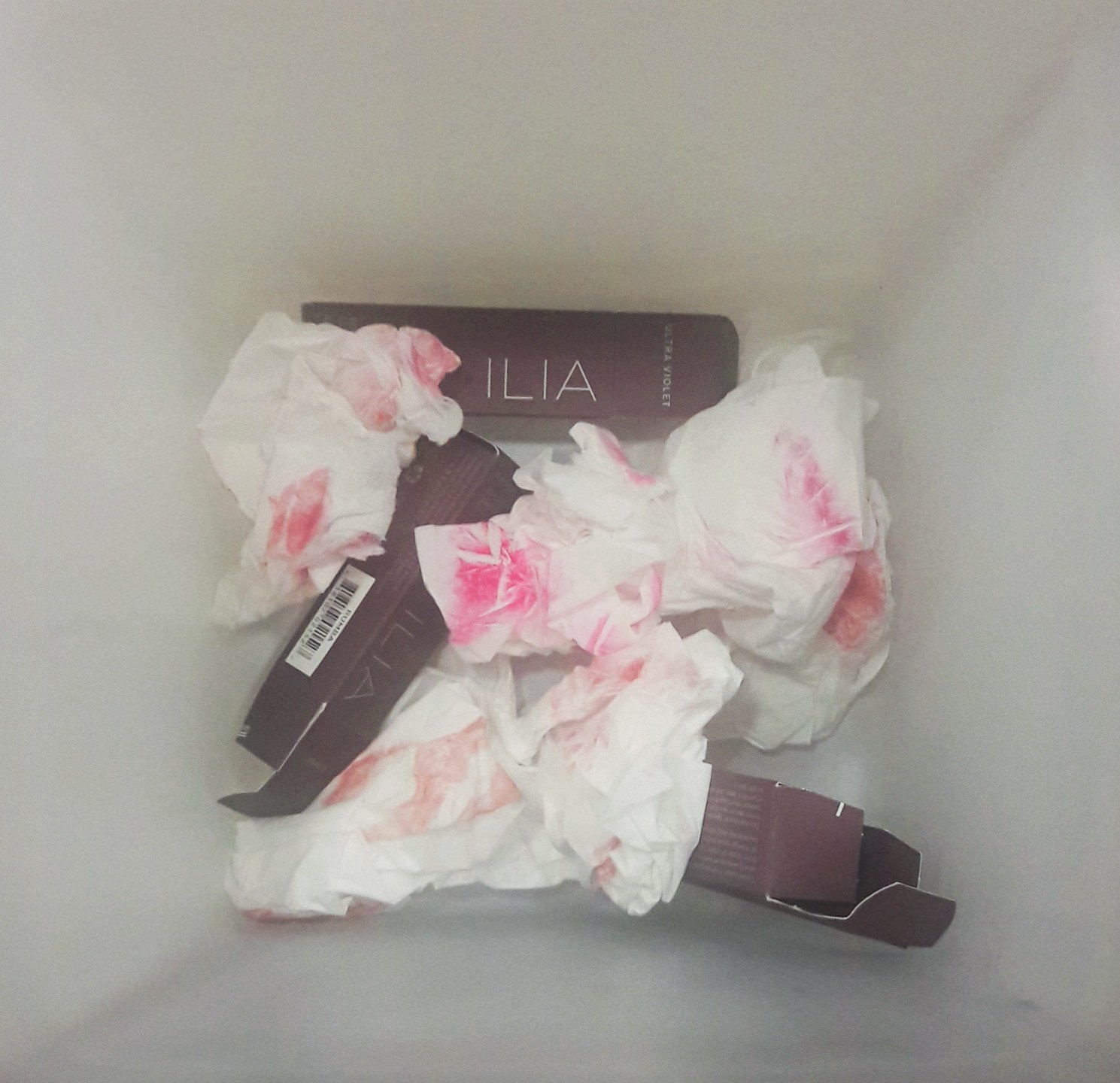
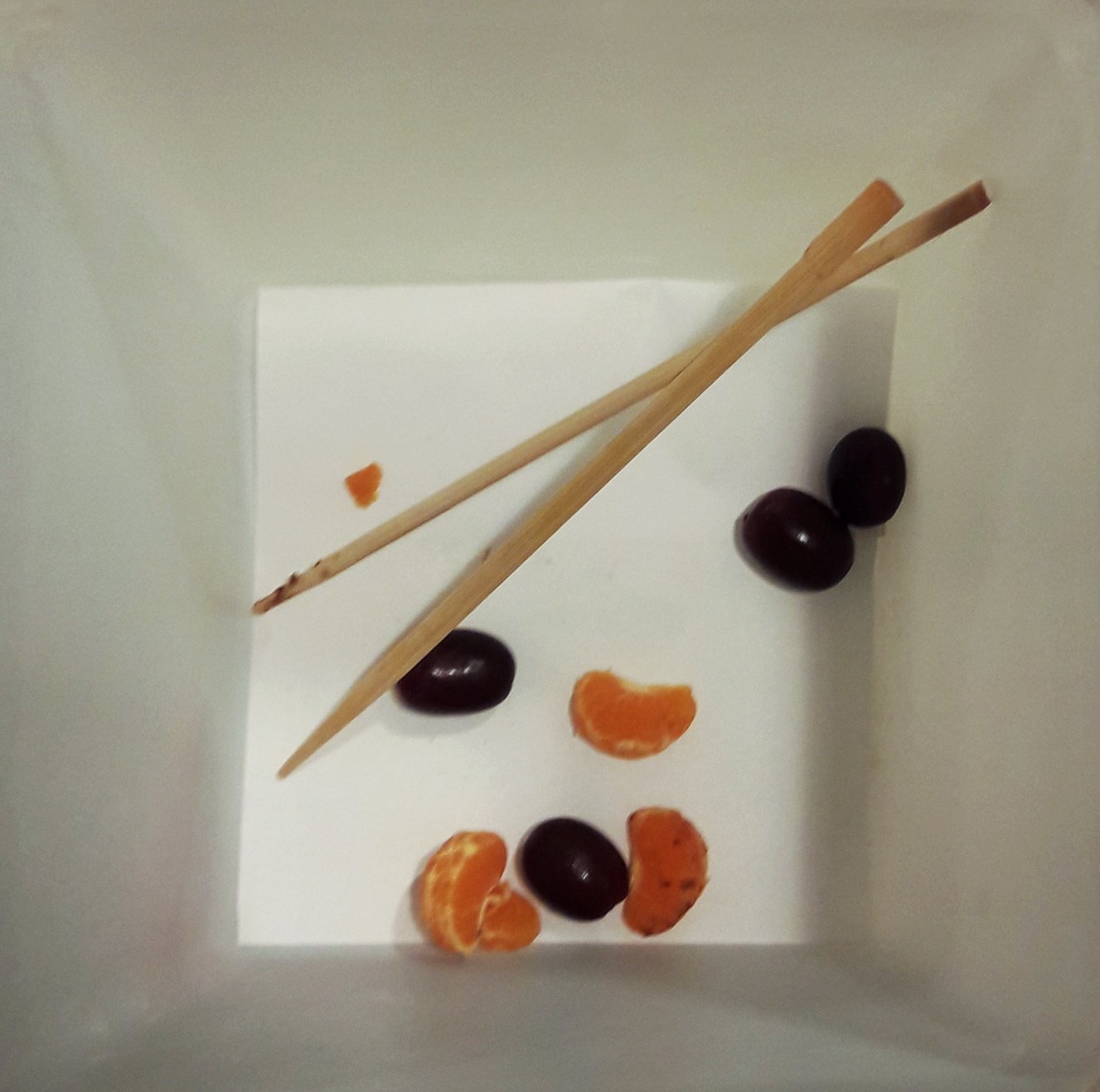
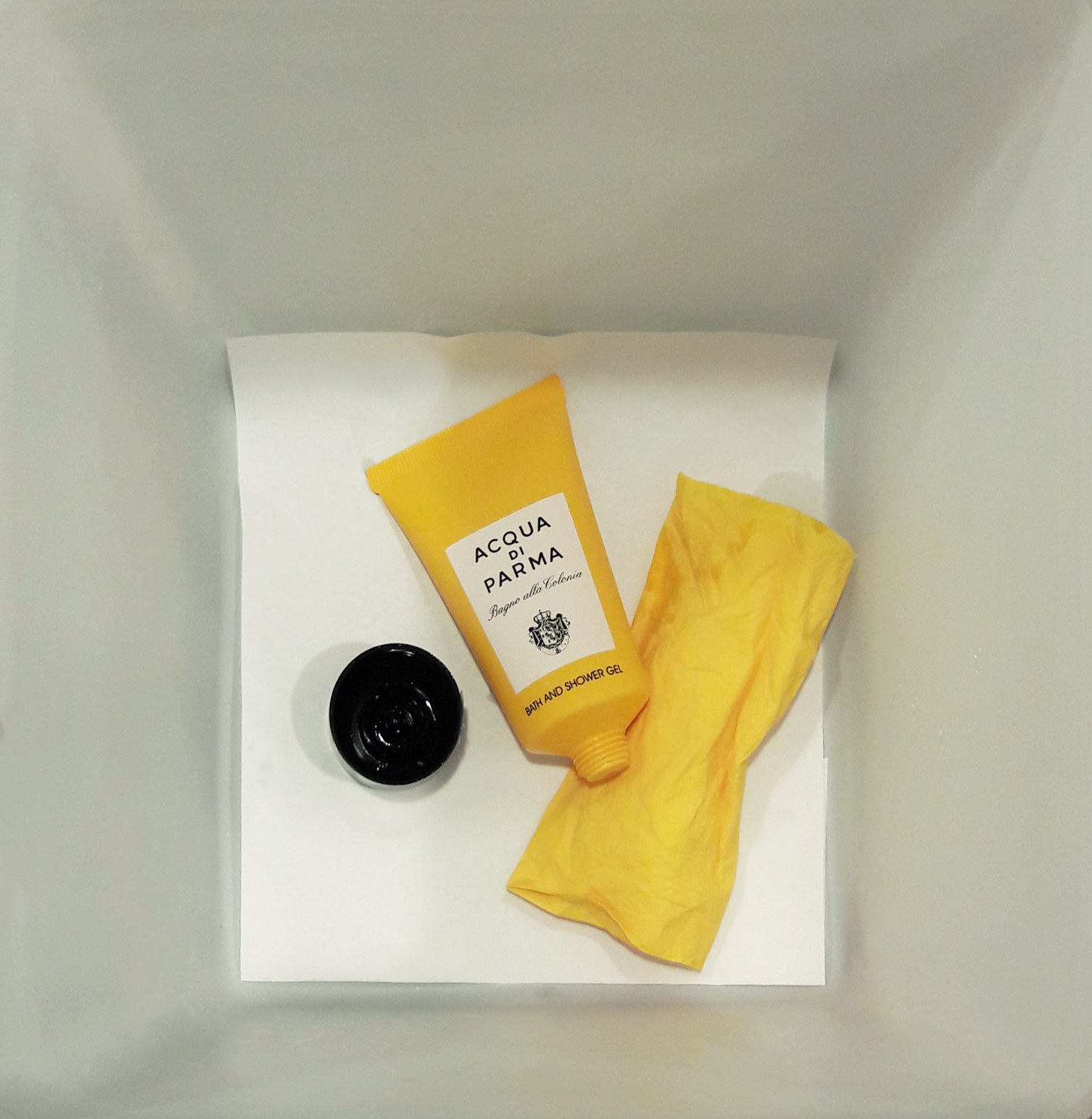
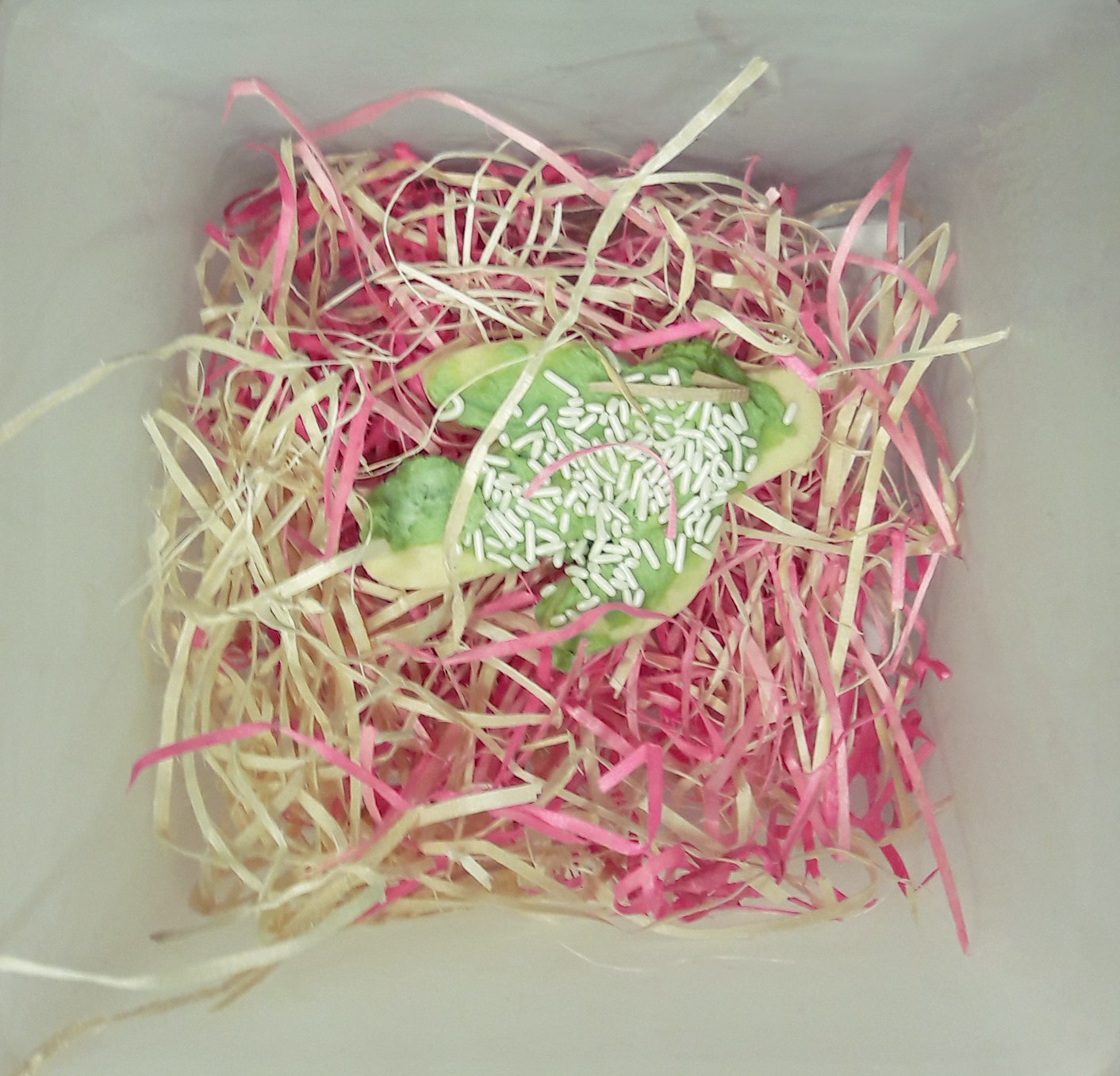
That attention is organized into four bodies of work. Espacio Domesticado (Italy, Colombia, 2013–2017) examines how people inhabit and mark domestic space — windows, thresholds, rituals, the body as territory. República Bananera (Colombia, Mexico, Bolivia, Italy, 2017–2022) is a tribute to his father, a market vendor, and a broader examination of food sovereignty and informal economies. White Trash (Palm Springs, 2019) is a photographic inventory of hotel wastebaskets, shot while working as a housekeeper: what guests discard, what workers touch but never own. Time Is Money (New York, 2023–present) documents years of restaurant and hospitality work — order notebooks, dollar bills, service gestures — as a record of time sold in exchange for the time to make art.
His work has been exhibited in Colombia, Mexico, Italy, and the United States. Recognition includes the XII IILA Photography Prize (Rome, 2020), First Prize at Premio Arte Joven, Embassy of Spain & Colsánitas (Bogotá, 2017), and an artist residency at the Istituto Italo-Latinoamericano (Rome, 2021).
SANTIAGO CARMONA (1990) · Colombian Artist living in NYC
Project in Progress · 2023 —
TIME IS MONEY
Selling Time,
Earning a Life
A three-year multimedia project examining time as commodity, service labor as artistic practice, and the working body as political territory. It comprises readymade objects, documentary photography, and durational overhead video filmed during real shifts.
Readymade Objects
A Bible with intervened capitalist slogans.
A clock face replaced by currency.
Framed server receipts as documents of value.
Documentary Photography
Back-of-house: industrial kitchens, service rooms, coworkers invisible to the customer. Spaces where time becomes money.
Durational Video
Overhead (cenital) framing of repetitive kitchen work filmed during actual shifts. The camera as witness of consumed time.
Lineage / References
- Mierle Laderman Ukeles
- Tehching Hsieh
- Chantal Akerman
- Santiago Sierra
- Latin American Conceptualism
SANTIAGO CARMONA (1990) · Colombian Artist living in NYC
Portfolio
Selected Work
2013 — Present
Side Work
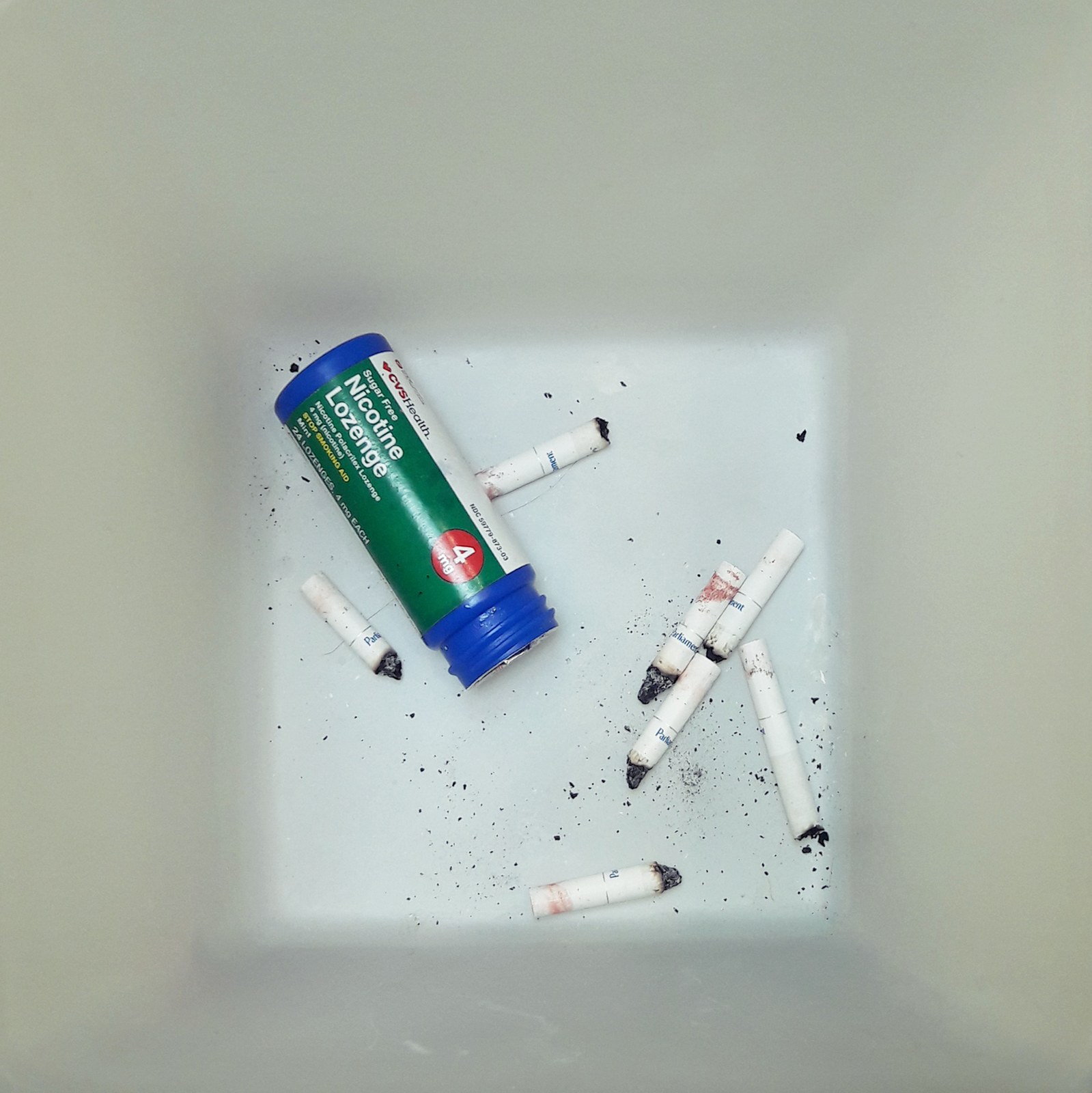
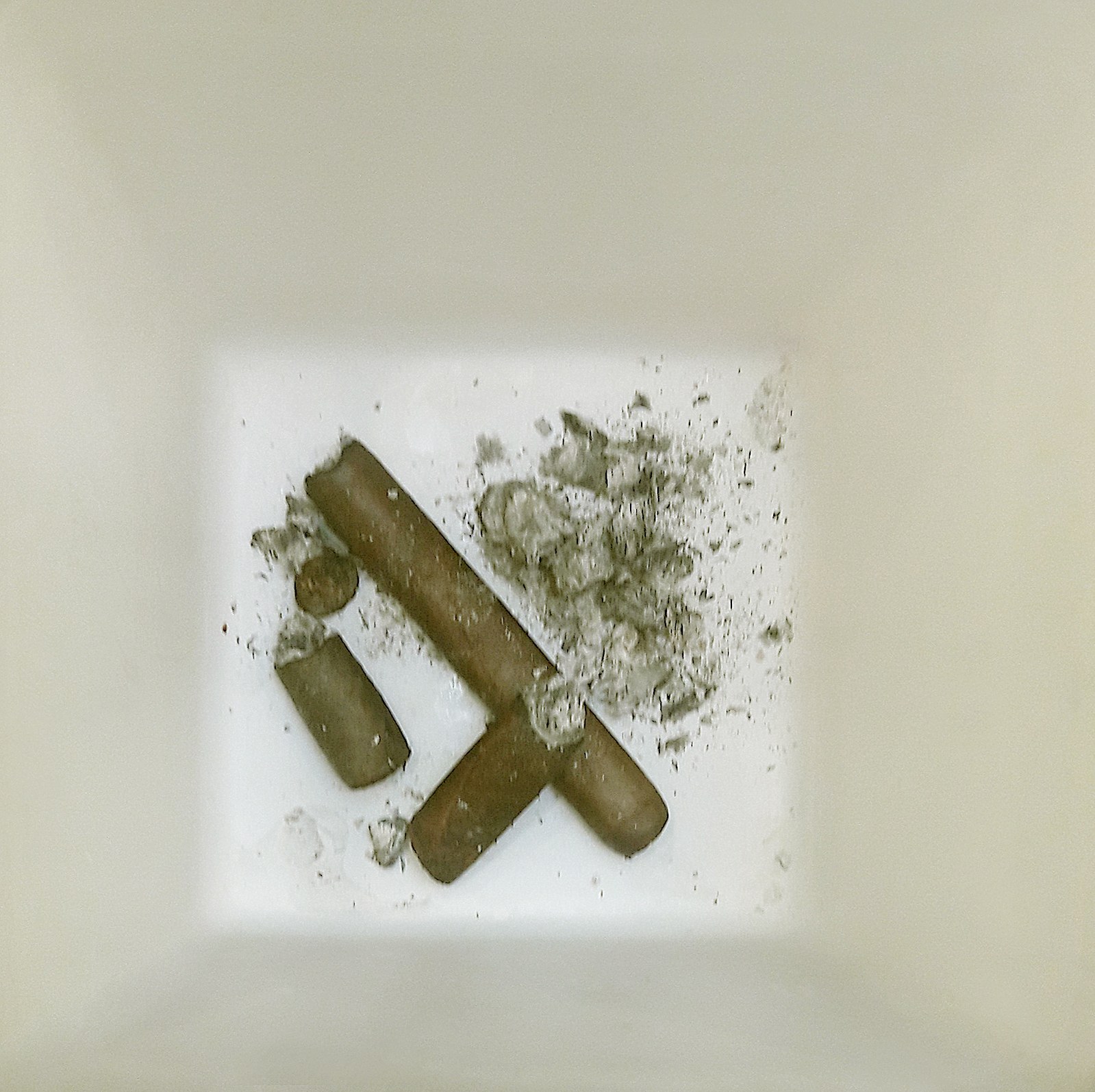
In January and February 2019 I worked in a hotel, cleaning rooms and emptying wastebaskets. What struck me was how the guests consumed: many products were thrown away with plenty of life left, and the waste was absurd and unnecessary. It exposed cultural, social and political positions. I found a culture of the disposable, of things used once and then discarded, marked by a total unawareness of what is consumed. How we consume, and what we throw away and when, is shaped by cultural construction and social dynamics; consumption is one of the main forms of intercultural construction we experience in daily life. I photographed the contents of the wastebaskets with my phone: an inventory of what guests discard and what workers touch but never own.
Shown: Galería Neebex, Bogotá (2019); Cali Foto Fest, open-call selection, presented as eight polyptychs (2020); Feria del Millón Medellín (2021); solo exhibition White Trash: Forme di consumo, forma di costruzione interculturale¹, Cappella Orsini Lab, Rome, during Rome Art Week (2022); Art at Home 73-22, Bogotá (2023).
Press: Cali Foto Fest 2020, exhibition catalogue, Colectivo Cámara Expandida.
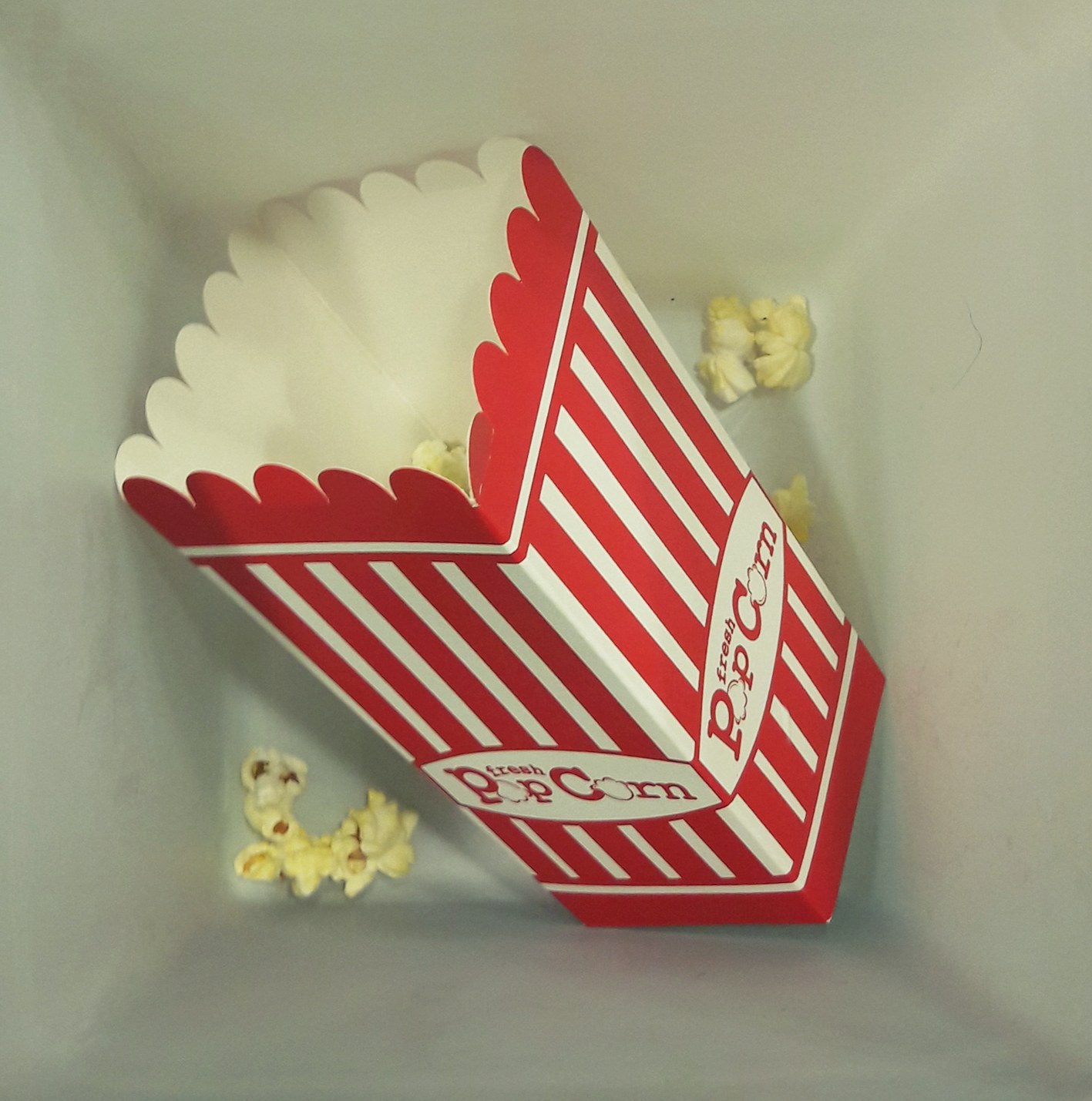
White Trash
Palm Springs, 2019
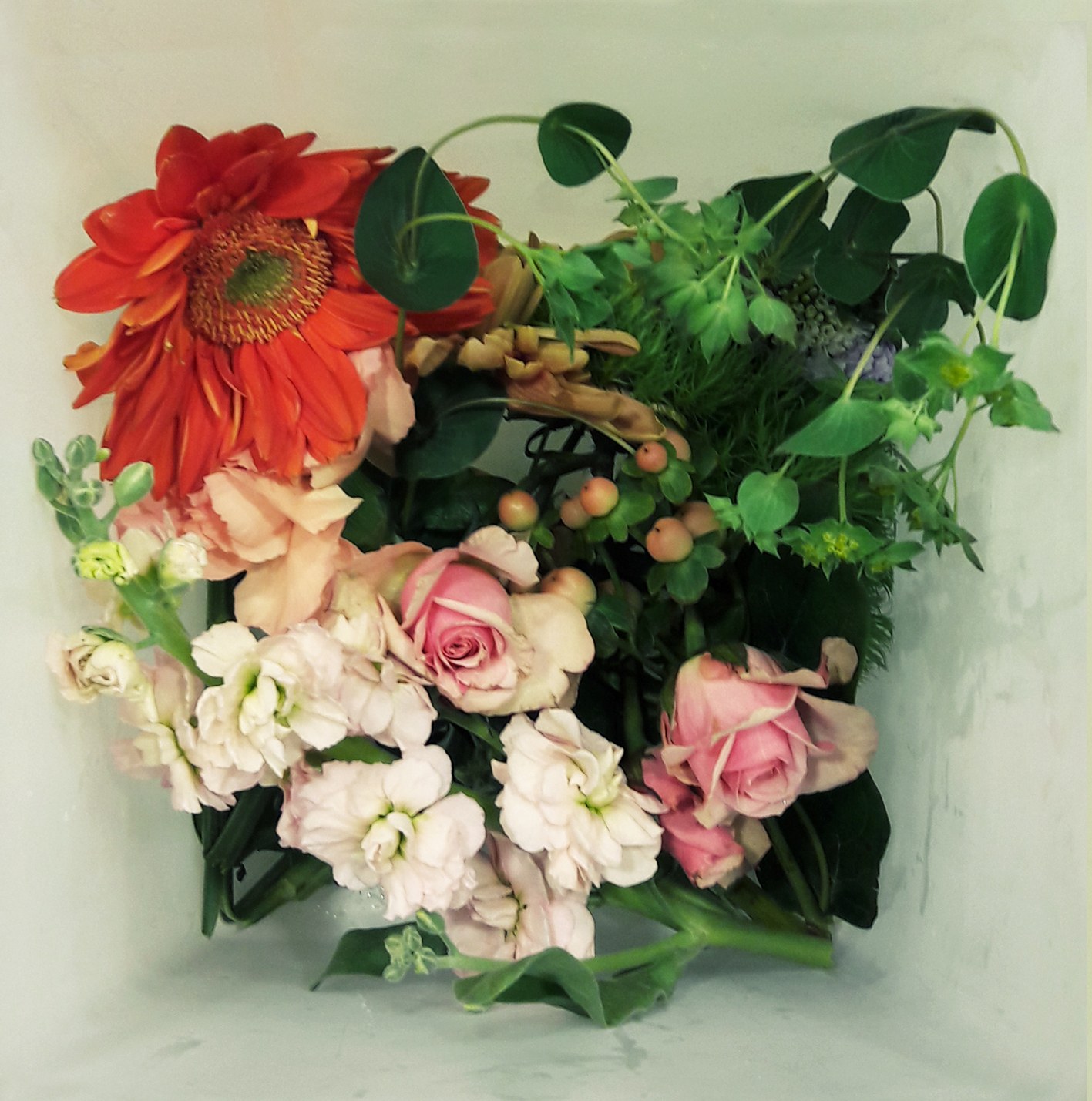
White Trash
Palm Springs, 2019
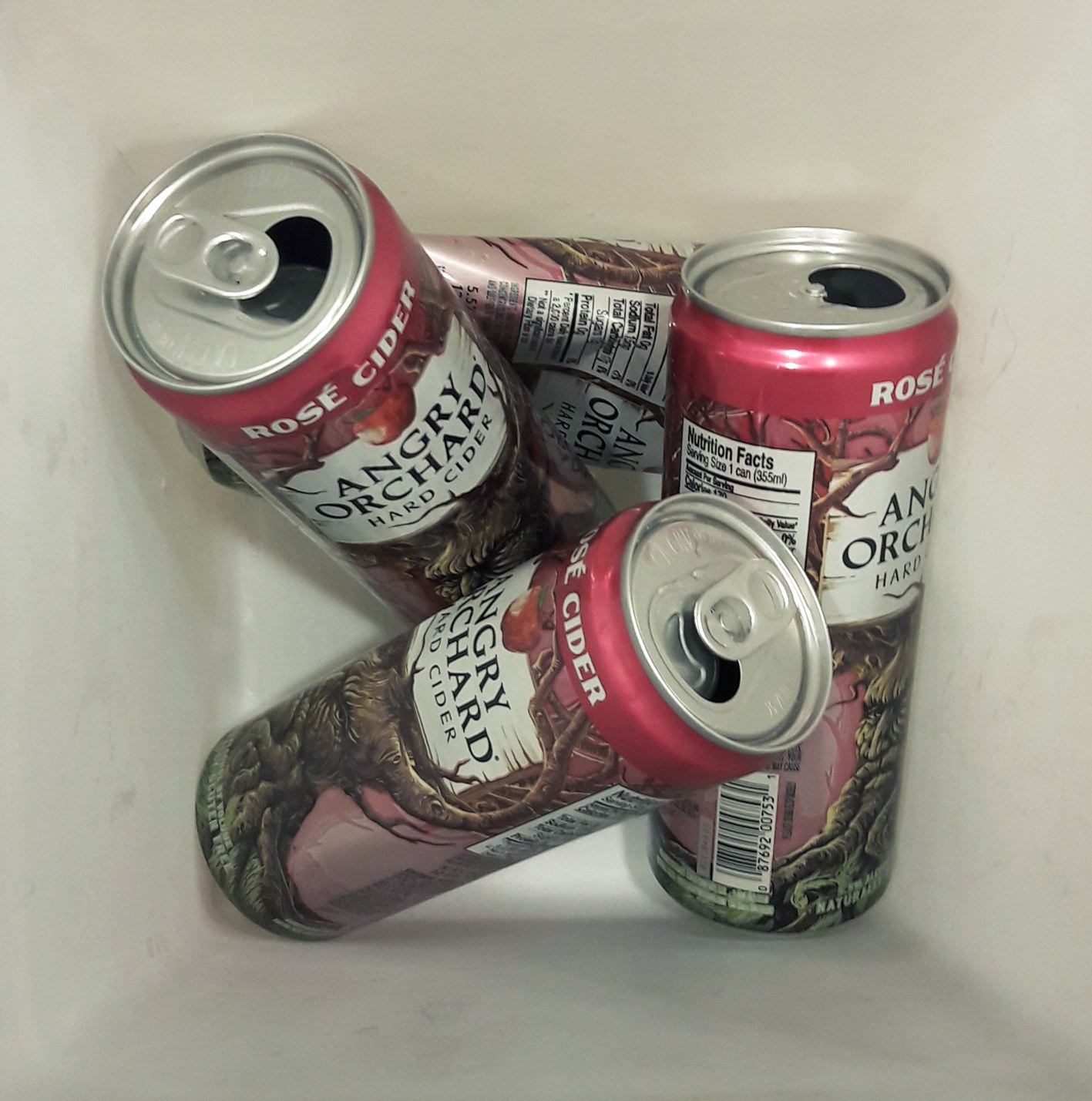
White Trash
Palm Springs, 2019
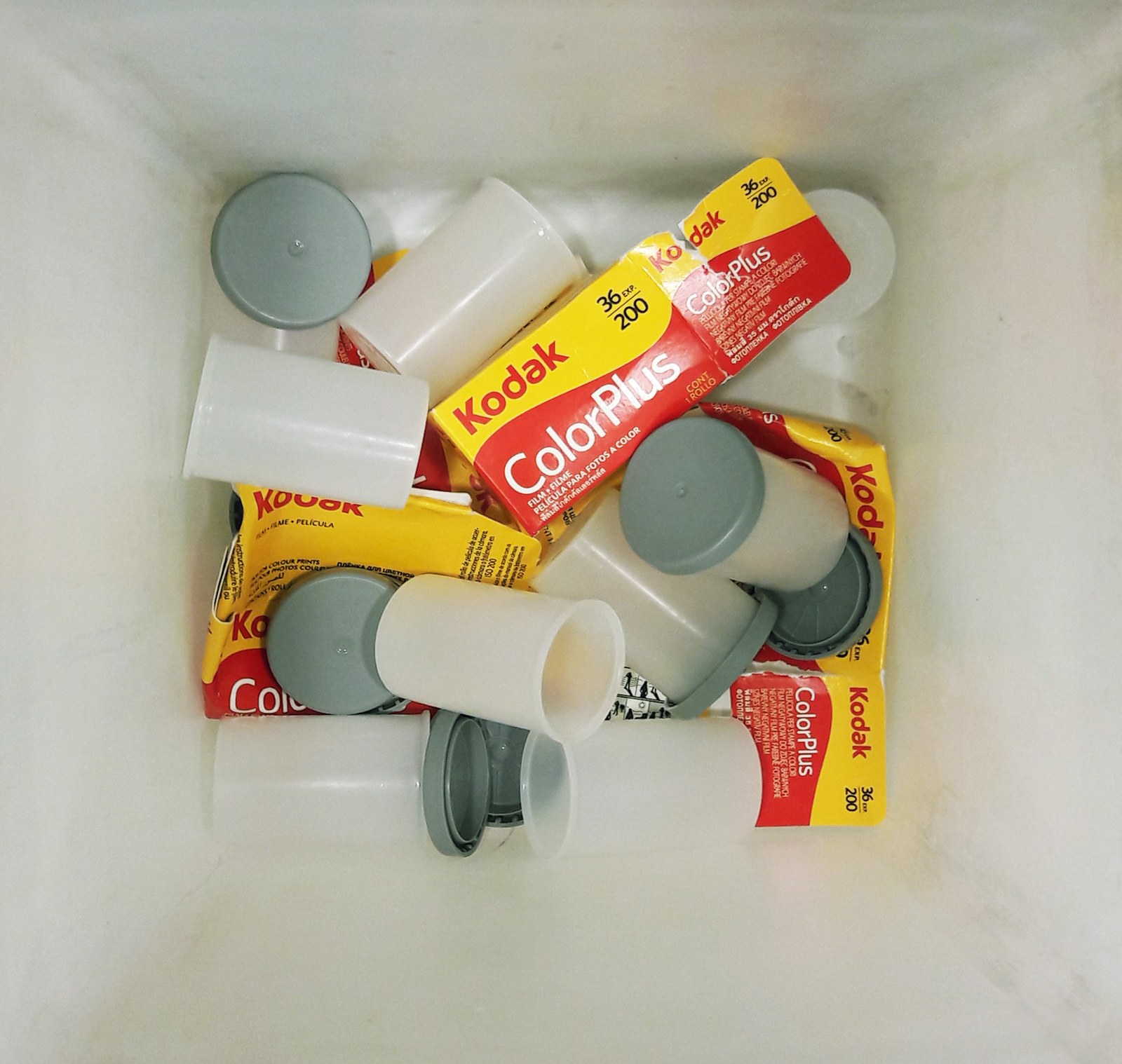
White Trash
Palm Springs, 2019
White Trash
Palm Springs, 2019
White Trash
Palm Springs, 2019
White Trash
Palm Springs, 2019
White Trash
Palm Springs, 2019
White Trash
Palm Springs, 2019
White Trash
Palm Springs, 2019
Time Is Money
NYC, 2023 – Present
Time Is Money
NYC, 2023 – Present
Time Is Money
NYC, 2023 – Present
Espacio Domesticado
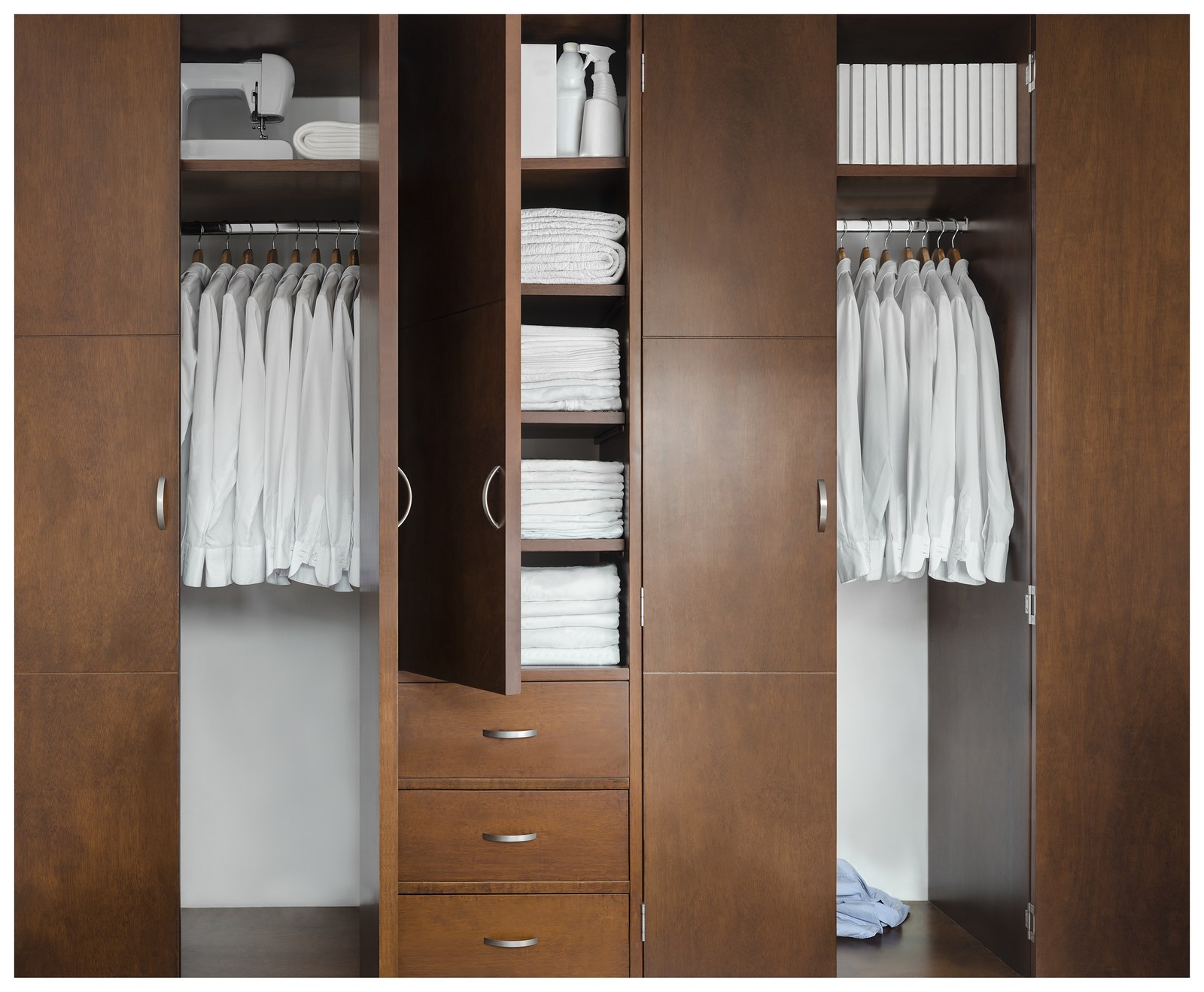
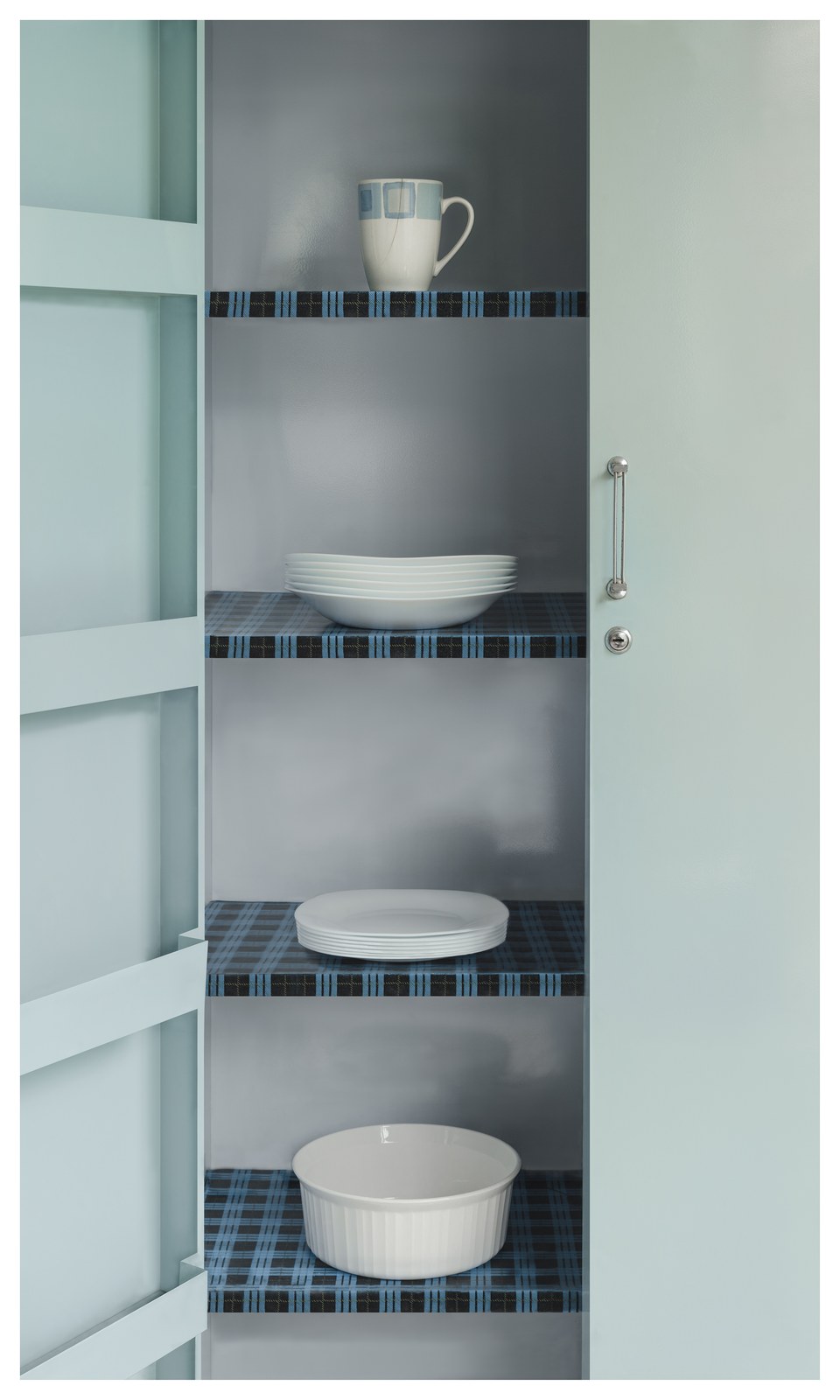
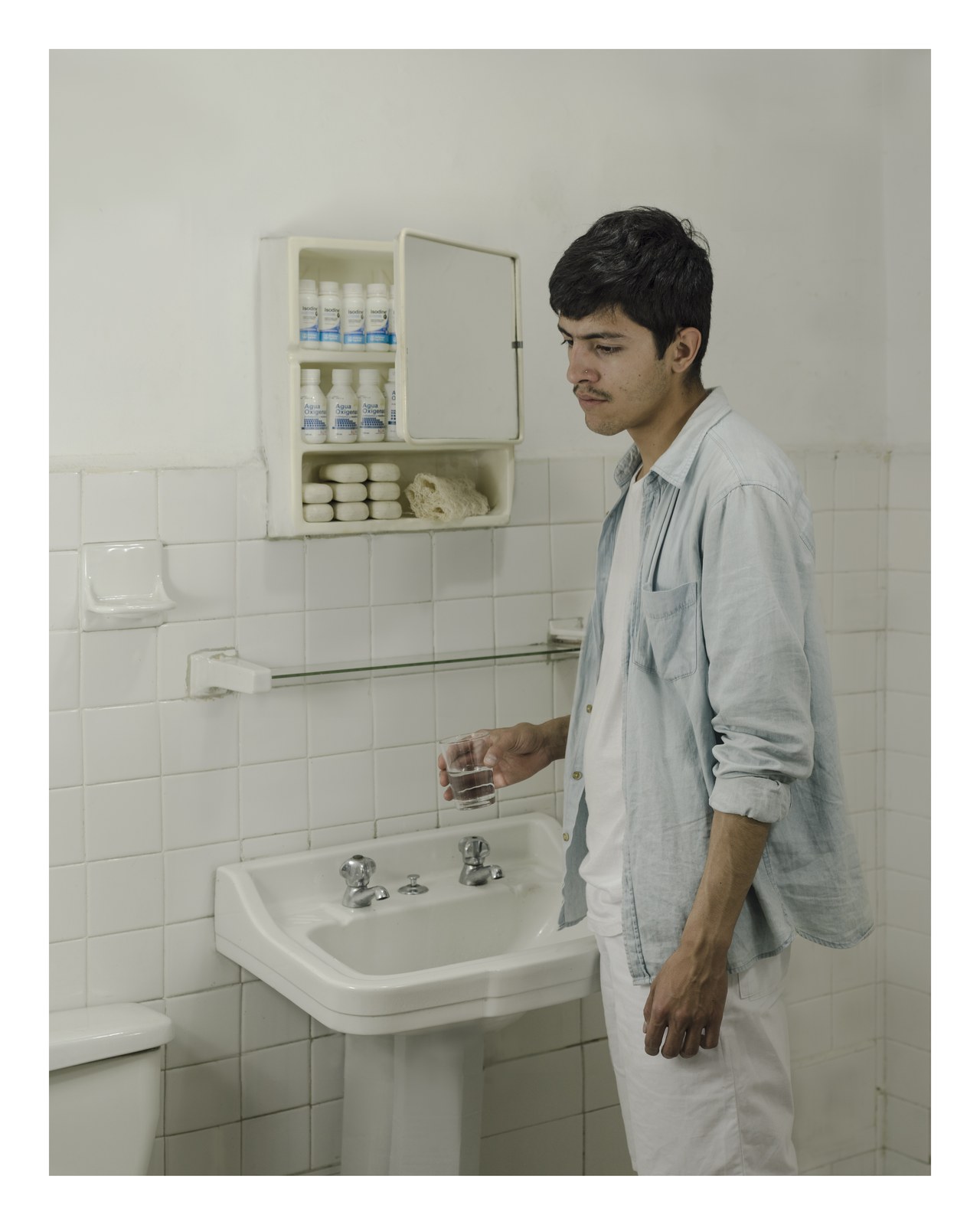
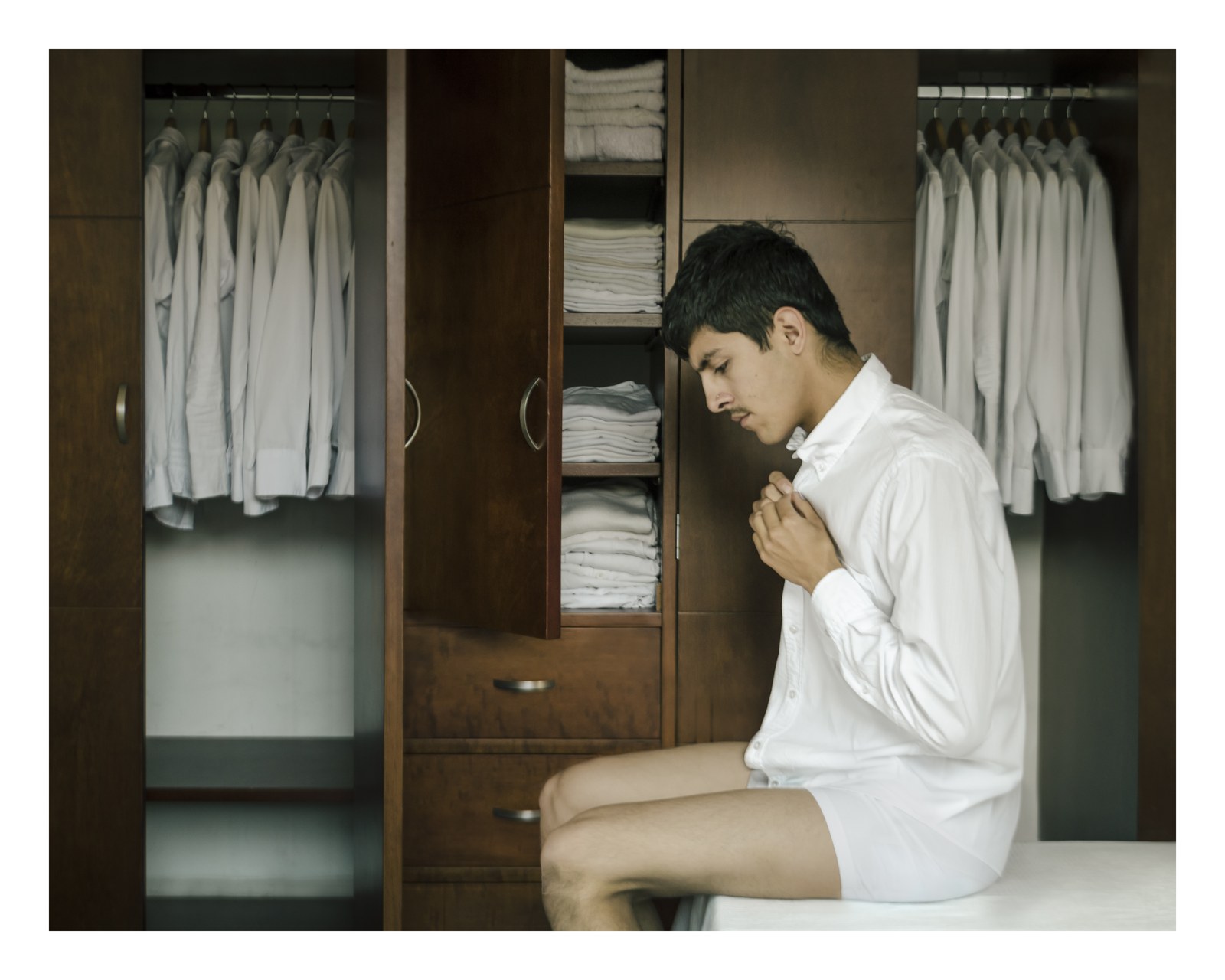
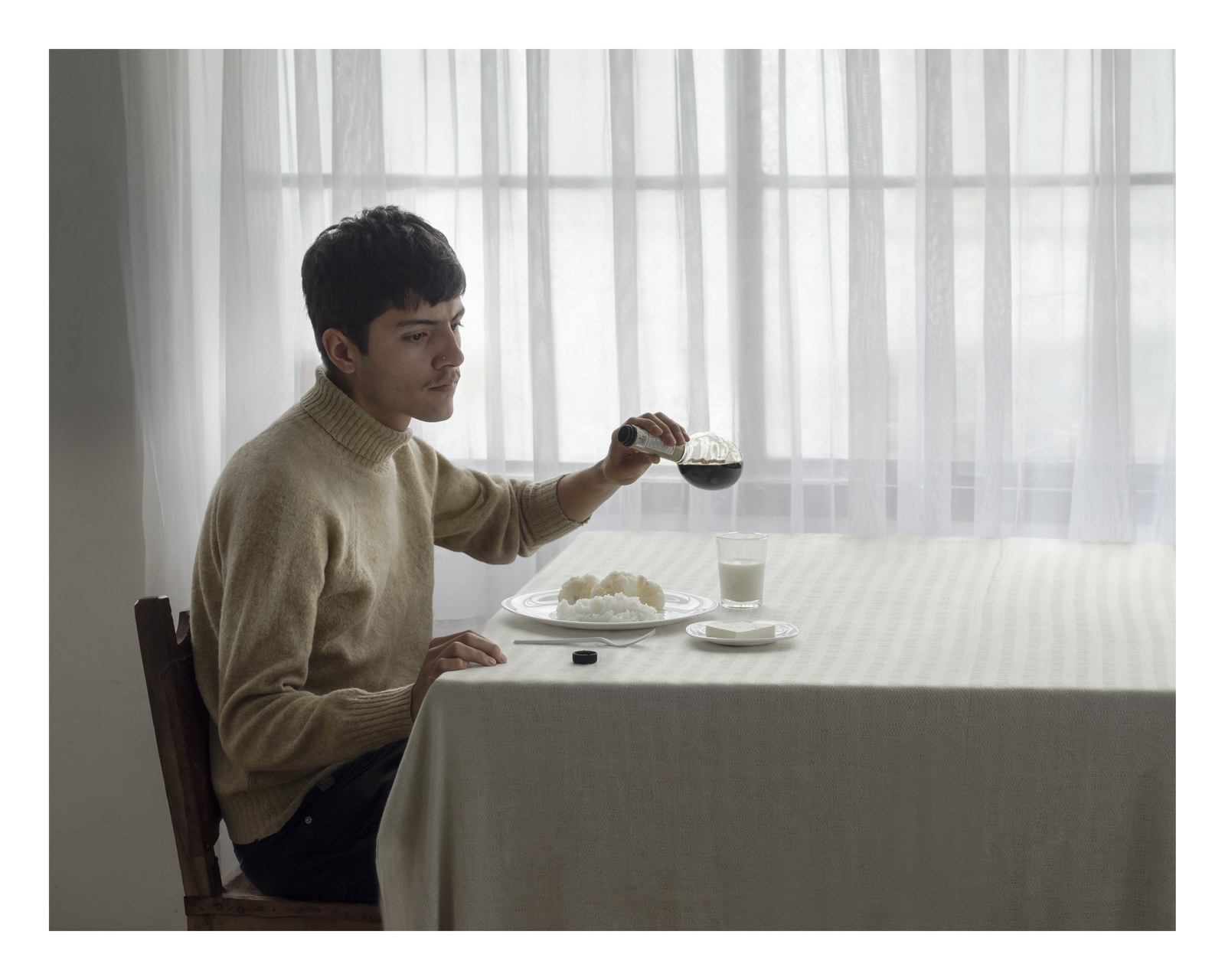
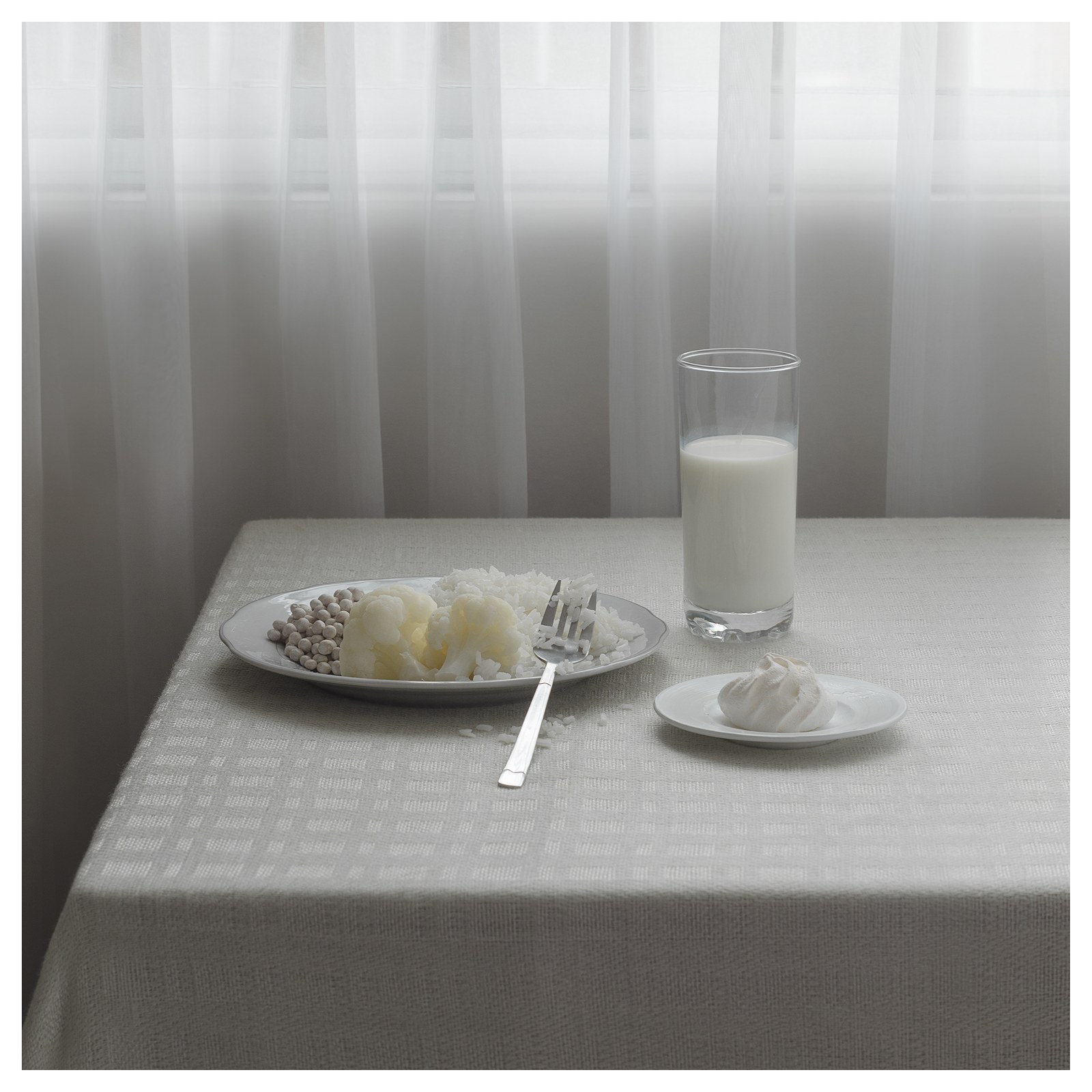
Our lives are marked by actions that repeat systematically. Because they are periodic and frequent, our daily actions become rituals that define how we relate to one another and how we inhabit a space, and over time they shape the space around us until person and surroundings become a single image. I call this process domesticating a space: modifying its primary characteristics to suit human needs. Some people follow patterns that repeat to the limit. People living with obsessive-compulsive disorder perform repetitive actions to relieve the anxiety of recurring, tormenting thoughts, and their daily life depends on places with precise, invariable conditions. Working with them, I photographed six interiors organized to the point of absurdity, where extreme order and the repetition of form and colour produce a sense of unreality and fiction.
Press: "Acciones repetitivas del espacio," Revista Enfoque Visual, no. 49, 22 April 2019 (published as Santiago López Carmona).
Espacio Domesticado
2014
Espacio Domesticado
2014
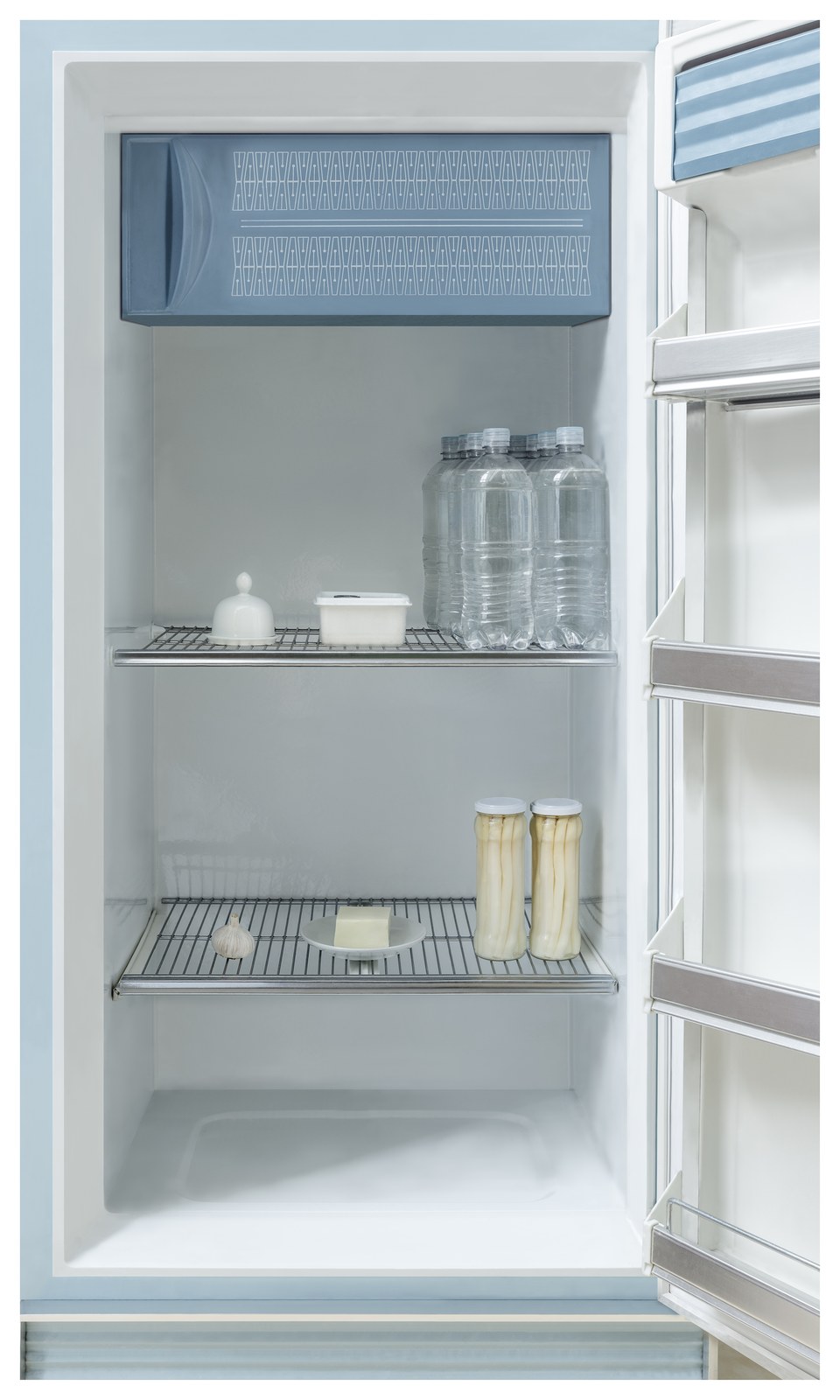
Espacio Domesticado
2014
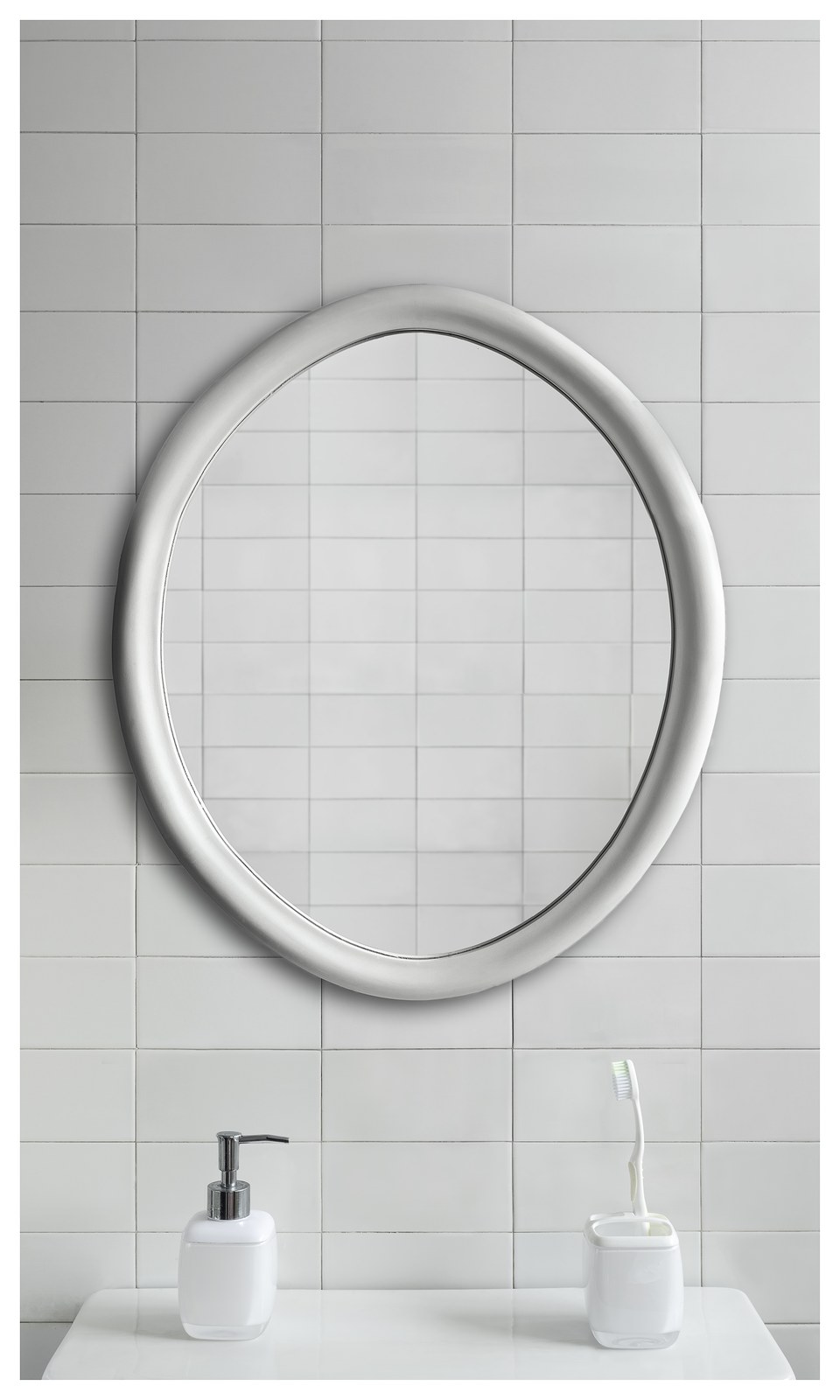
Espacio Domesticado
2014
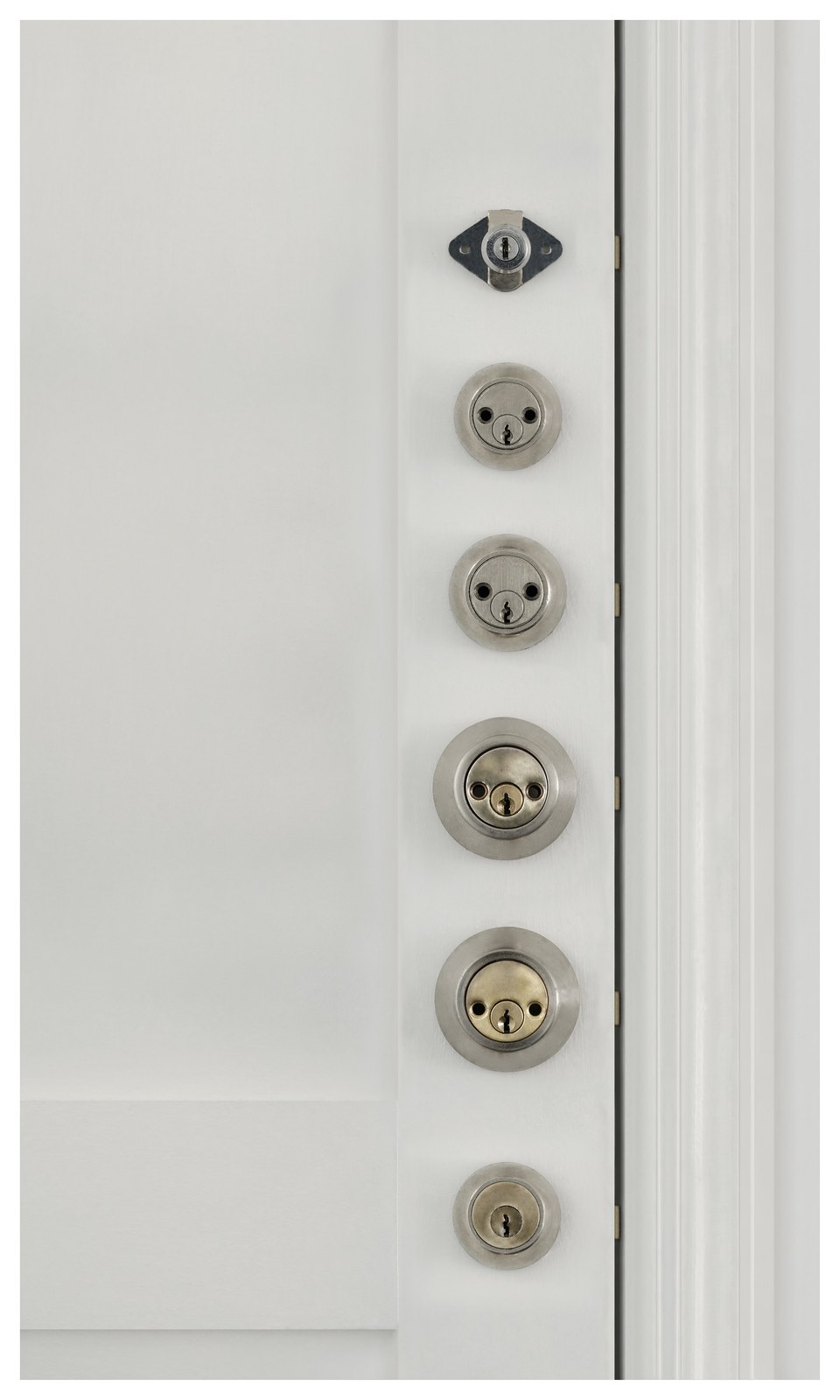
Espacio Domesticado
2014
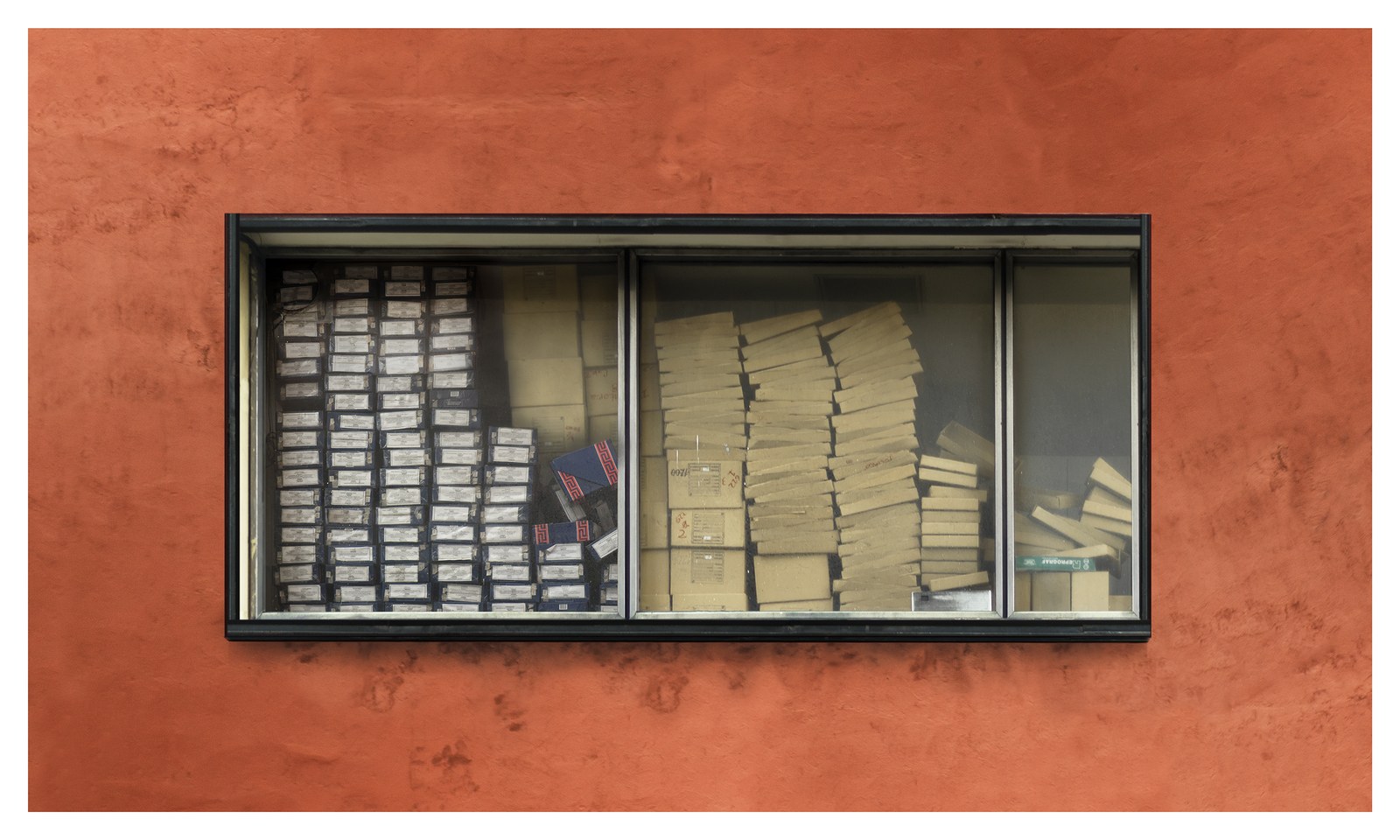
Everyone has a particular way of inhabiting the space around them, of using it and arranging objects within it. I like to imagine how each person lives through the objects I see in their windows. I think of windows as display cases or stages, and of the curtain as the theatre curtain that reveals a scene set by whoever occupied the space. The windows I find tell me that upper floors are often used as storage. From the street you see only stacked boxes, dust and old objects. The image reinforces the window as a stage, as fiction, as an uninhabited space, which is precisely another way of inhabiting: the extreme occupation of space. This idea is the start of a series of reflections developed across photography, installation and sound.
Recognition: First Prize, X Premio Arte Joven (Embassy of Spain in Colombia, Spanish Cooperation and Colsanitas), Bogotá, 2017, awarded under the name Santiago López Carmona; prize exhibition at Galería Nueveochenta, Bogotá. Also shown in II Salón de Arte Joven (nominee), Fundación Gilberto Alzate Avendaño, Bogotá, 2017.
Press: Laura Guzmán, "Estas son las obras ganadoras del Premio Arte Joven 2017," El Tiempo, Bogotá, 4 October 2017.
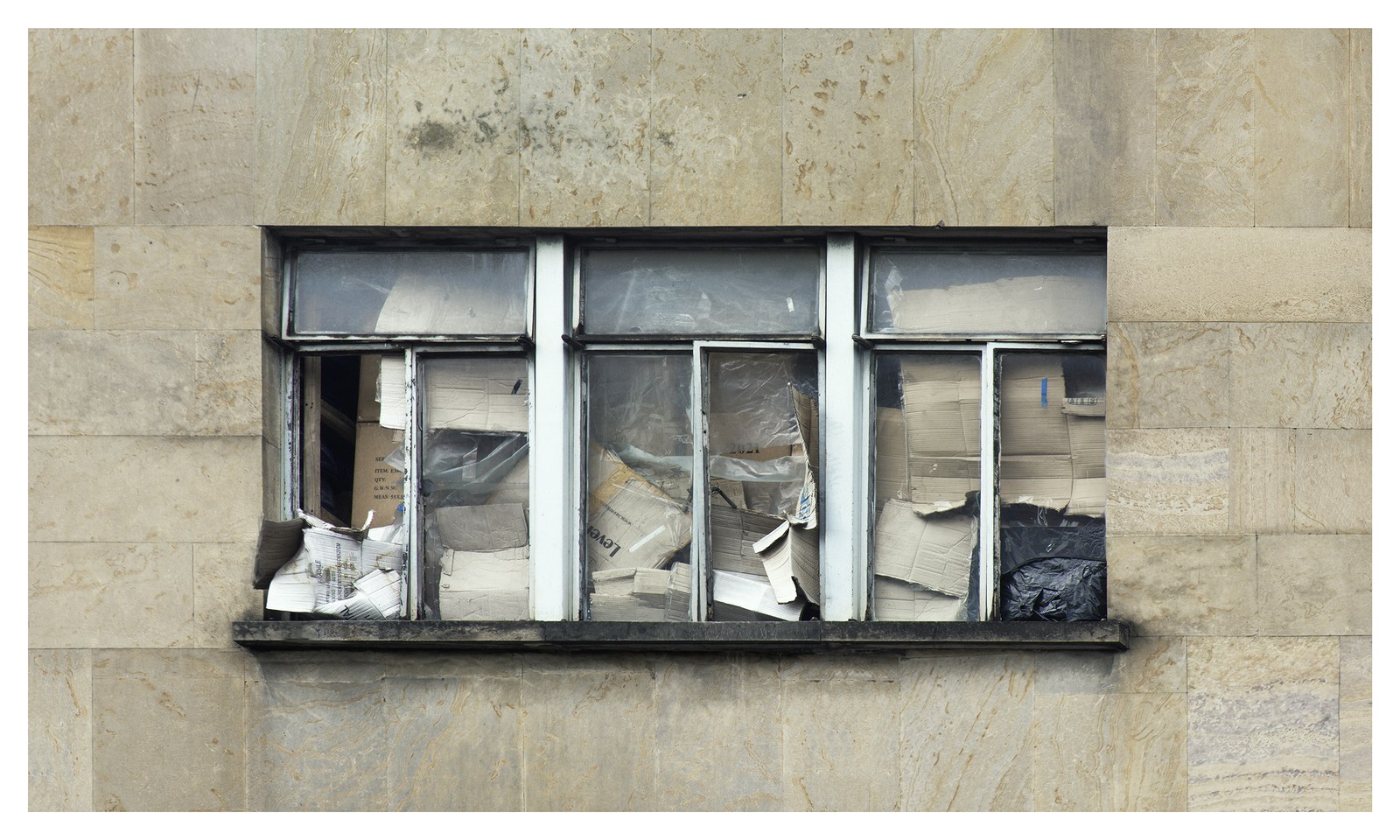
Ocupar
Bogotá, 2017
Ocupar
Bogotá, 2017
Rituales Cotidianos
2015
Rituales Cotidianos
2015
Rituales Cotidianos
2015
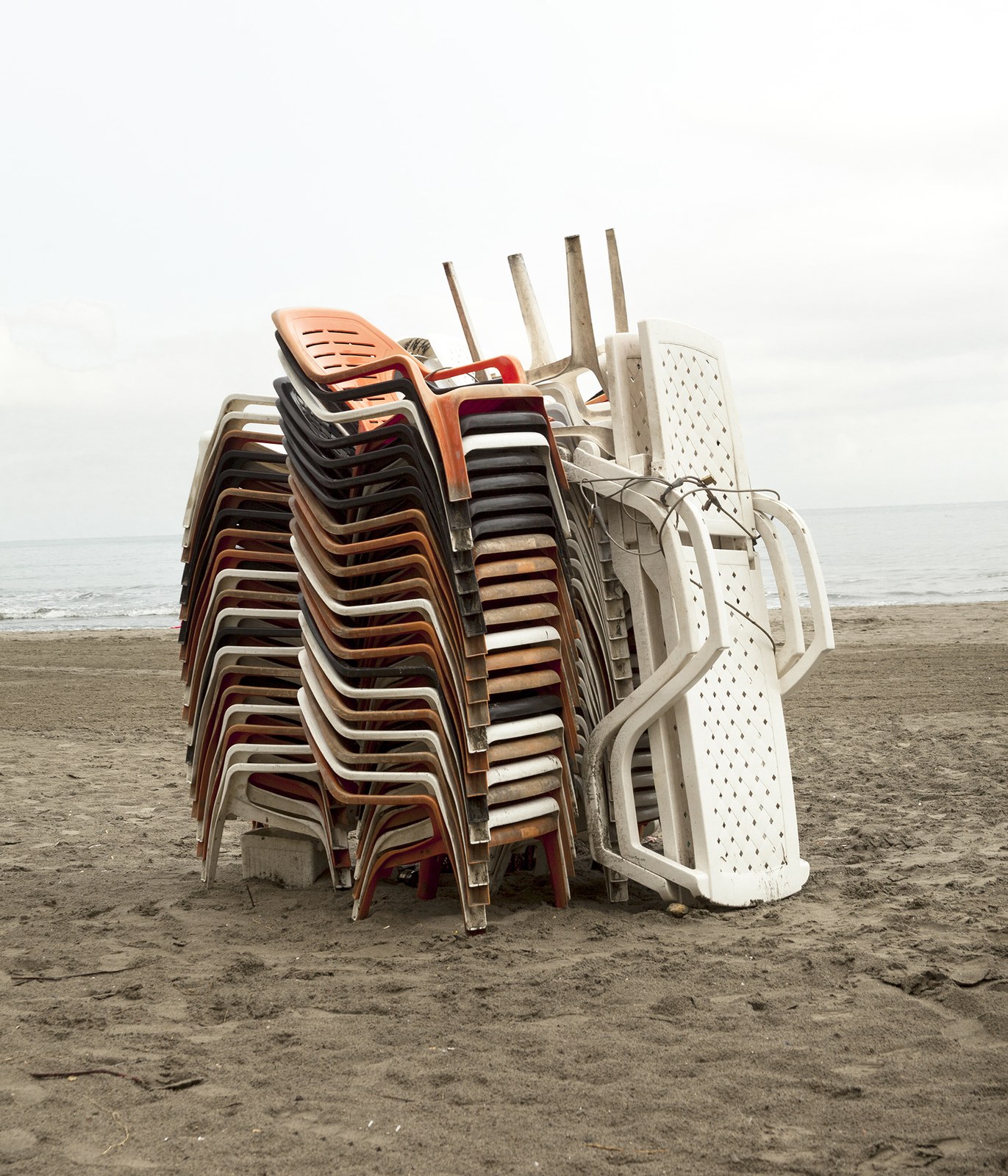
Un Metro de Sillas Rimax
Colombia, 2017
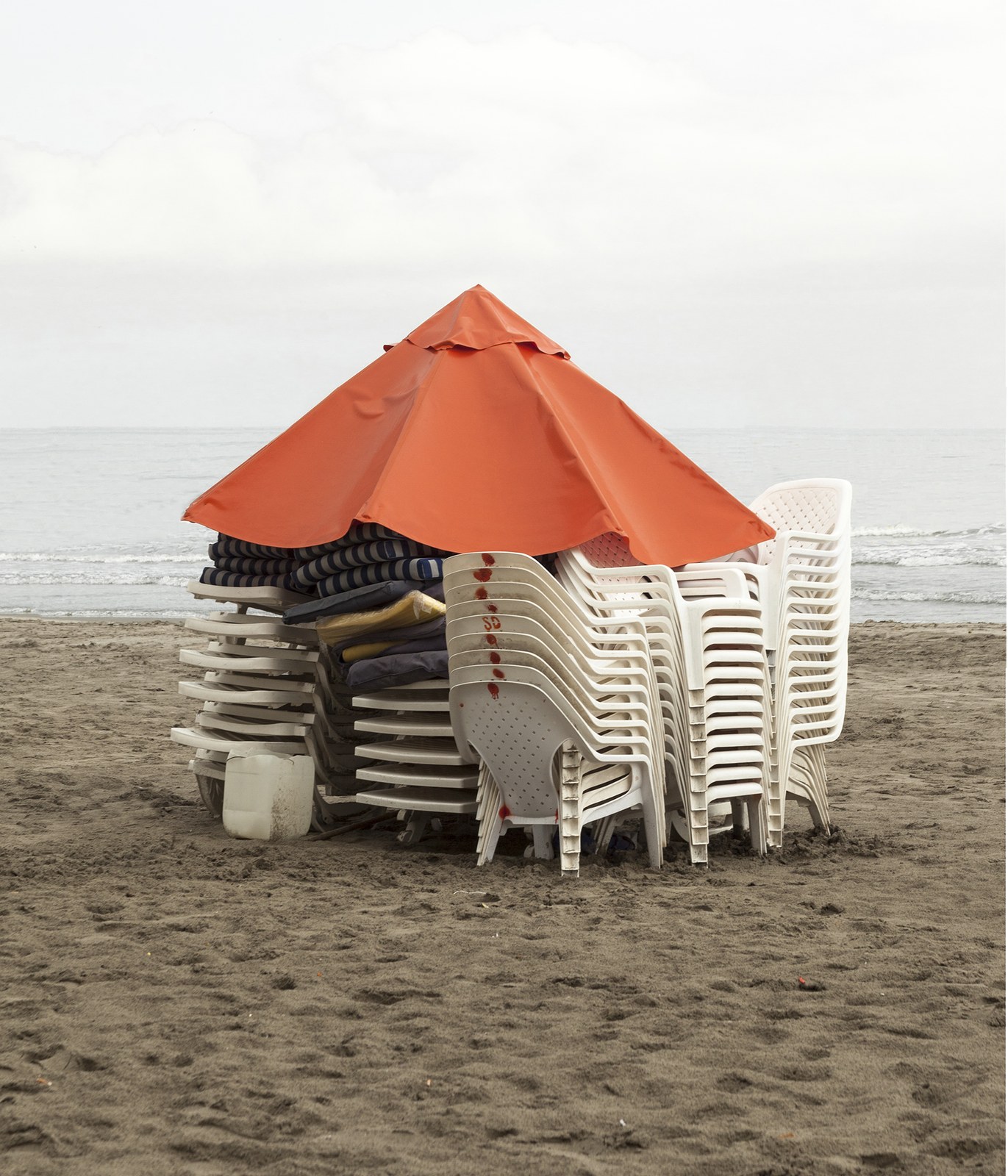
Un Metro de Sillas Rimax
Colombia, 2017
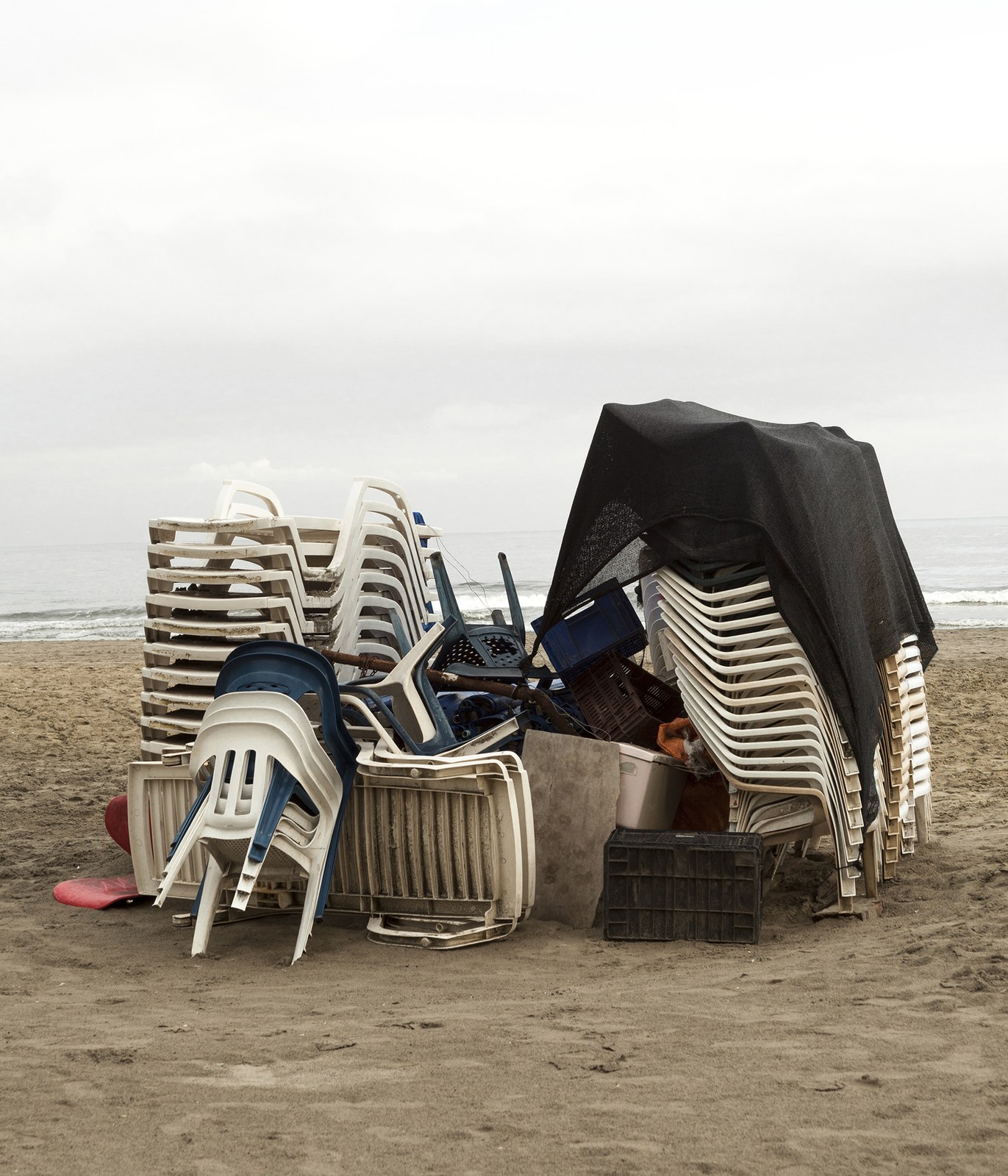
Un Metro de Sillas Rimax
Colombia, 2017
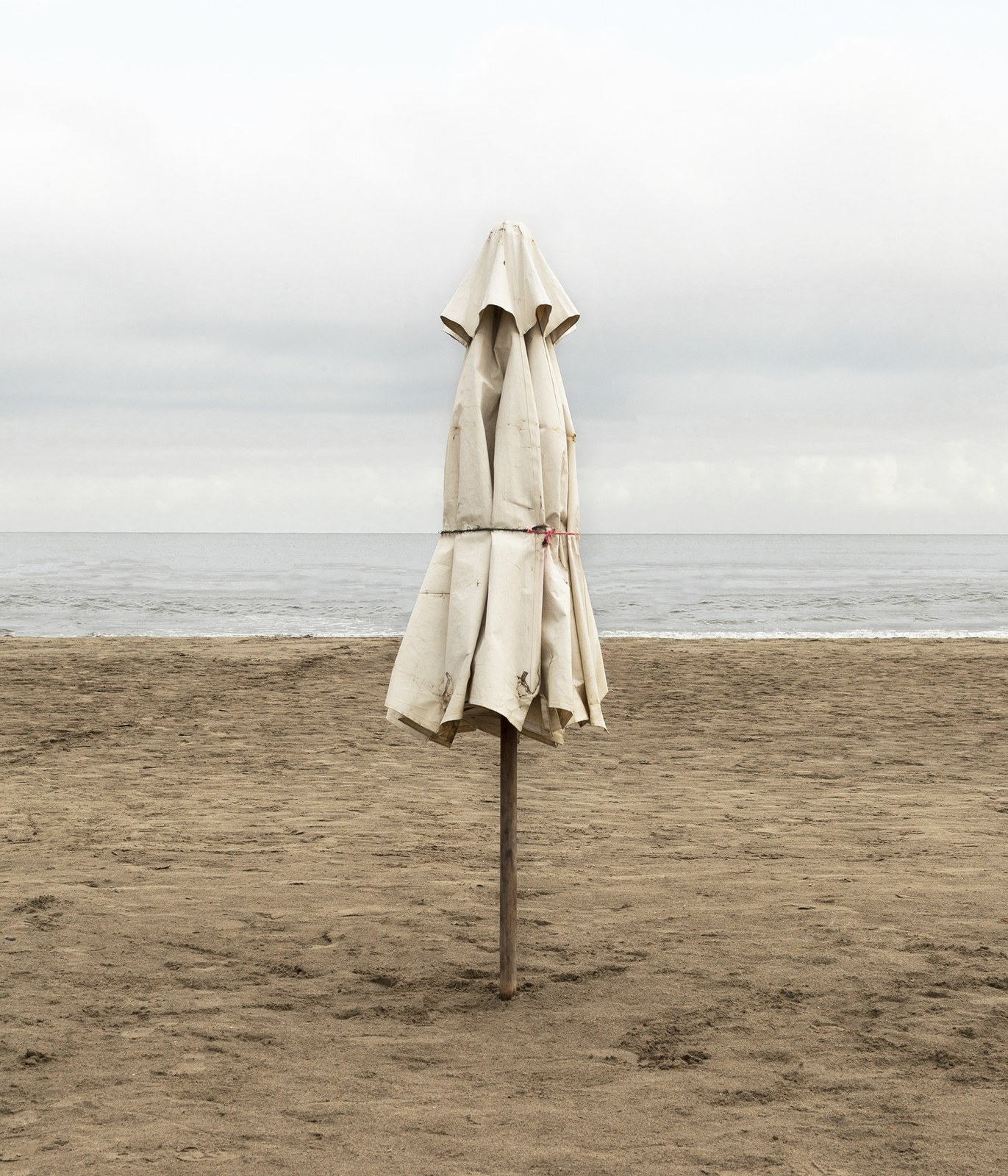
Un Metro de Sillas Rimax
Colombia, 2017
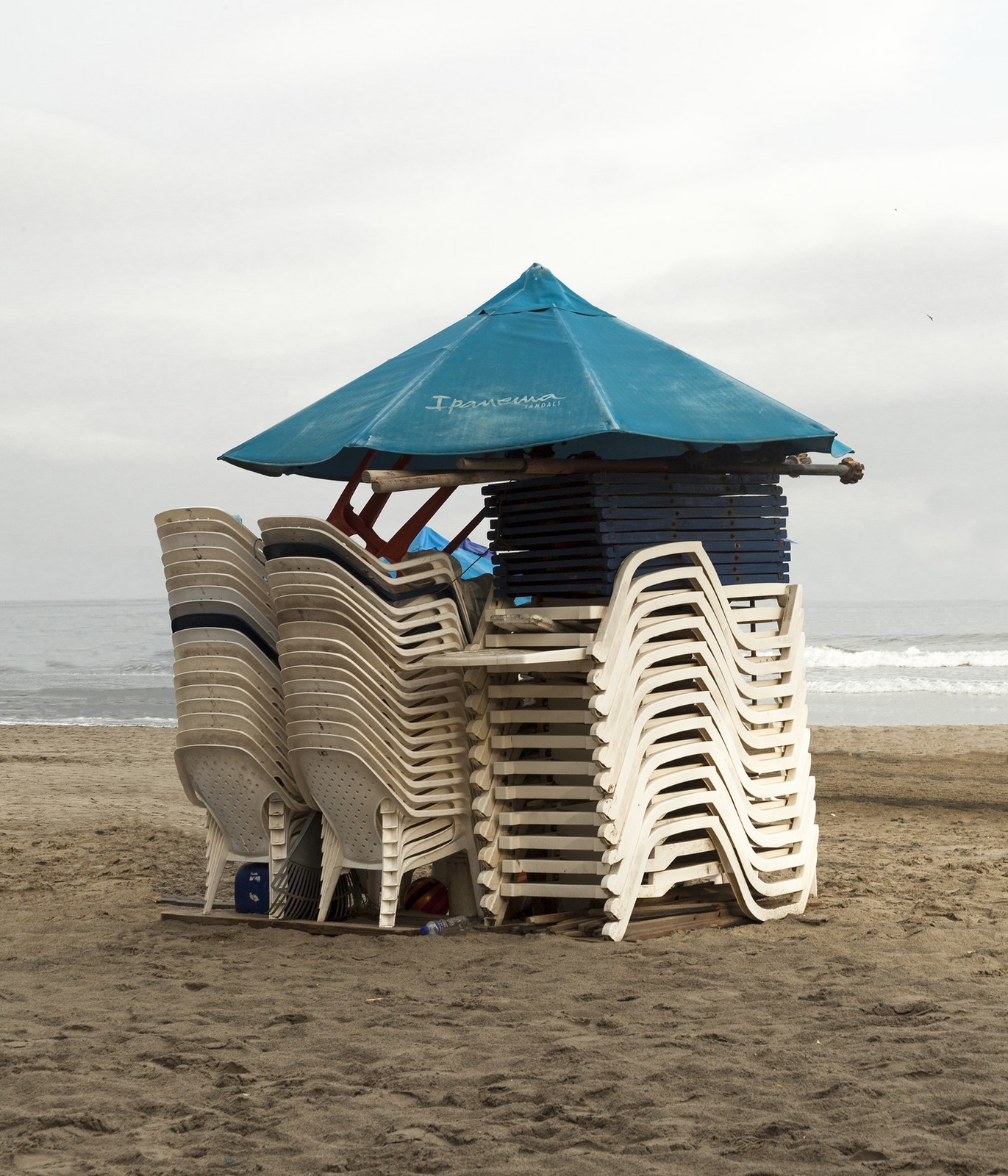
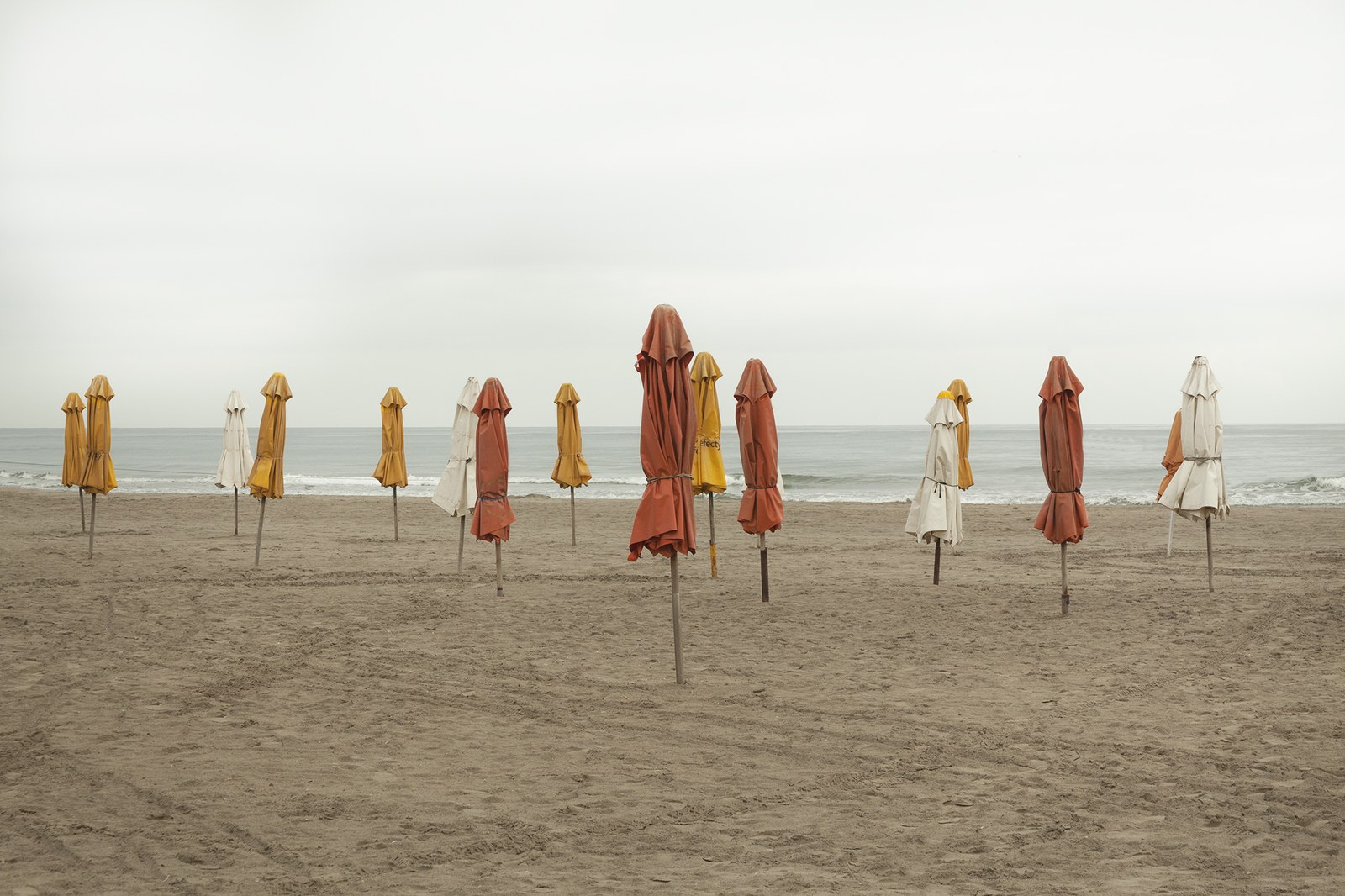
Un Metro de Sillas Rimax
Colombia, 2017
Un Metro de Sillas Rimax
Colombia, 2017
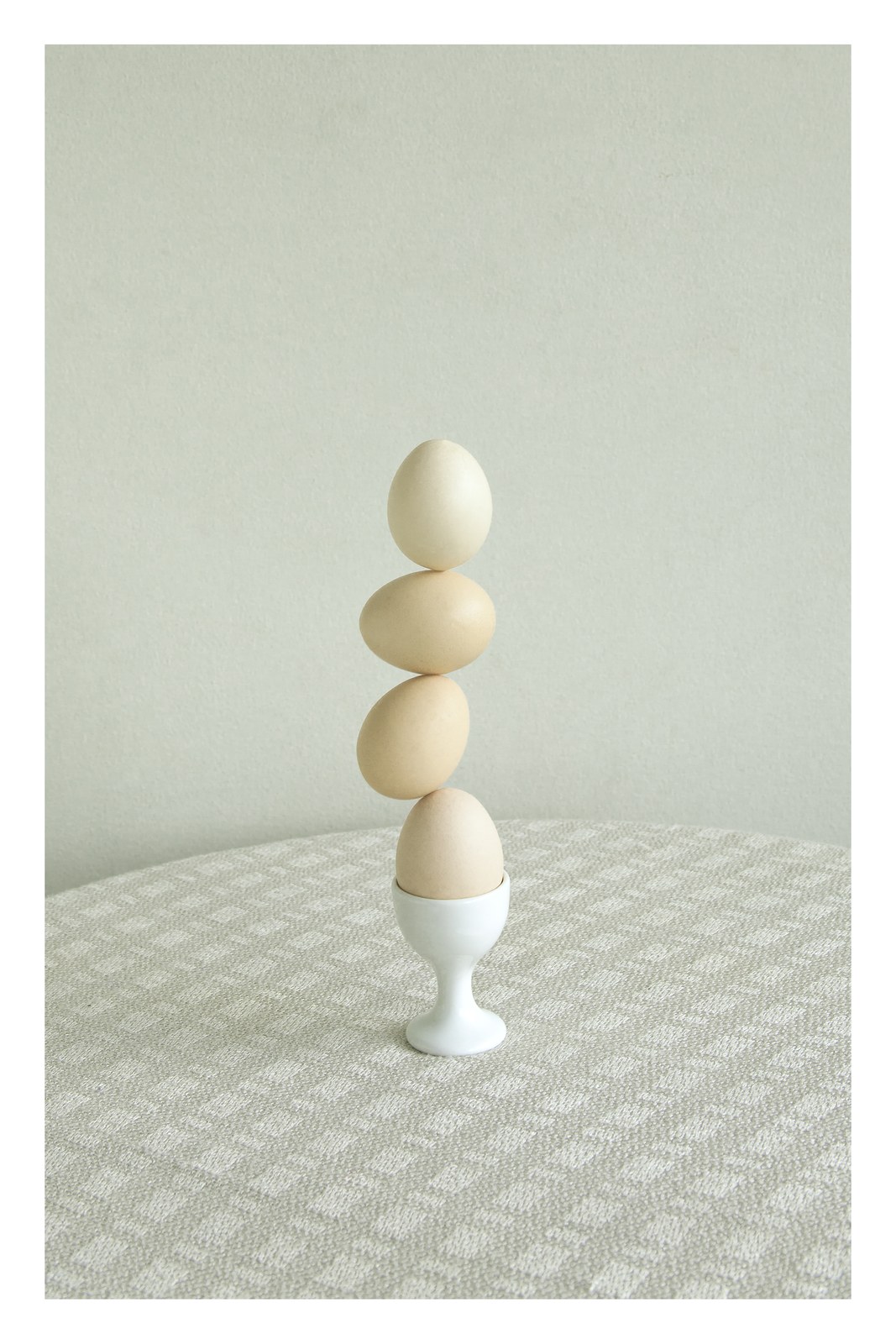
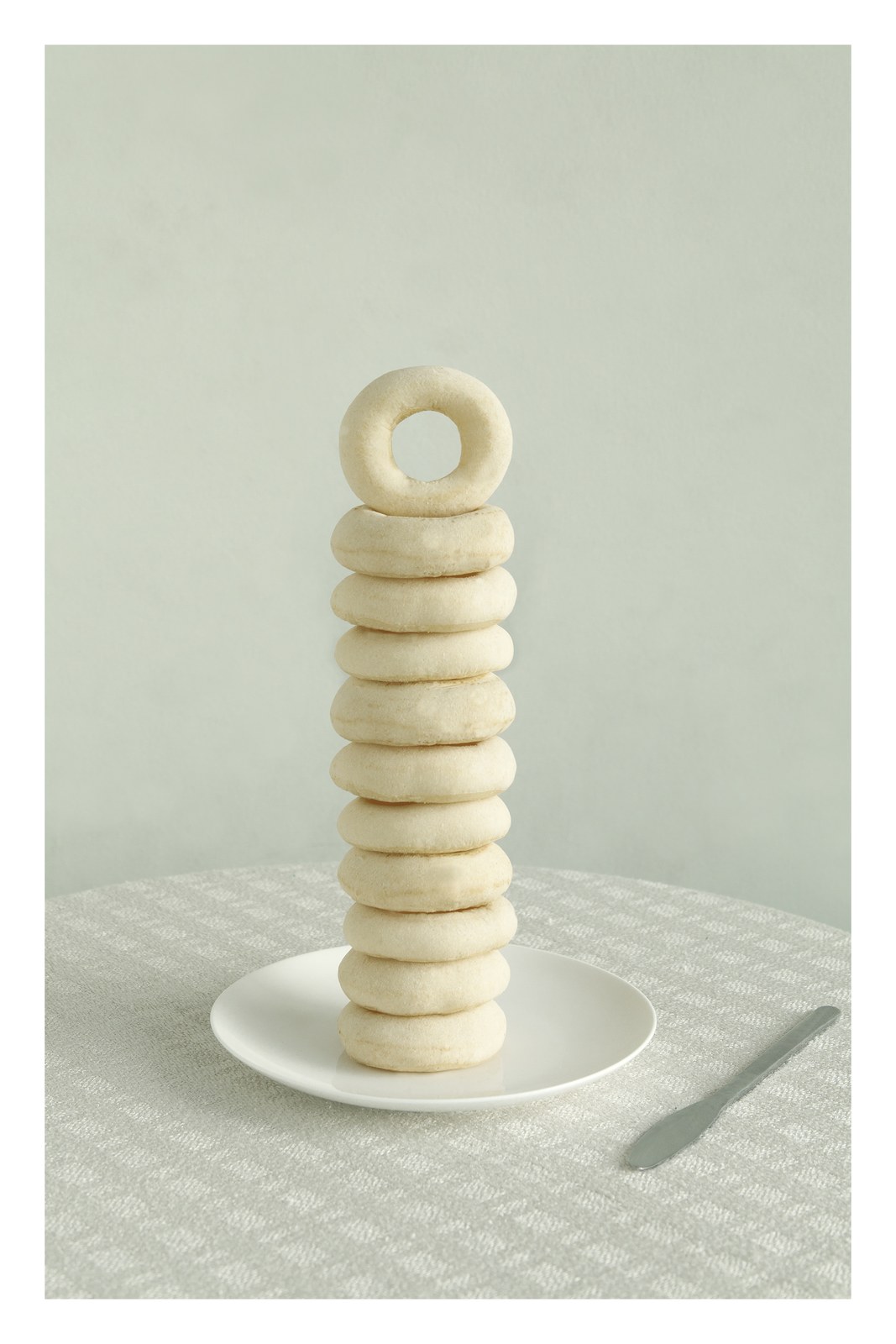
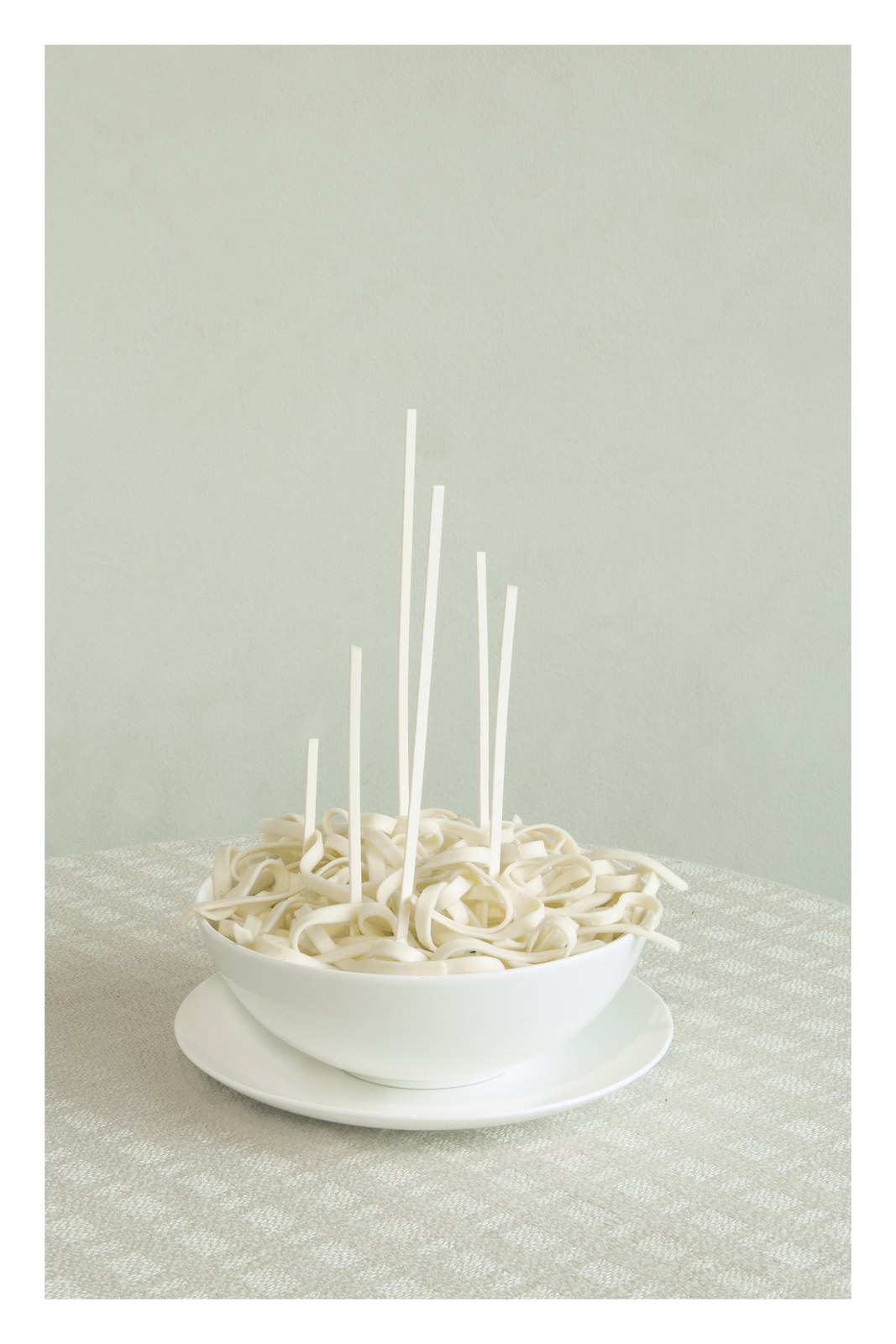
Juego de Mesa
2017
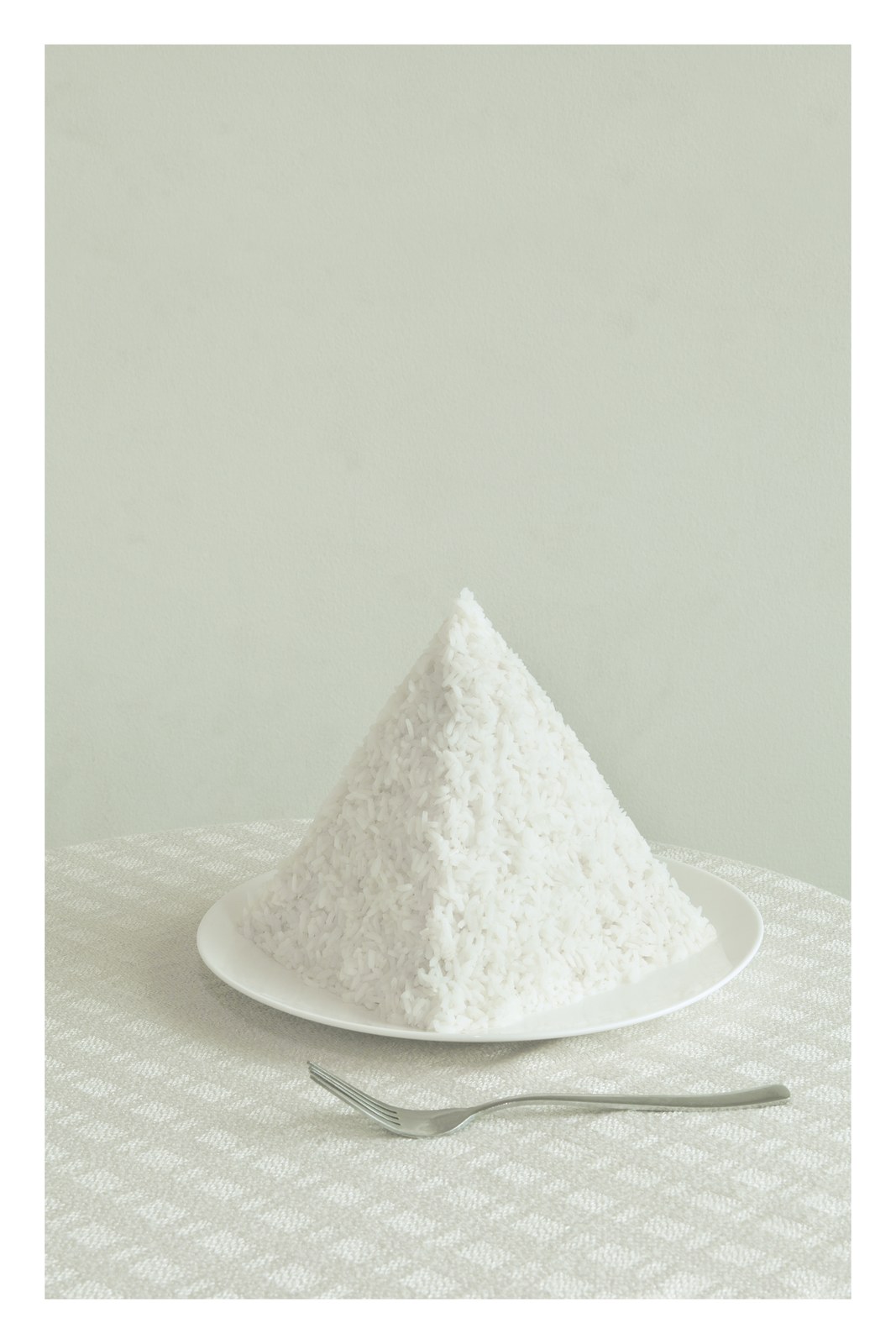
Juego de Mesa
2017
Juego de Mesa
2017
Juego de Mesa
2017
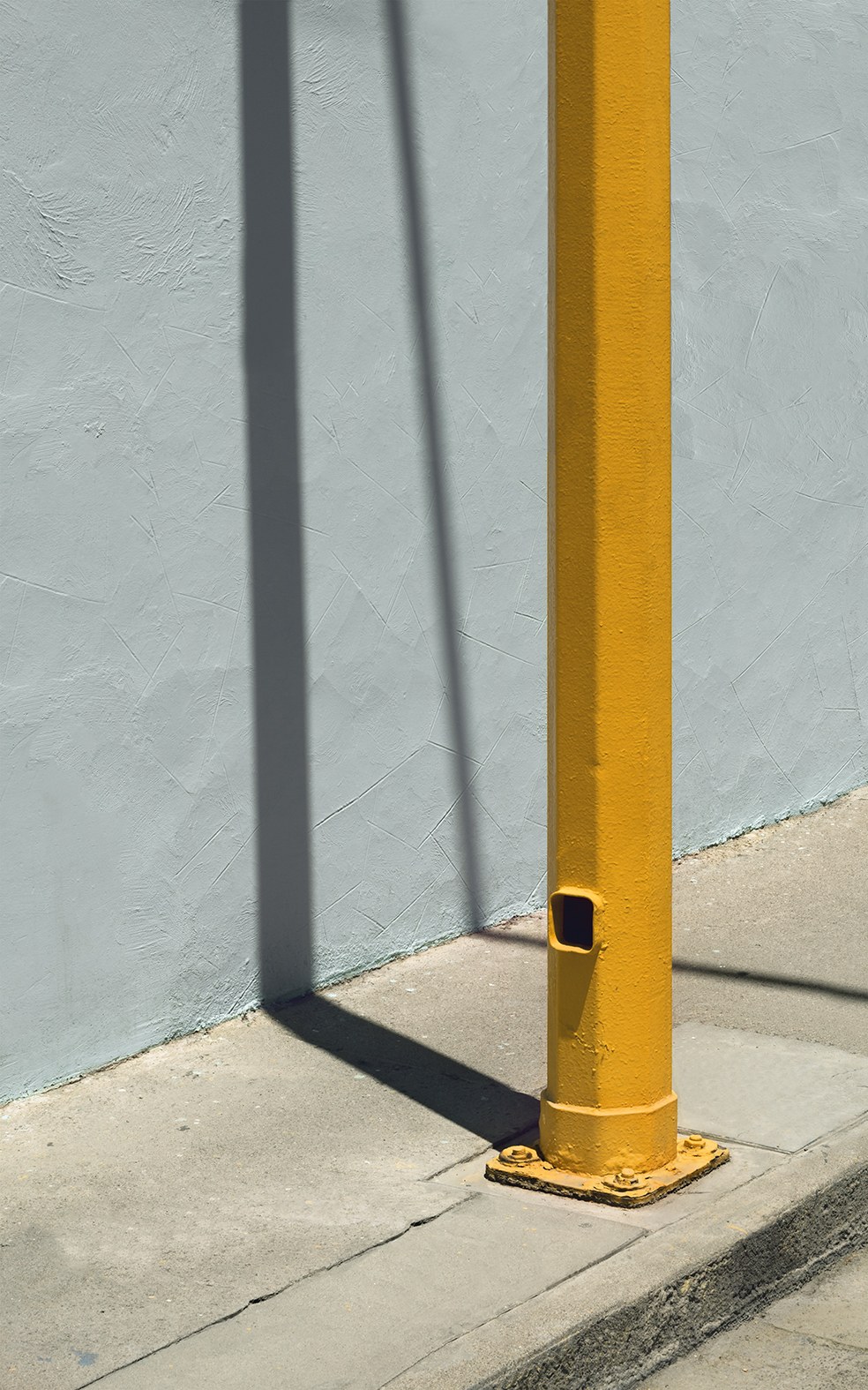
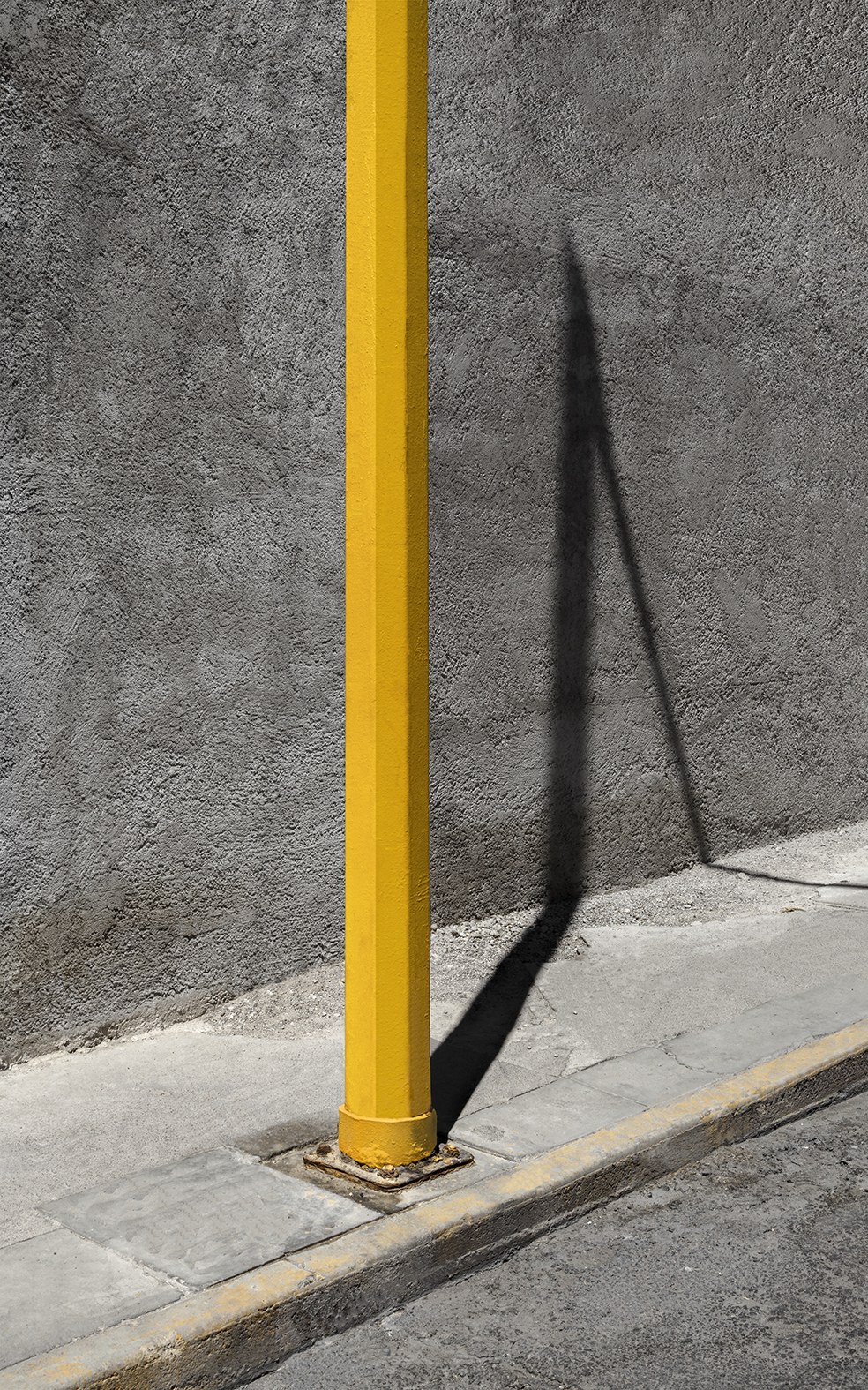
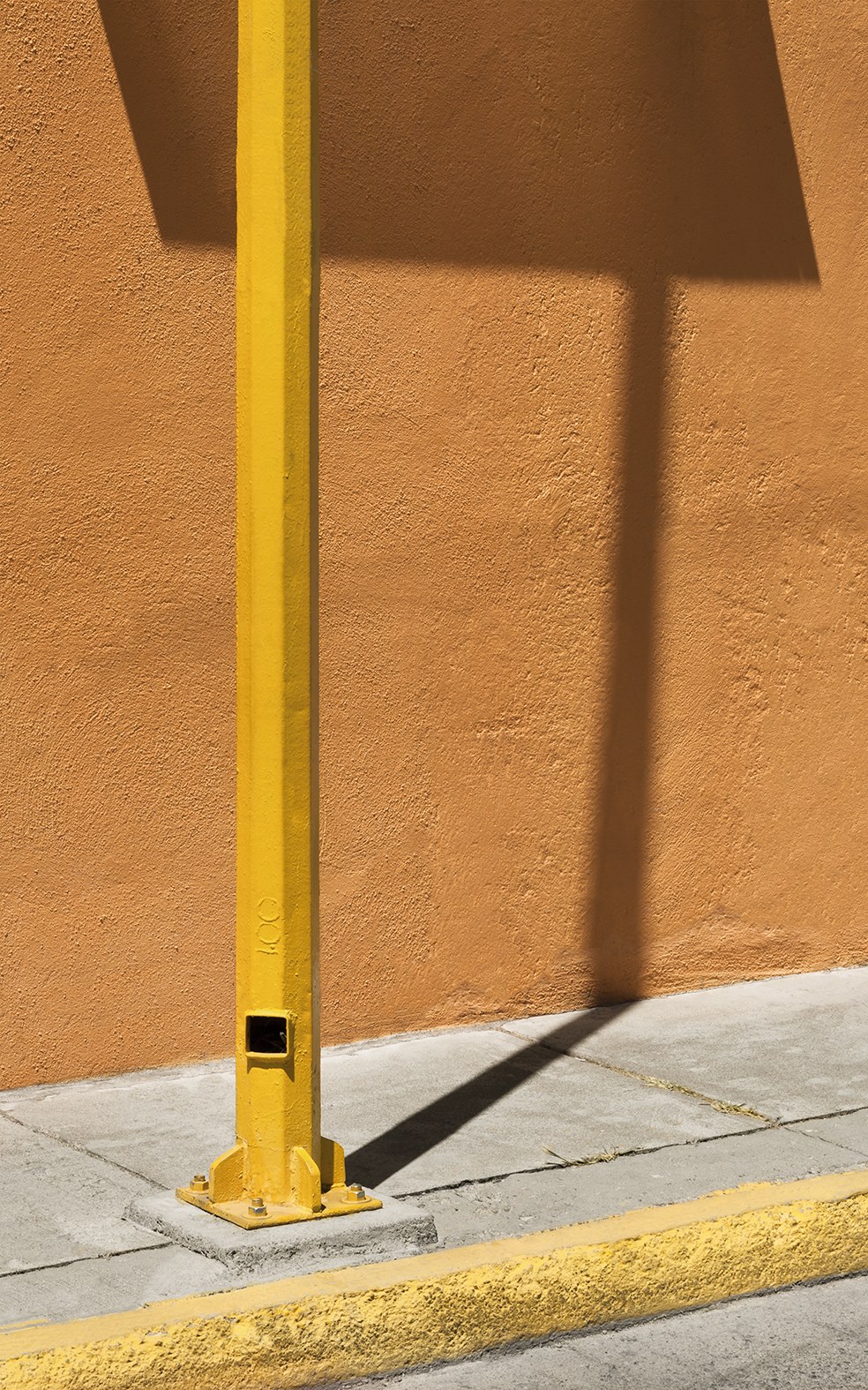
Geometría
Rome, 2019
Geometría
Rome, 2019
Geometría
Rome, 2019
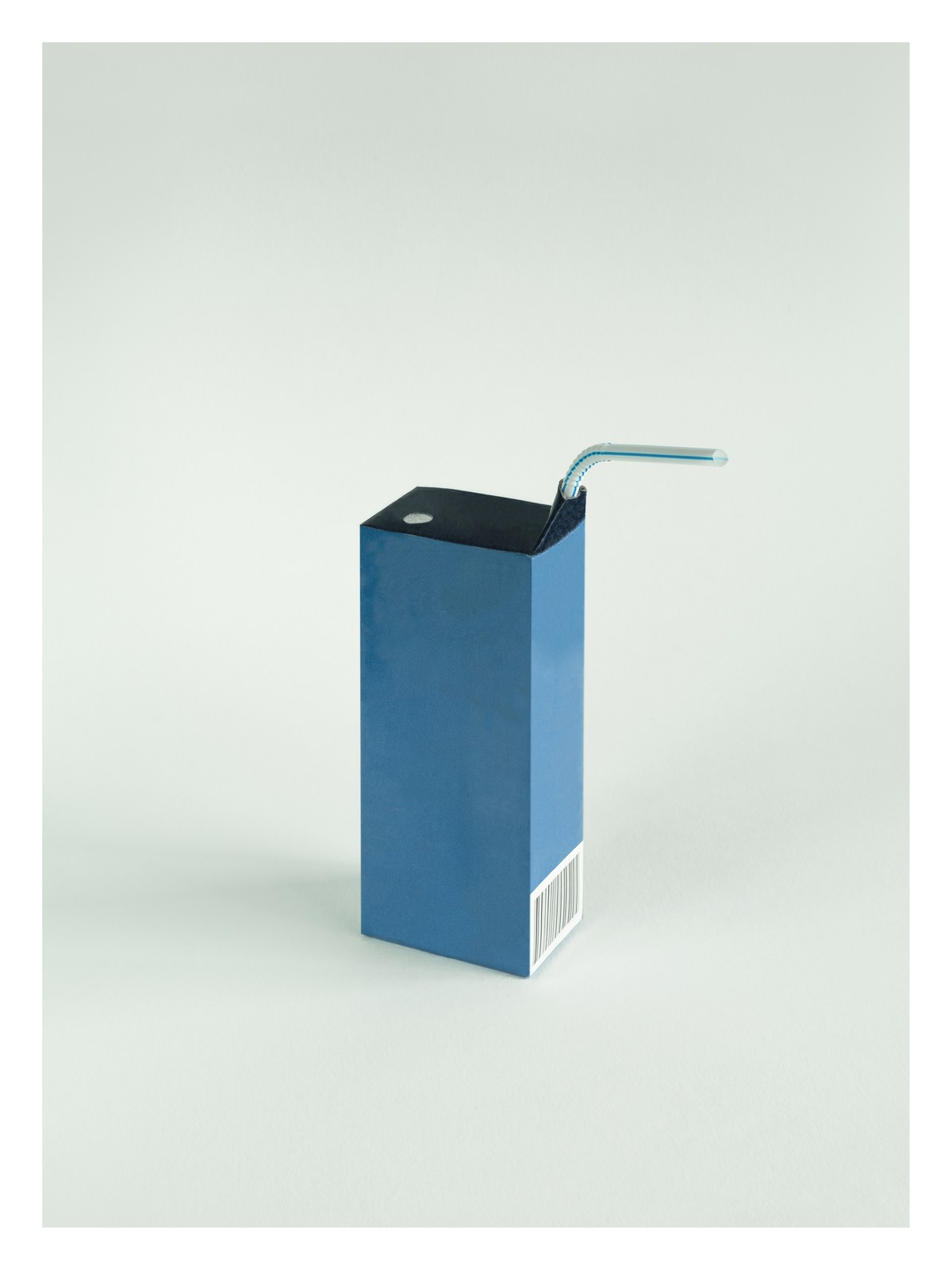
Objeto
2026
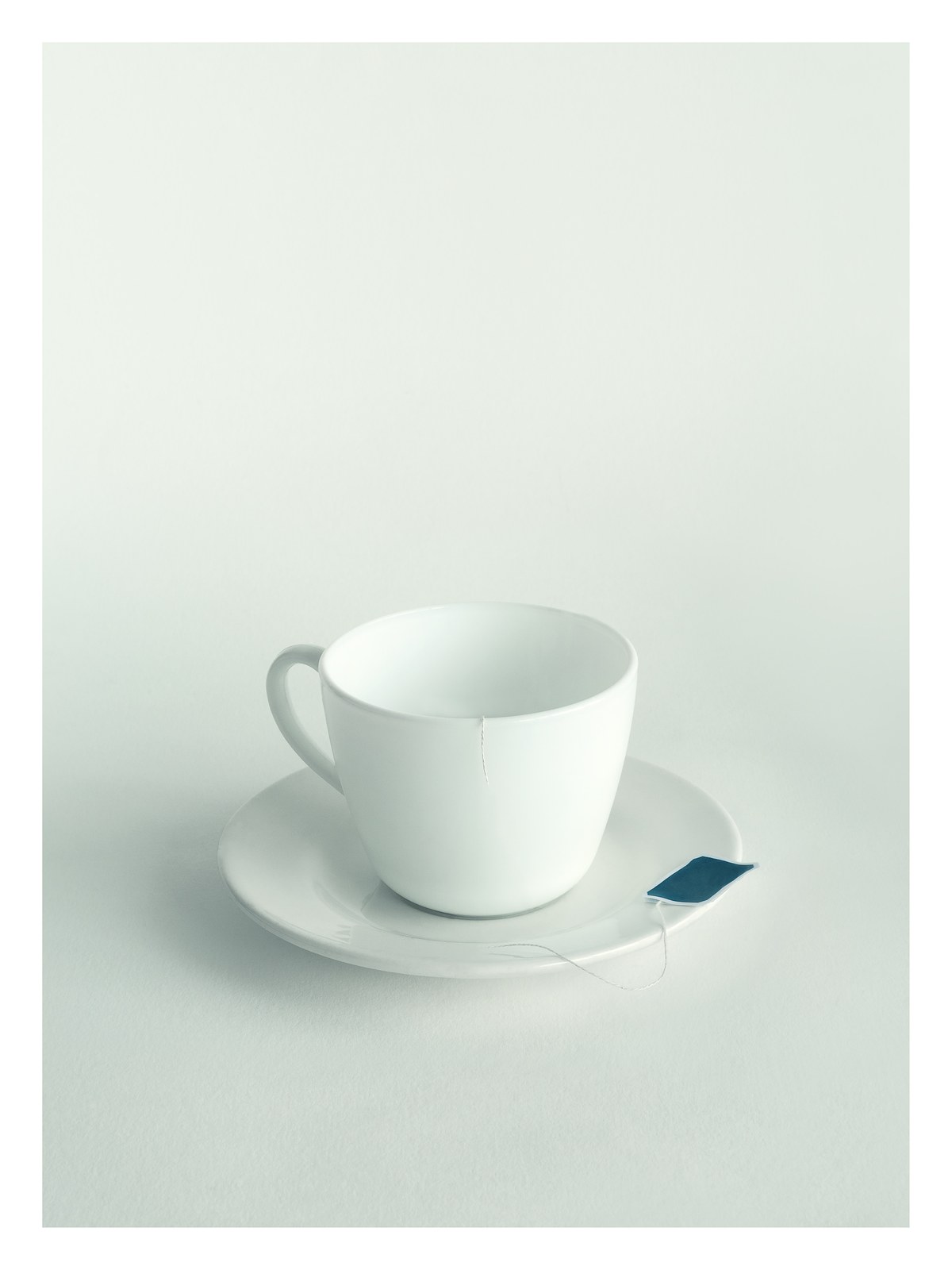
Objeto
2026
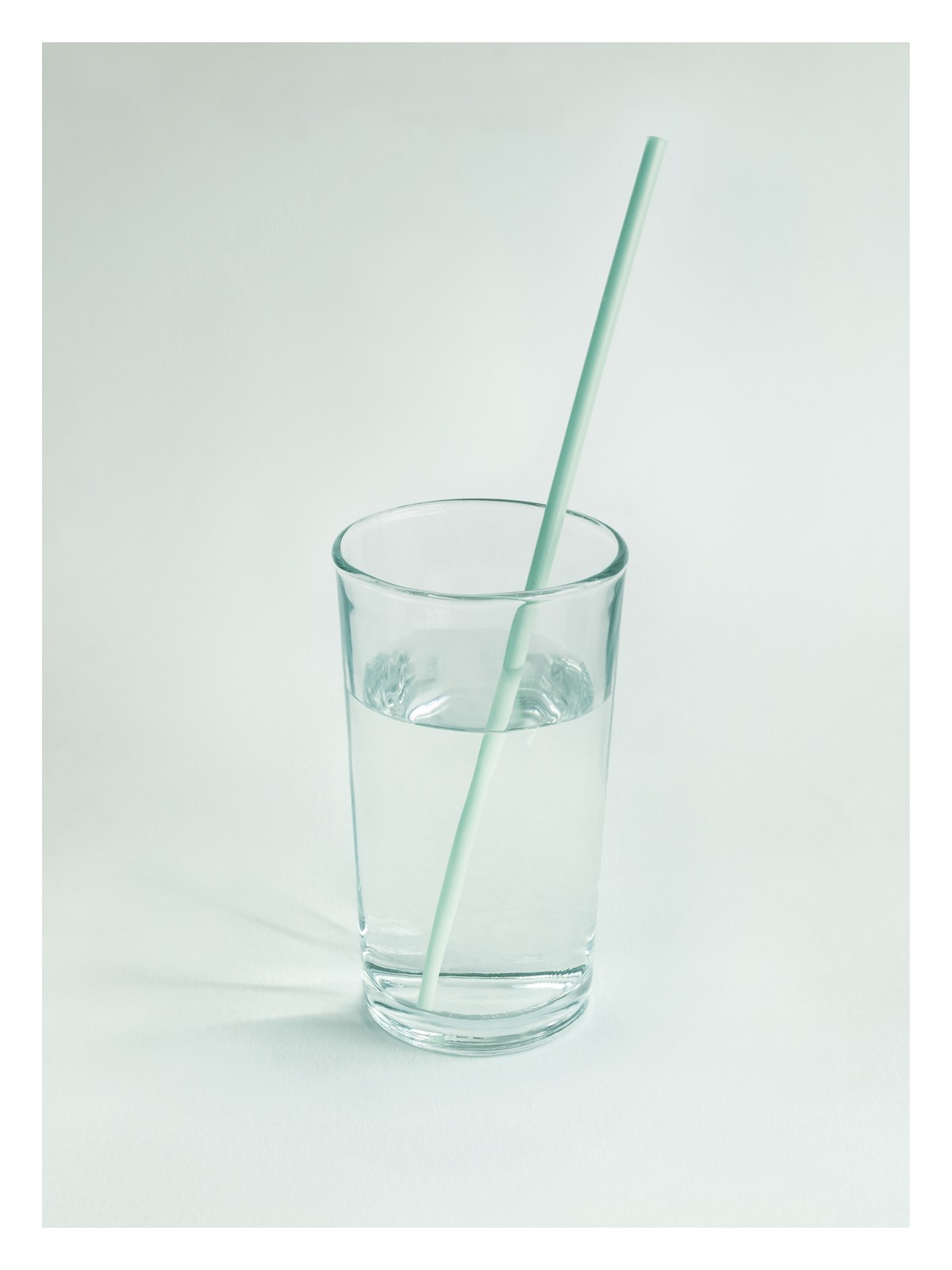
Objeto
2026
Objeto
2026
Objeto
2026
Mercado Informal
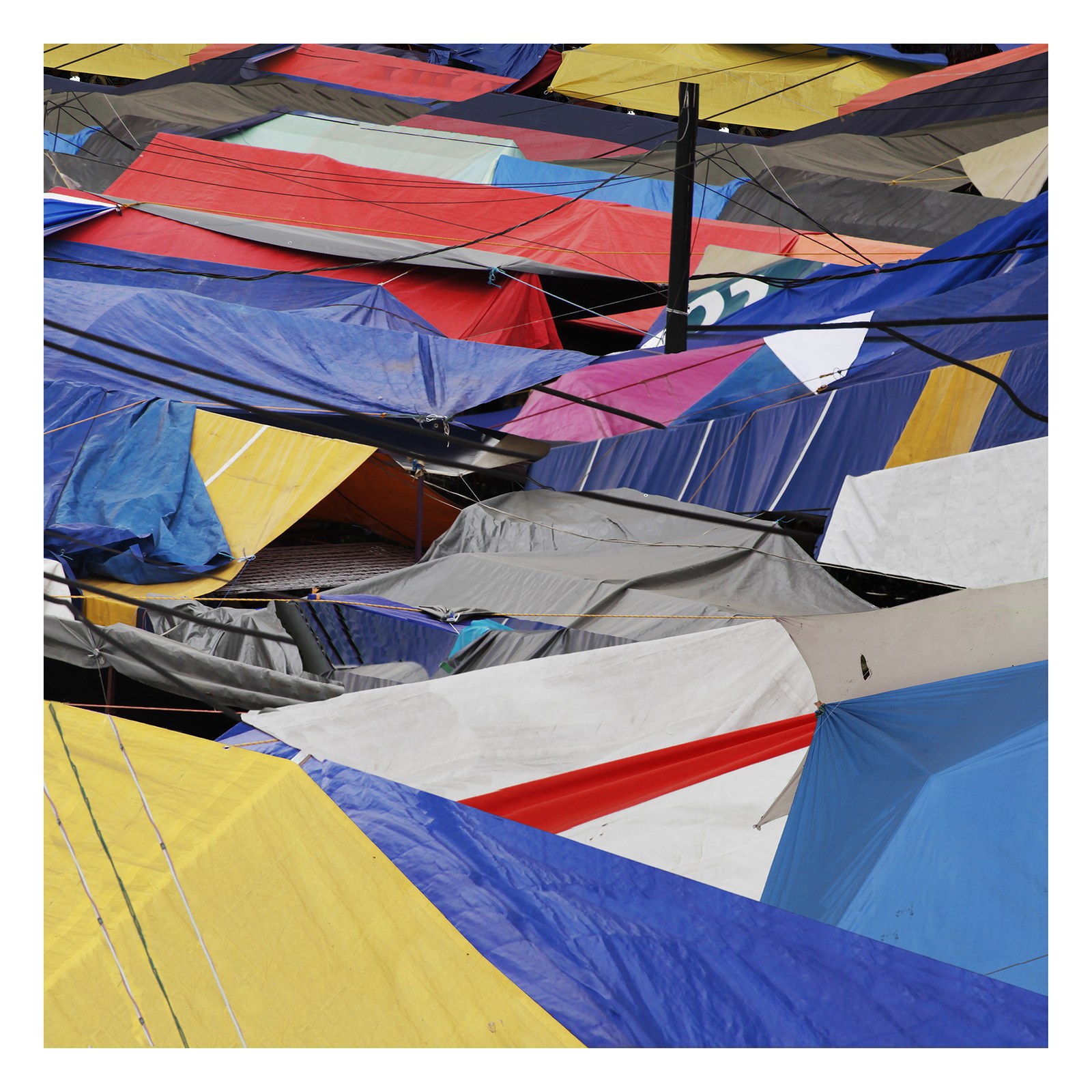
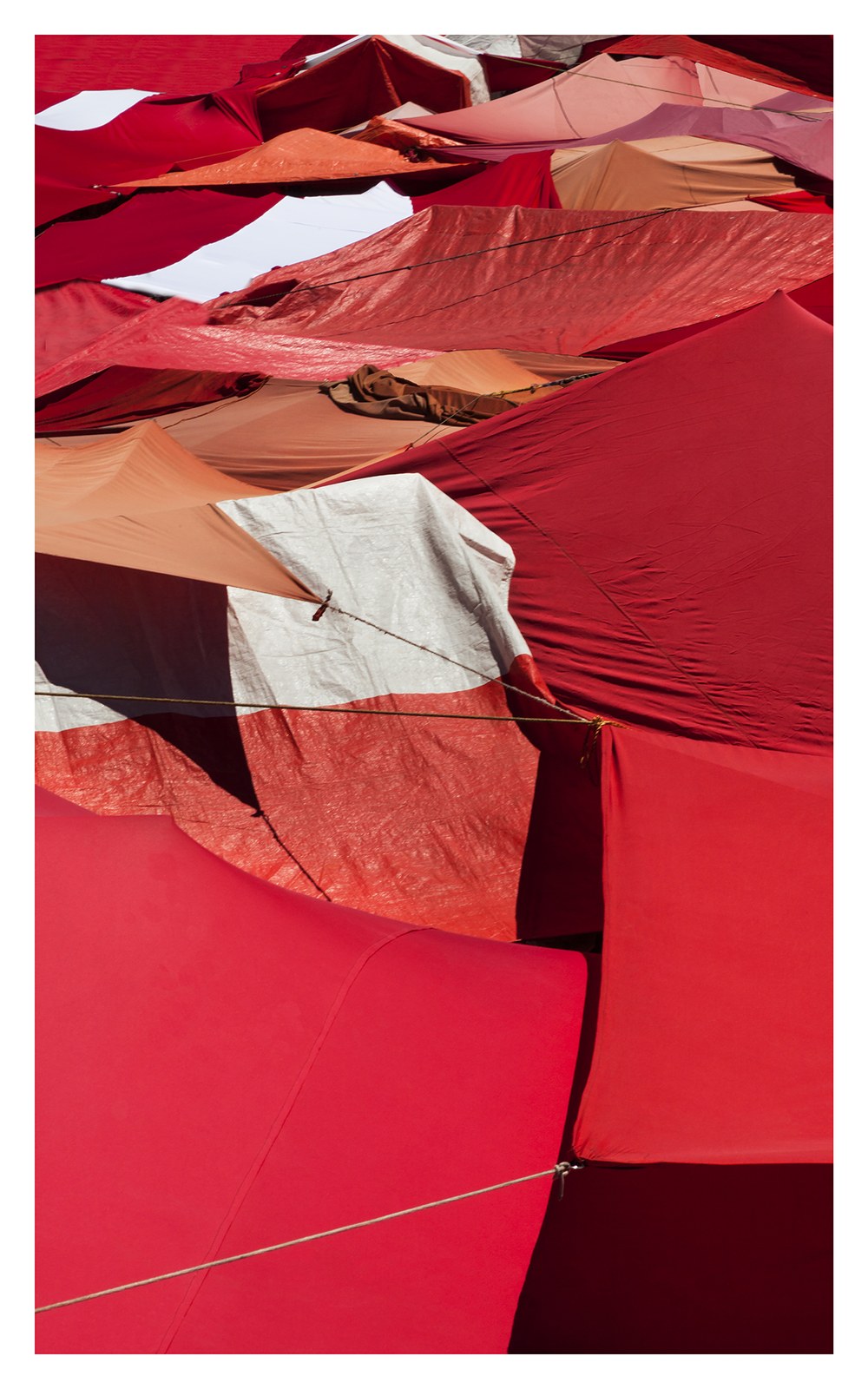
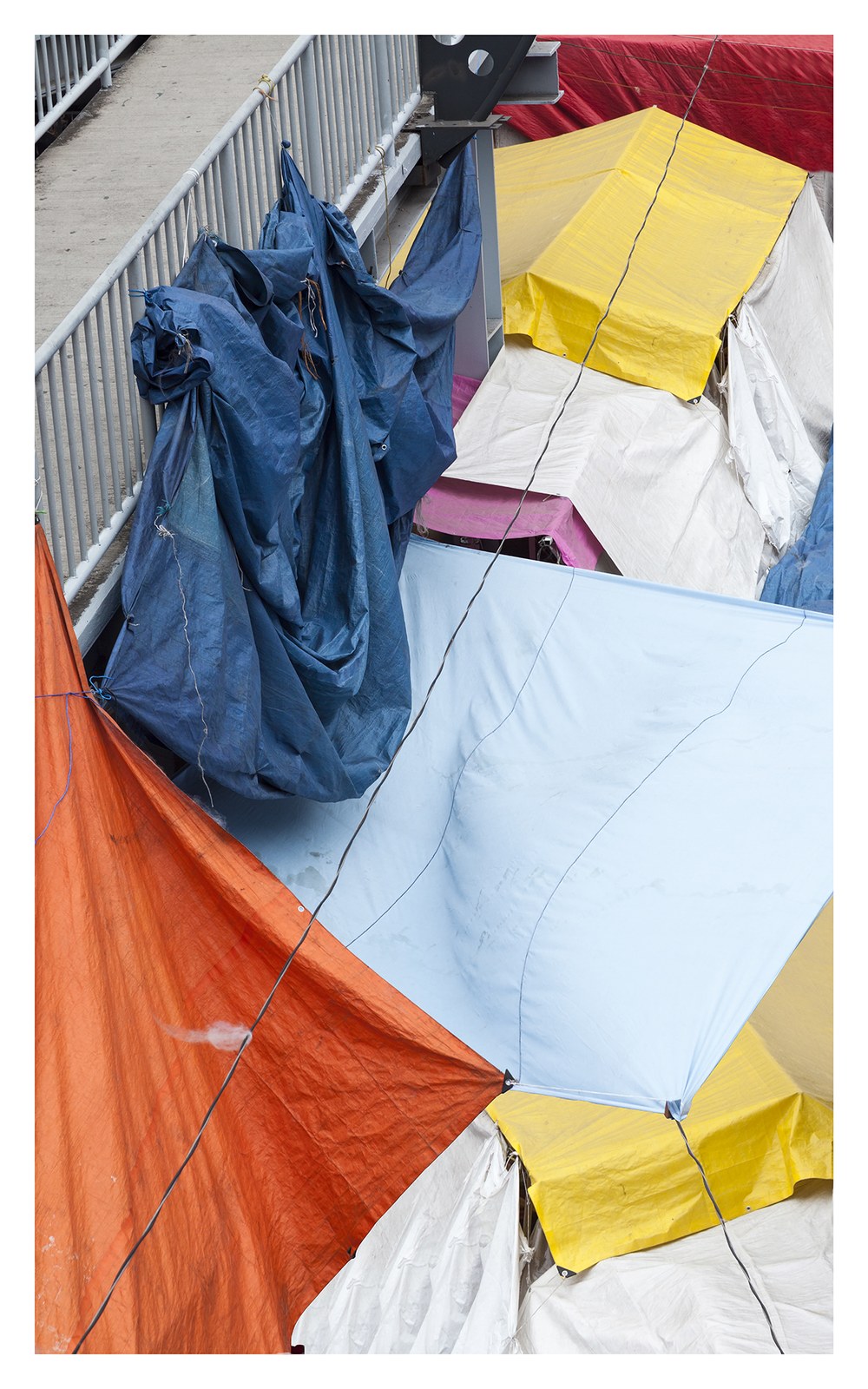
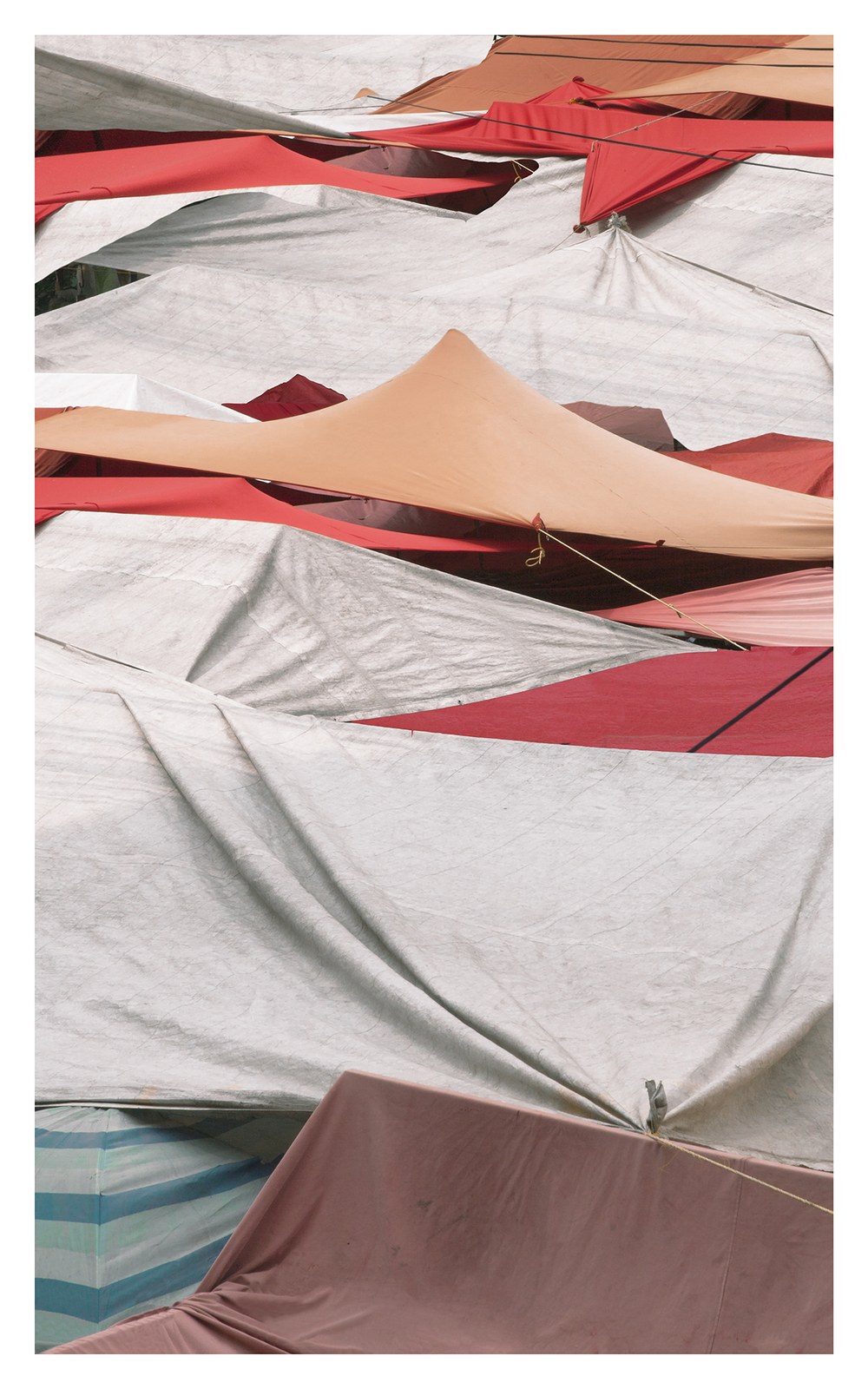
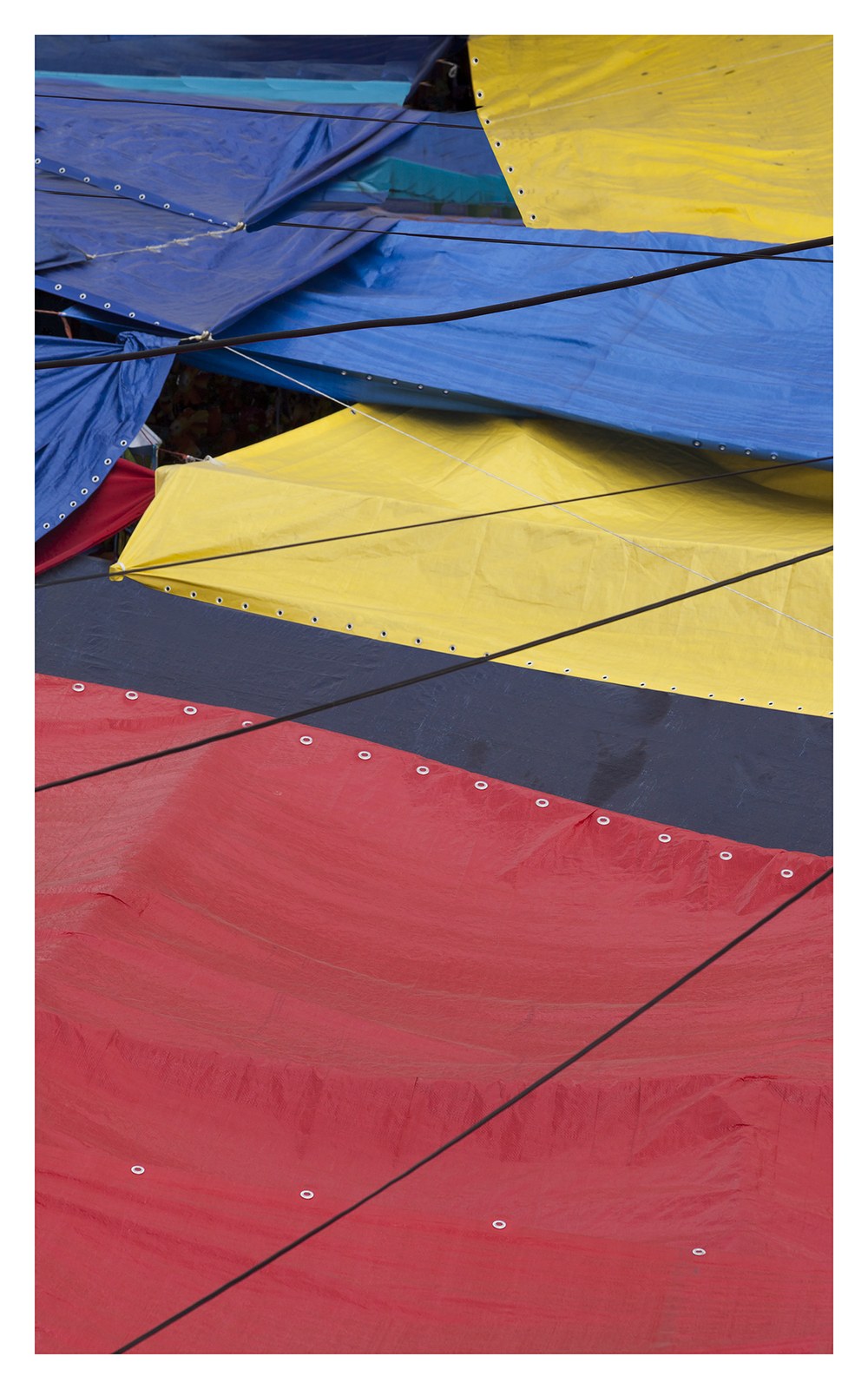
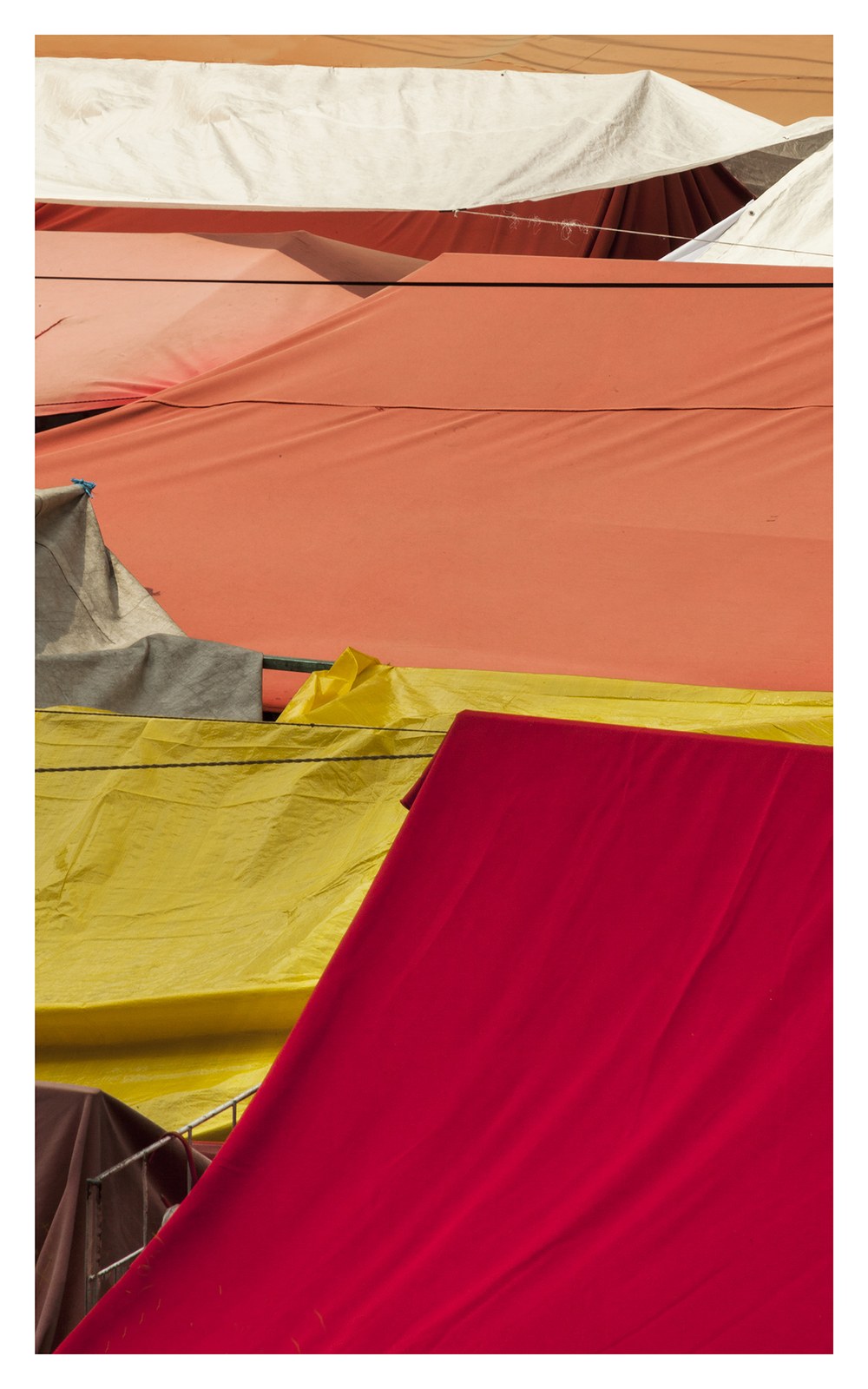
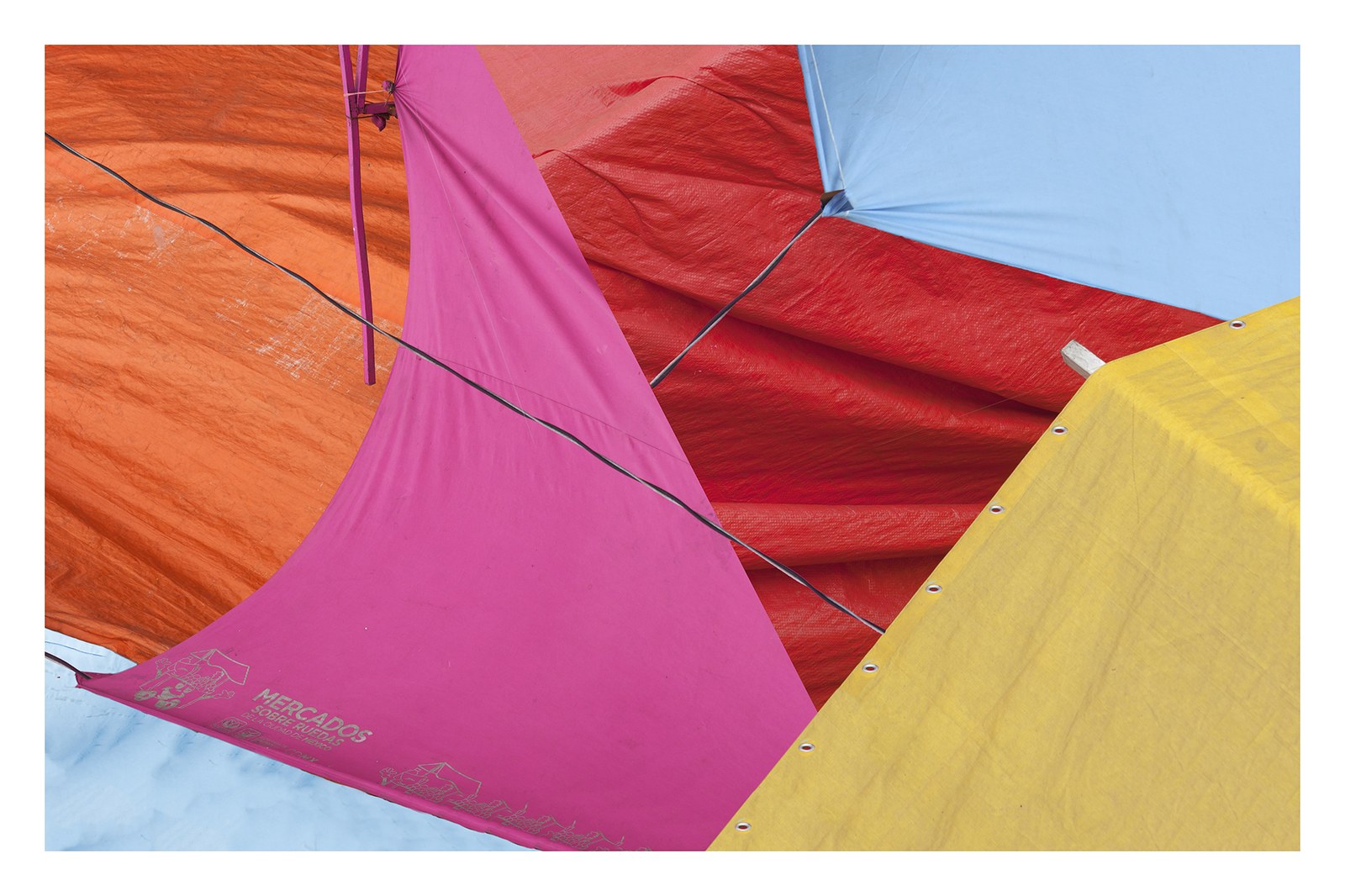
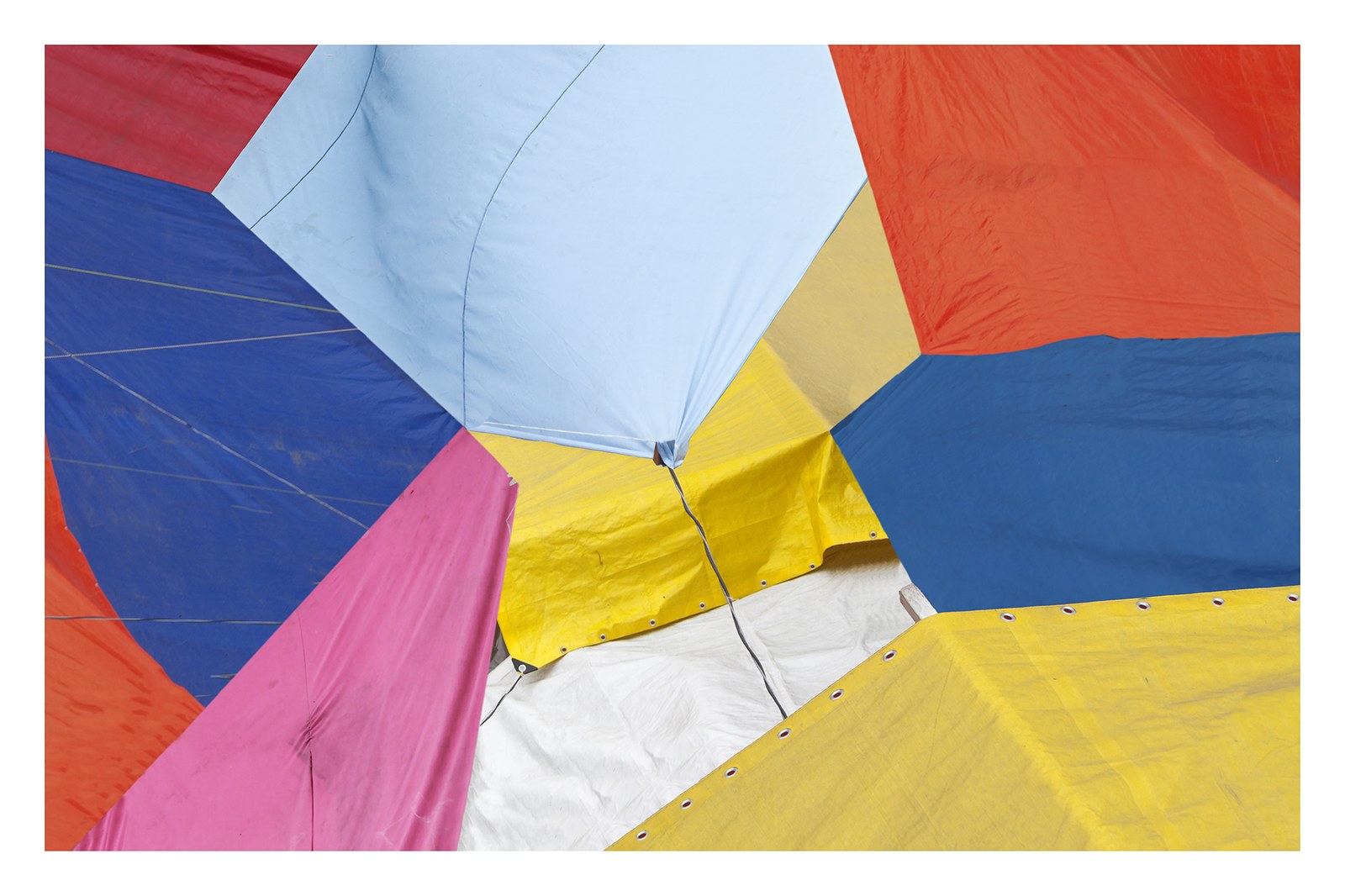
Everyone has a particular way of inhabiting the space around them. In places of commercial exchange, in markets, inhabiting is conditioned by the dynamics of buying and selling, and a natural order (in the middle of chaos) emerges for arranging objects. The occupation of space serves the need to exchange products. I love walking through markets: they are stages full of visual and auditory sensations. Some markets are itinerant, appearing and disappearing within a day and transforming the urban landscape. These ephemeral spaces must rely on simple, practical resources to occupy a street, and I am drawn to the structures of tarps and cloth that roof the vendors, which have a great plastic richness. The photographs are an abstraction of the market seen from above, from outside the tents. The sound represents what cannot be seen, what is happening on the other side; it complements the image and tells a story, while the photograph becomes a veil that does not let us see what goes on inside.
Mercado Informal
2018
Mercado Informal
2018
Mercado Informal
2018
Mercado Informal
2018
Mercado Informal
2018
Mercado Informal
2018
Mercado Informal
2018
Mercado Informal
2018
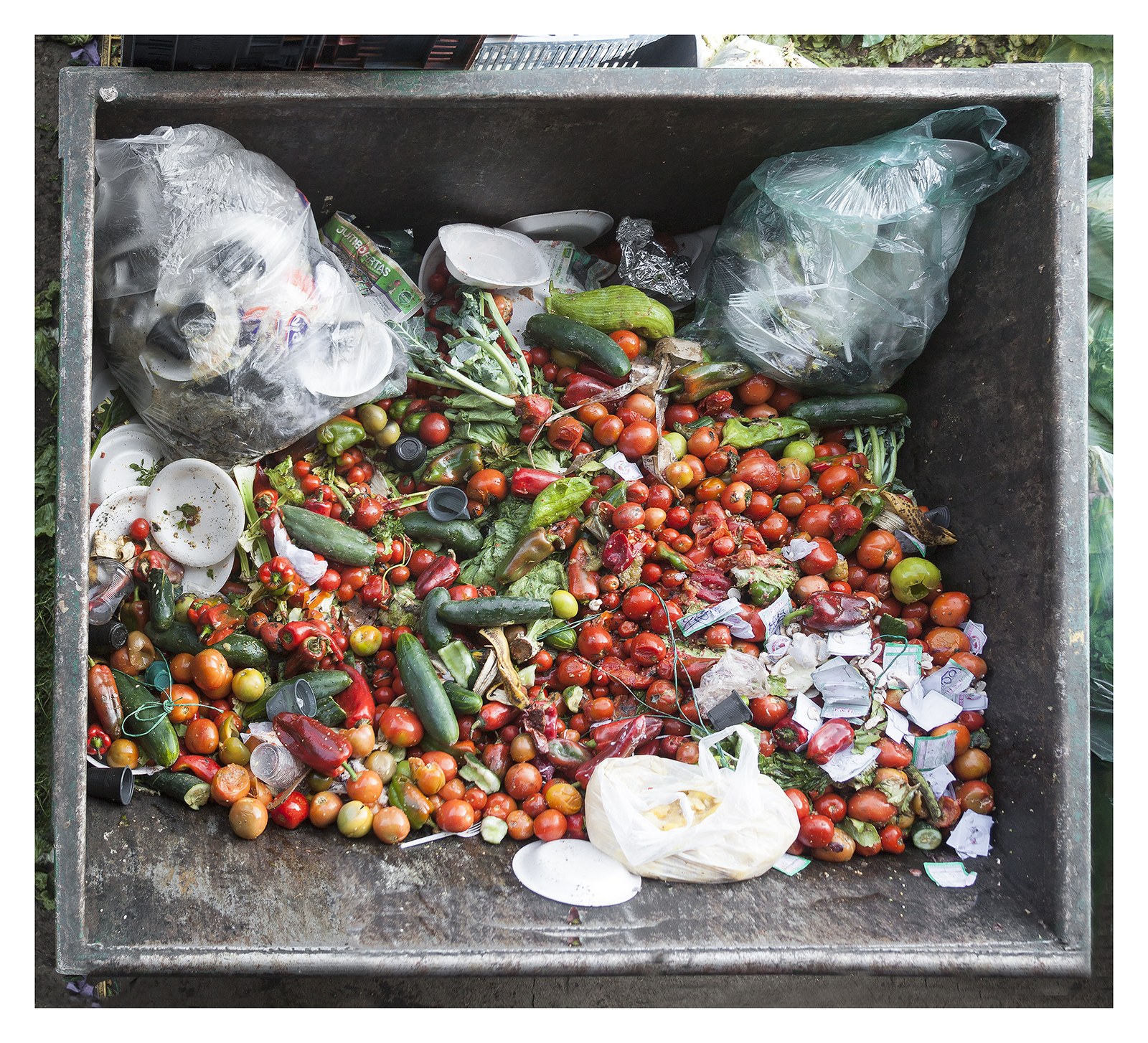
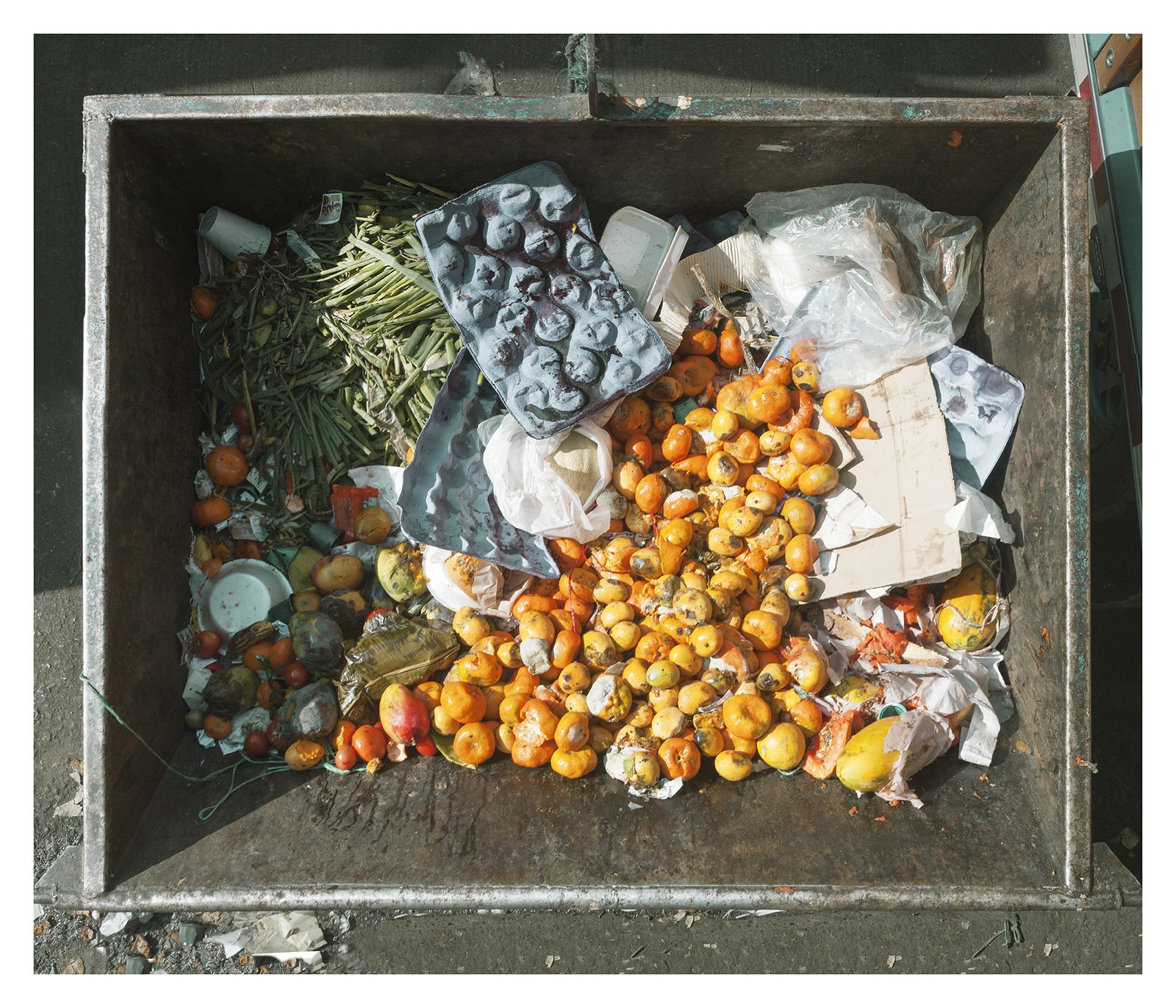
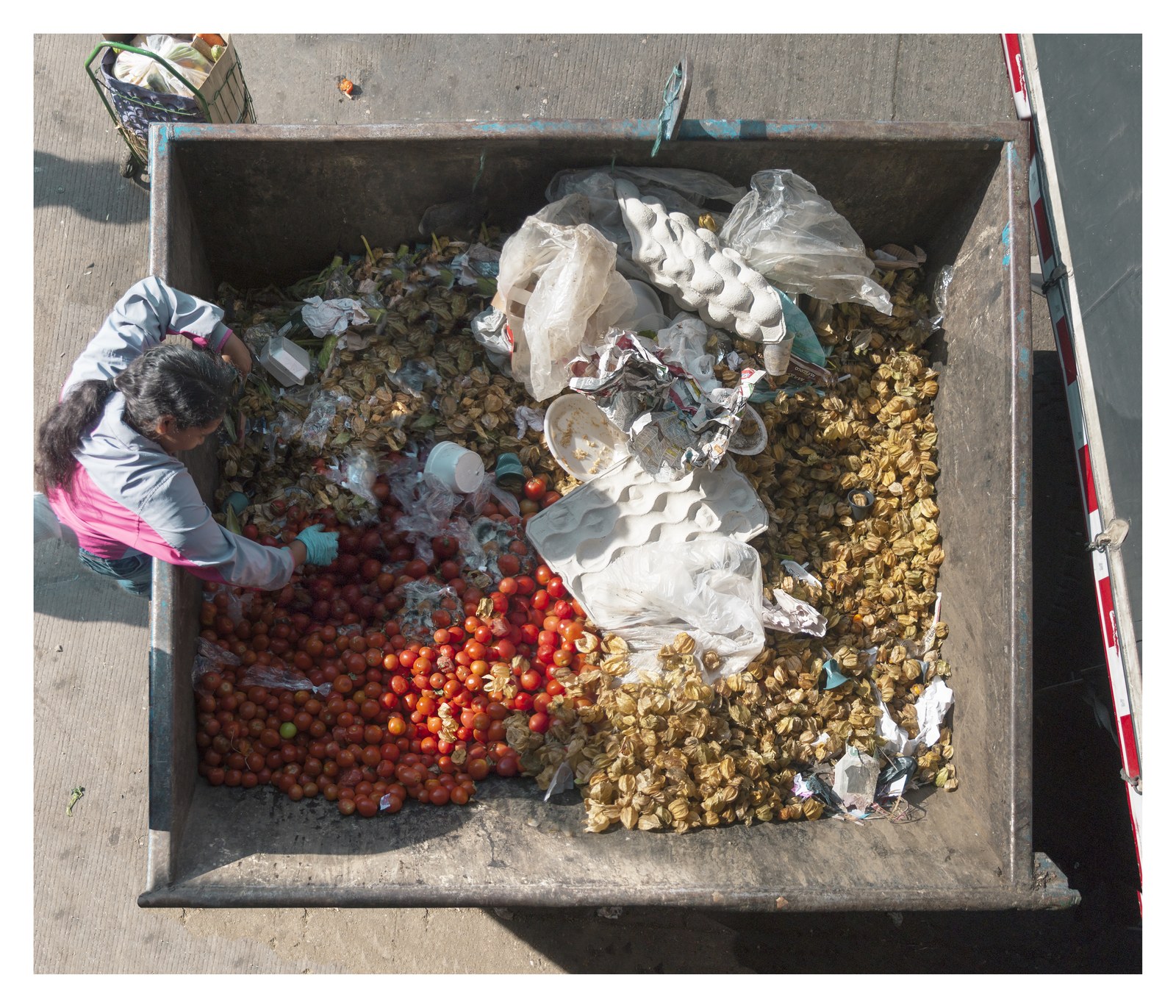
Food and the act of eating play a vital role in human development, not only as nourishment but as a matter of economic, social, political and cultural exchange. Our eating practices define our daily life and bind us as a community. In this project I address two contrasting aspects of the sale of food in Latin American markets. First, I show the richness and variety of what is grown in Latin America. Second, because of market dynamics and the mismanagement of resources, much of what goes unsold ends up in the trash while still in good condition. It is ironic that in countries so abundant (the photographs were taken in Bolivia and Colombia) resources are so poorly managed and hunger reaches such high levels. Exceso de abundancia calls for responsible, conscious practices in the sale and consumption of food, aimed at real food sovereignty. The amount of food wasted each year could go a long way toward ending hunger. Access to quality food is a fundamental human right.
Recognition: Winner, XII Photo-IILA Prize, Istituto Italo-Latinoamericano, Rome (2020), theme Siamo ciò che mangiamo²; exhibited at Museo di Roma in Trastevere, Rome (2021).
Press: "El ganador de PHOTO-IILA, Santiago Carmona, comienza su Residencia artística en Roma," IILA, Rome, 2021.
² Italian: "We are what we eat." The prize theme, tied to UN 2030 Agenda Sustainable Development Goal 2 (zero hunger).
Exceso de Abundancia
Bolivia / Colombia, 2018–2020
Exceso de Abundancia
Bolivia / Colombia, 2018–2020
Exceso de Abundancia
Bolivia / Colombia, 2018–2020
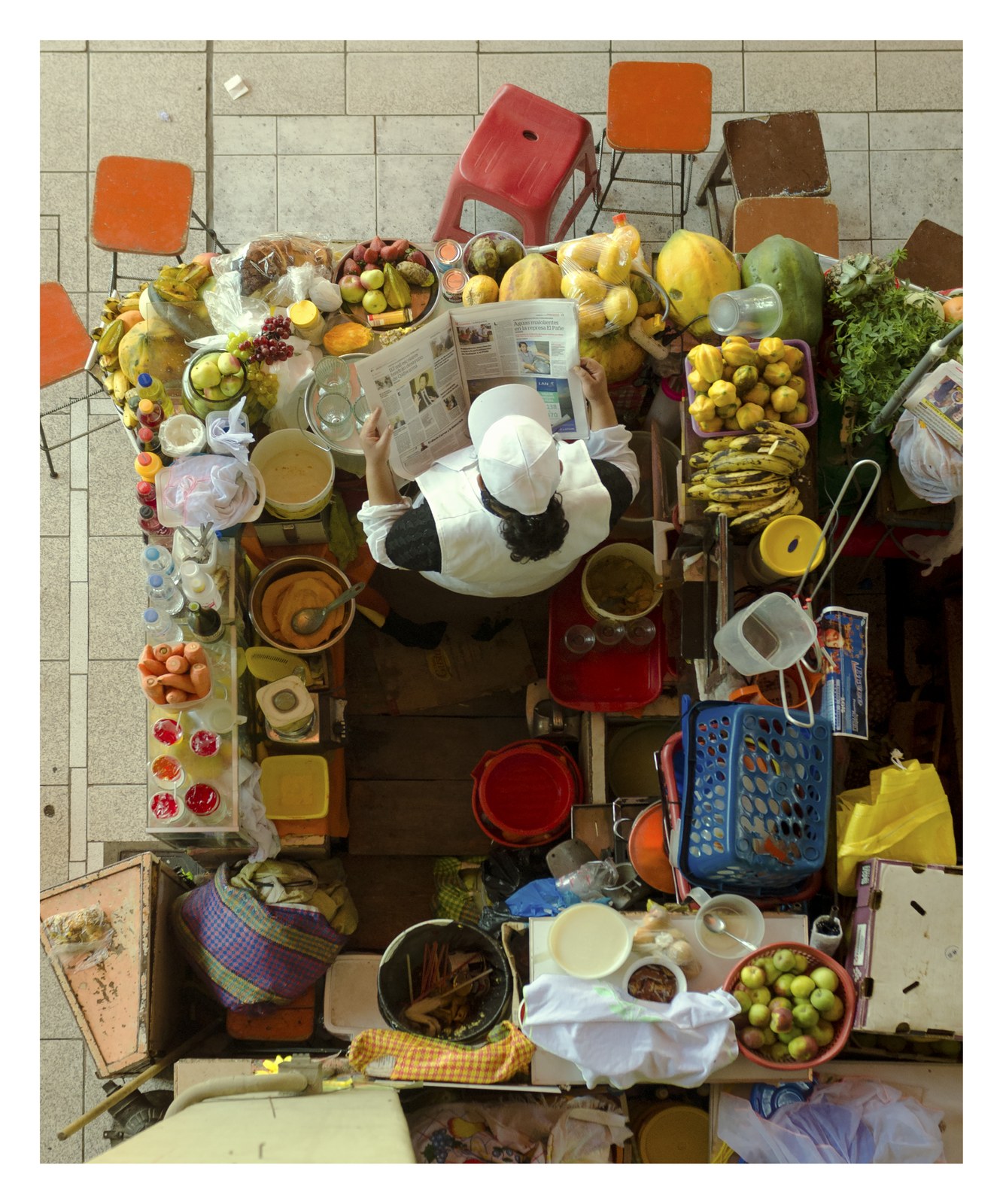
Exceso de Abundancia
Bolivia / Colombia, 2018–2020
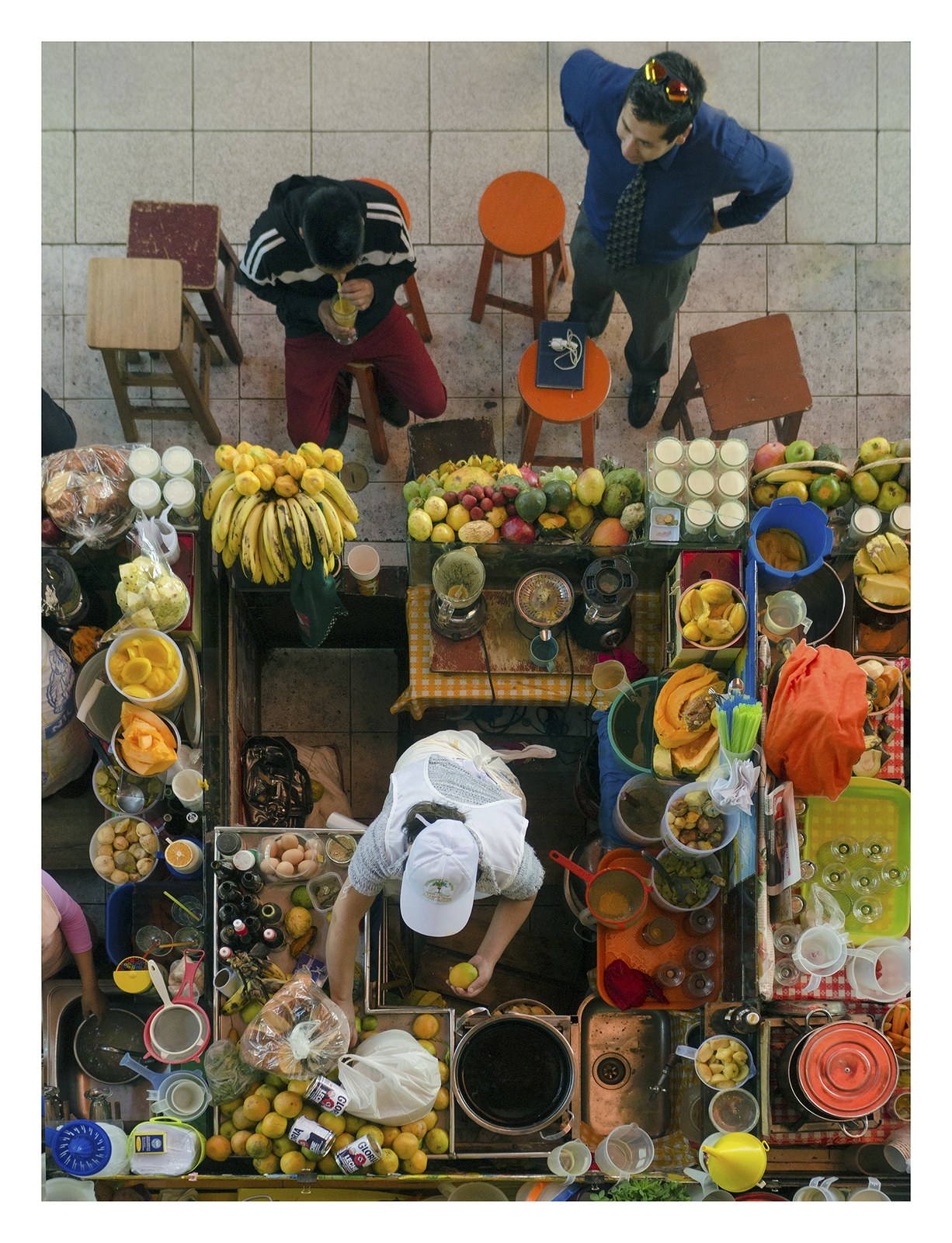
Exceso de Abundancia
Bolivia / Colombia, 2018–2020
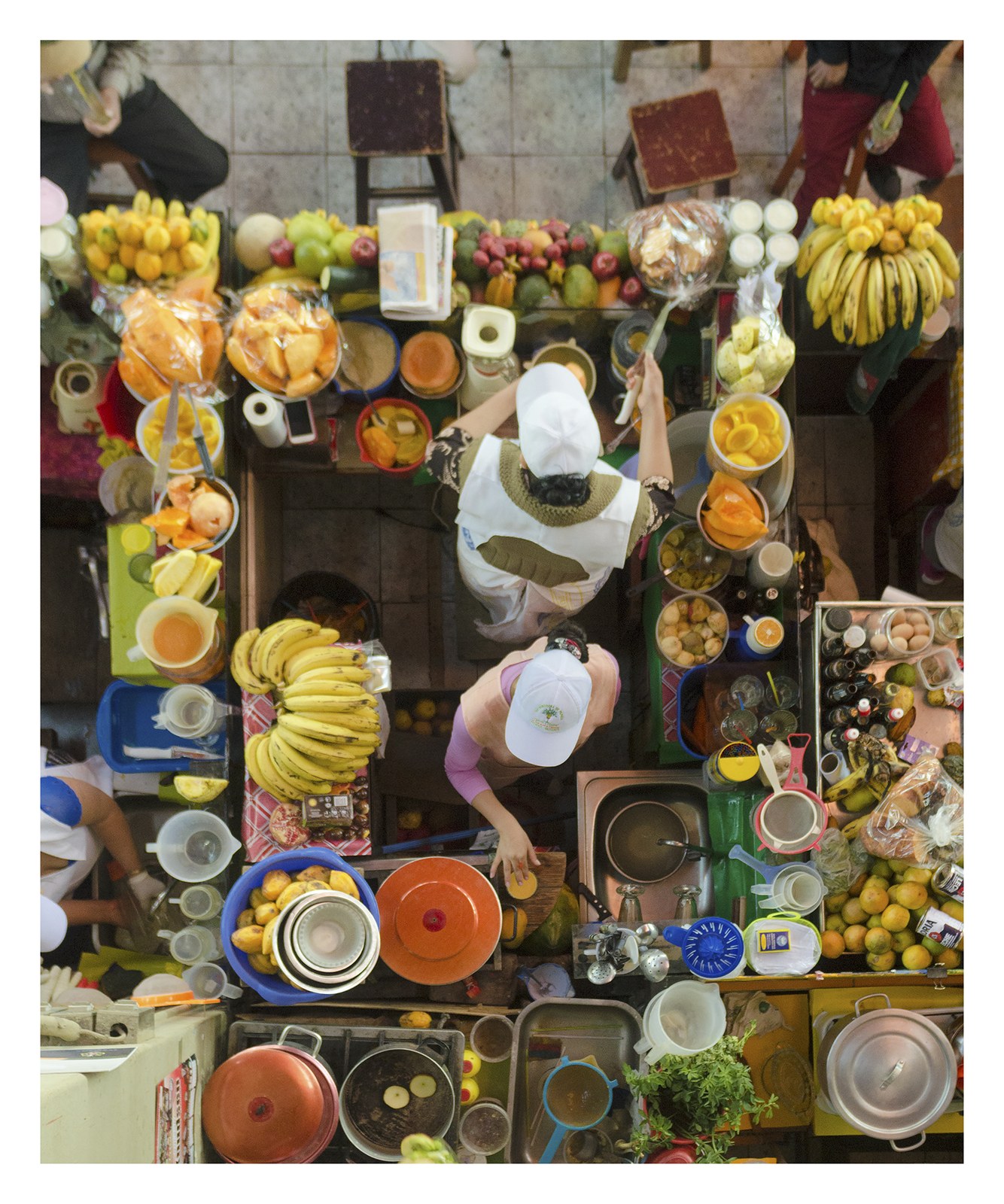
Exceso de Abundancia
Bolivia / Colombia, 2018–2020
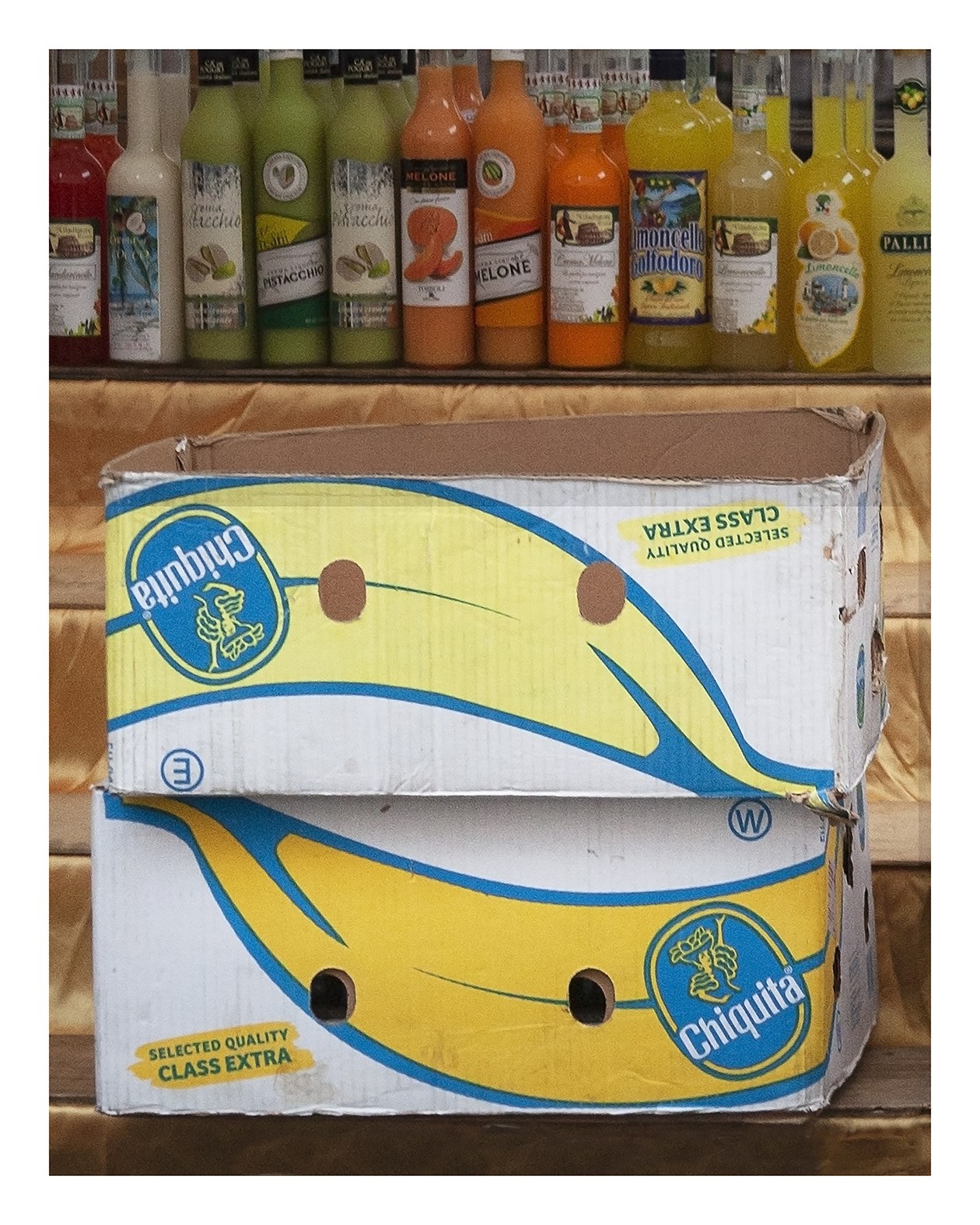
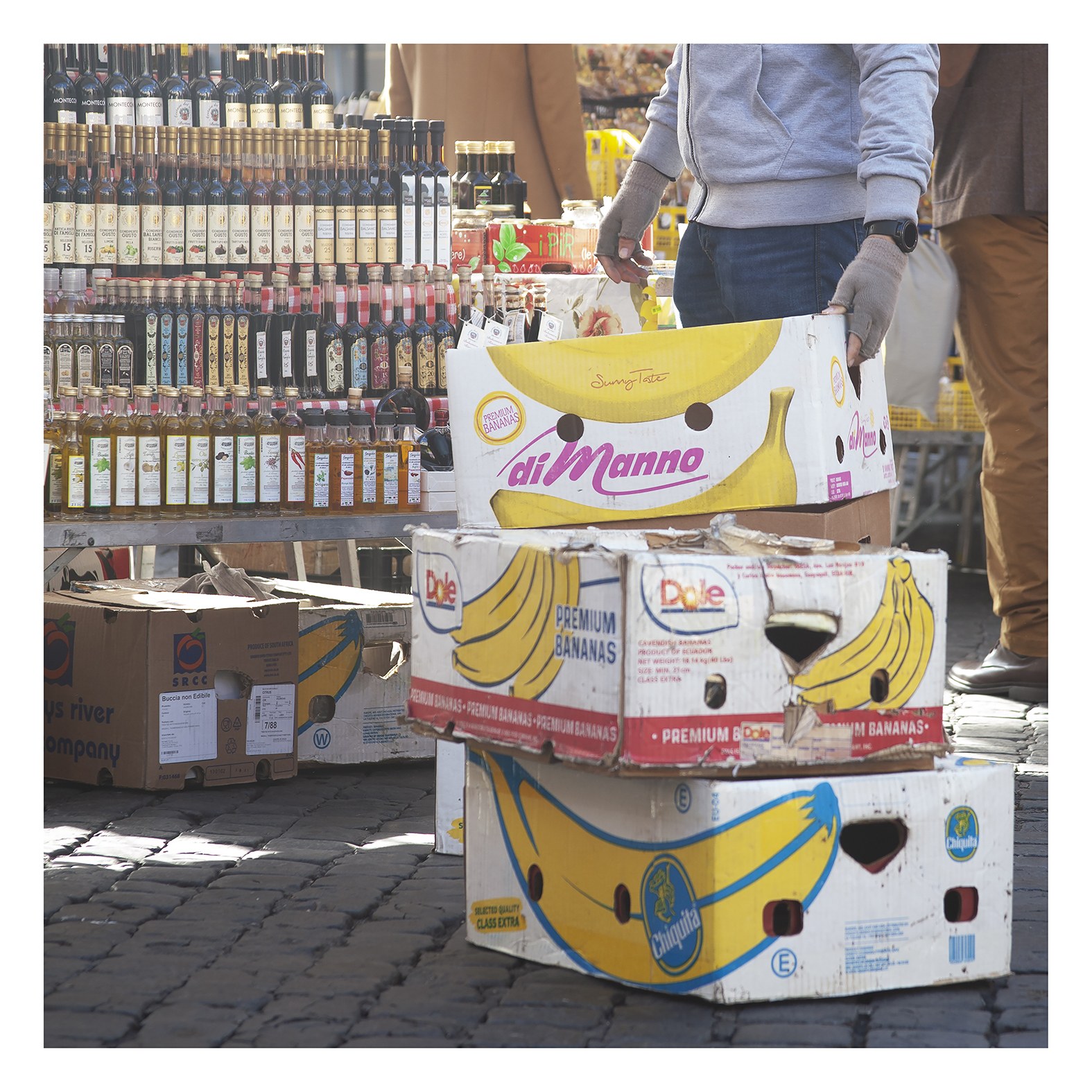
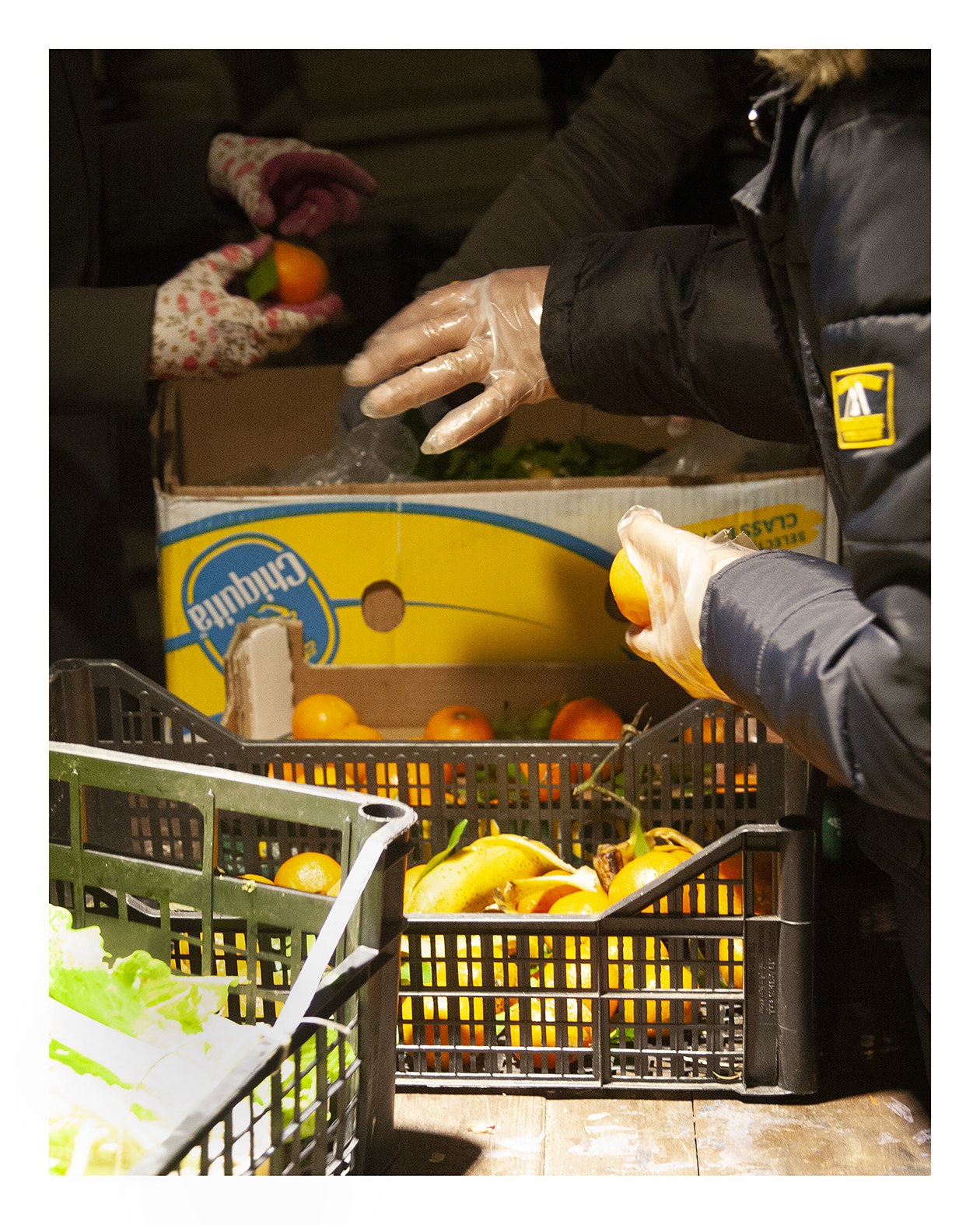
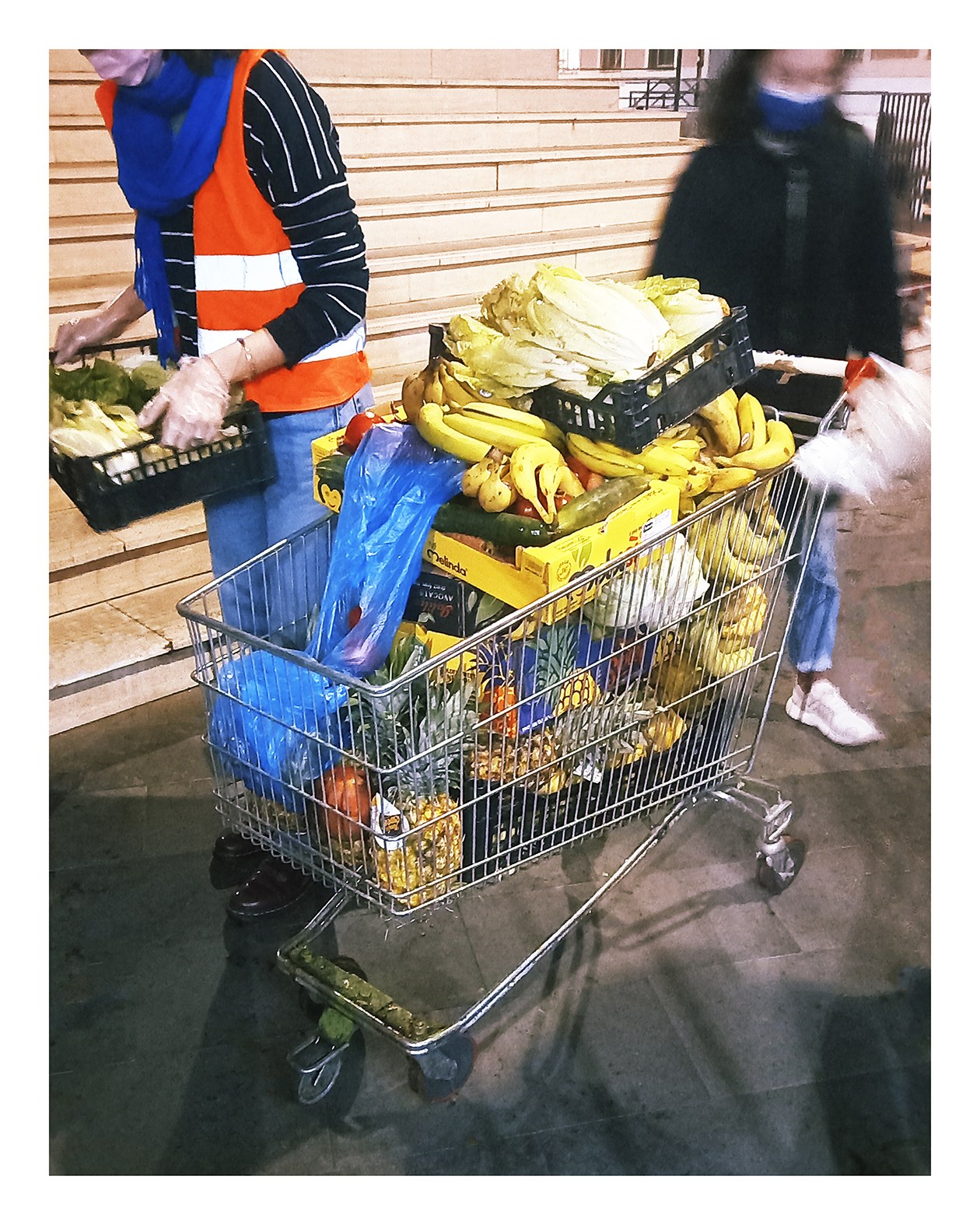
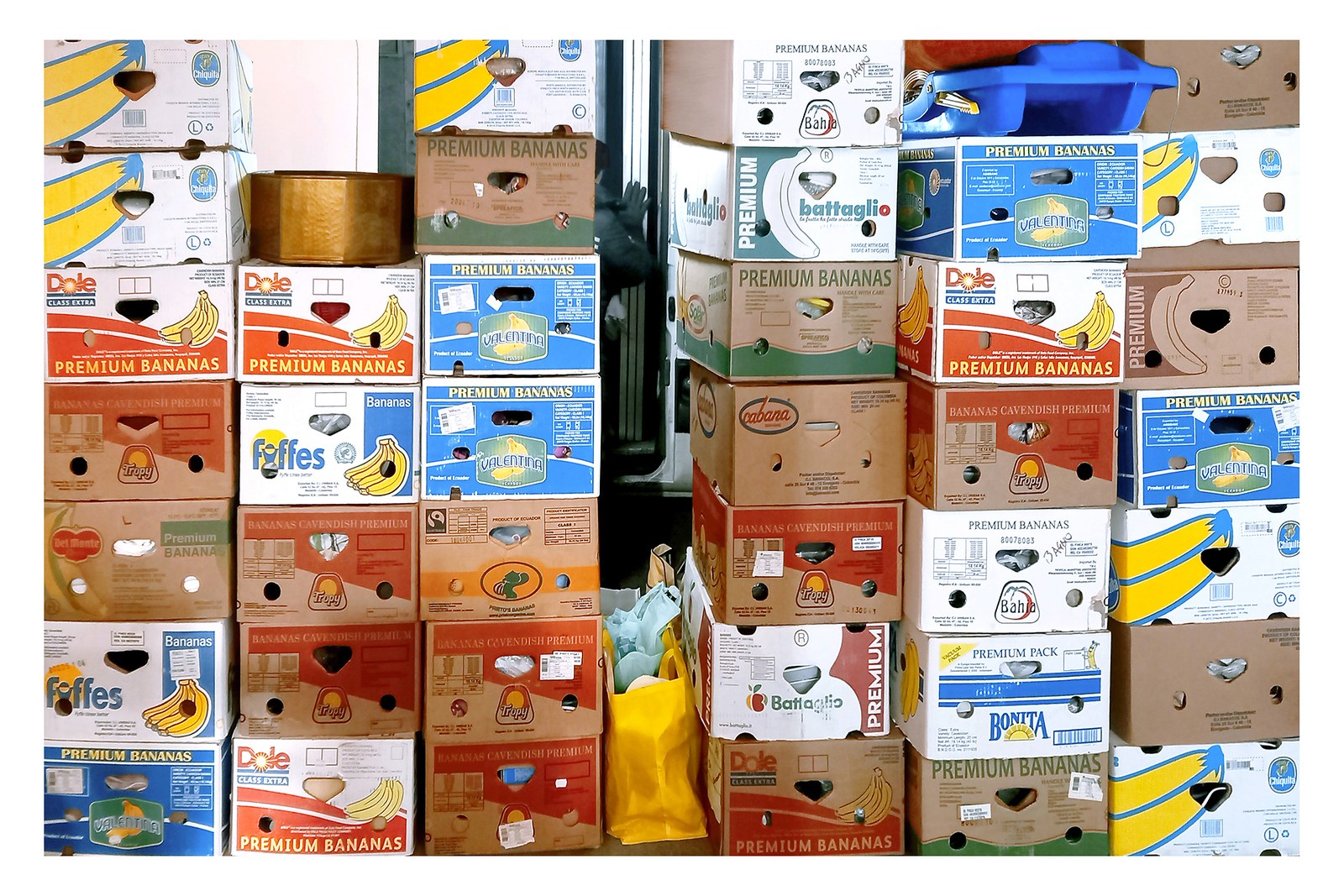
My residence in Rome, after winning the XII Premio IILA Photo, was a few streets from Campo dei Fiori, one of the city's most popular and visited markets, where you find fresh fruit and vegetables, typical Italian food, clothing and souvenirs. Markets are fascinating places where the main dynamics and social interactions of a city's inhabitants become visible: who visits, what is eaten and how, what is bought and sold, who buys and who sells. During my wanderings of observation through Campo dei Fiori I looked for the visual elements that made it particular. Almost all the vendors transported and stored their products in banana boxes, which they left beside their stalls all day. The boxes could not go unnoticed: they were everywhere, forming an installation of modules in the shape of bananas that repeated endlessly across the space, with great aesthetic and plastic richness.
I think of everyday objects as carriers of great symbolism. An object is never just an object; there is a whole history in the things around us and in how people use them. It is striking to think that these boxes were first in some Latin American country, crossed an ocean of 9,000 km with 20 kg of bananas inside each, and are now used by the market's vendors (mostly migrants) to carry bottles of limoncello or Italian olive oil.
Toward the end of the nineteenth century and the beginning of the twentieth, US companies, the most symbolic of them the United Fruit Company (today Chiquita Brands International), began planting bananas in series and created modern enclaves in the republics of Latin America and the Caribbean. According to the FAO, half of the bananas exported worldwide are grown in Latin America (mainly Ecuador, Costa Rica and Colombia), where 8 out of 10 are shipped to other countries. As a low-value-added product, the banana allows large profits only for big companies, while farmers and small vendors have gone on working in poor conditions for over a hundred years.
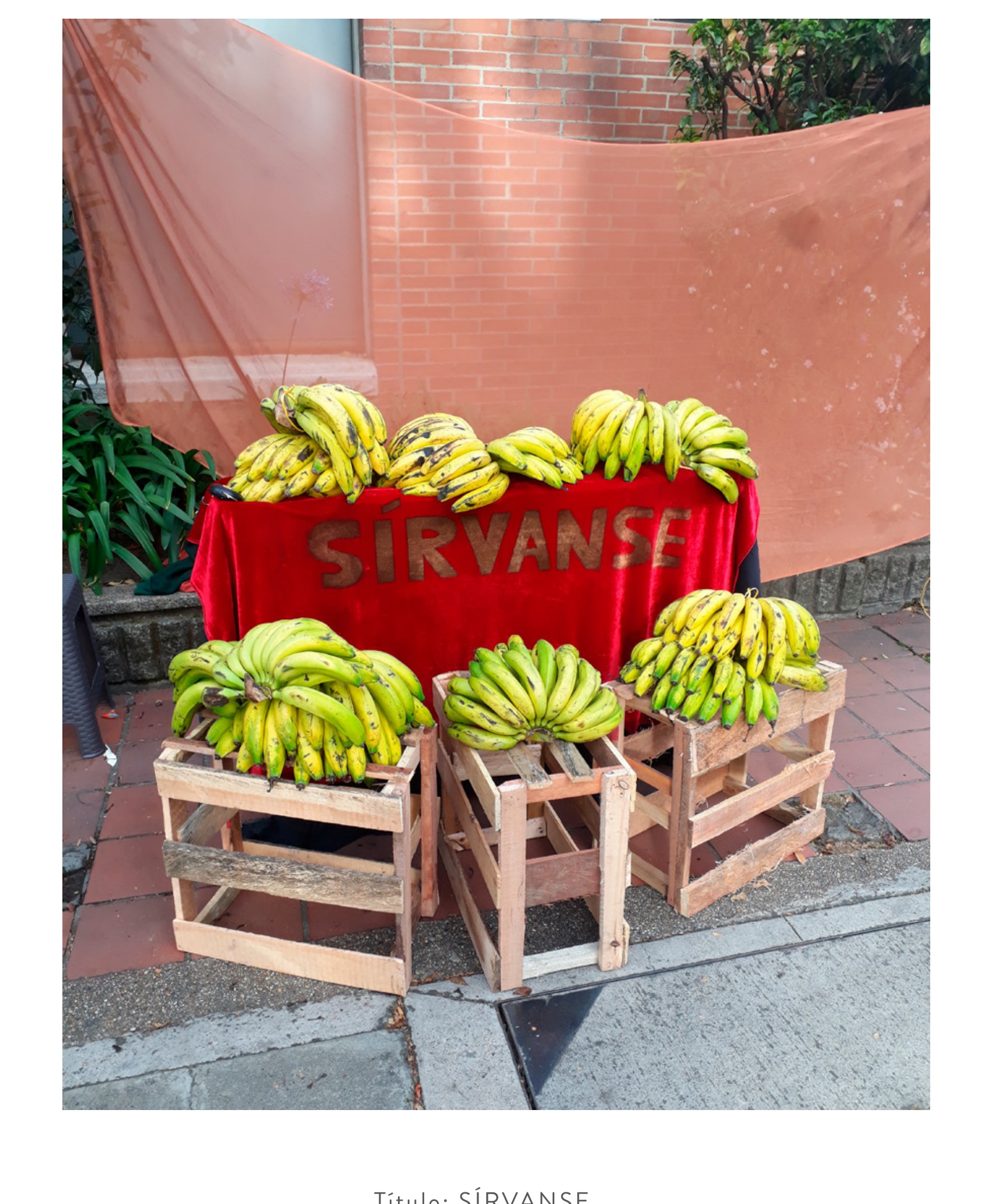
My father works selling bananas in a market in Manizales, Colombia. Selling fruit and vegetables has sustained my family for decades. Seeing fruit boxes in the markets felt familiar, because I grew up watching those same boxes when my father took me to work, yet it also makes me think about the precarious working conditions of primary-sector workers in developing countries. Why, if Latin America is a powerhouse of production, are poverty rates so high? How can we rethink the dynamics of the market and the distribution of food and wealth?
Context: Made during the IILA artist residency, Rome (from 16 November 2021), commissioned under the rules of the XII Photo-IILA Prize; shown in Acqua, Vita e Salute, XIII Premio IILA Photo, Museo di Roma in Trastevere, Rome (2022).
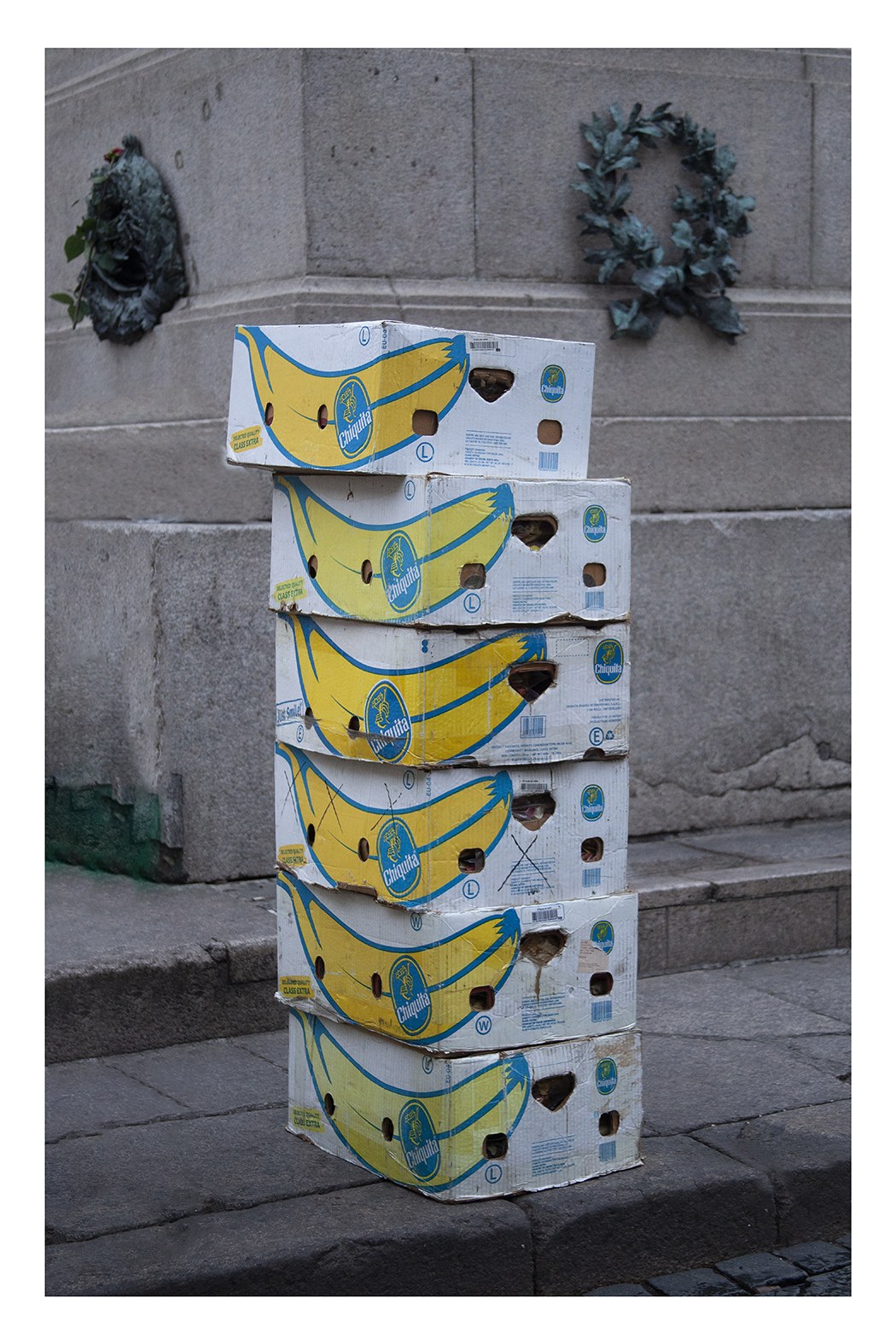
Repubblica Bananera di Roma
Rome, 2021
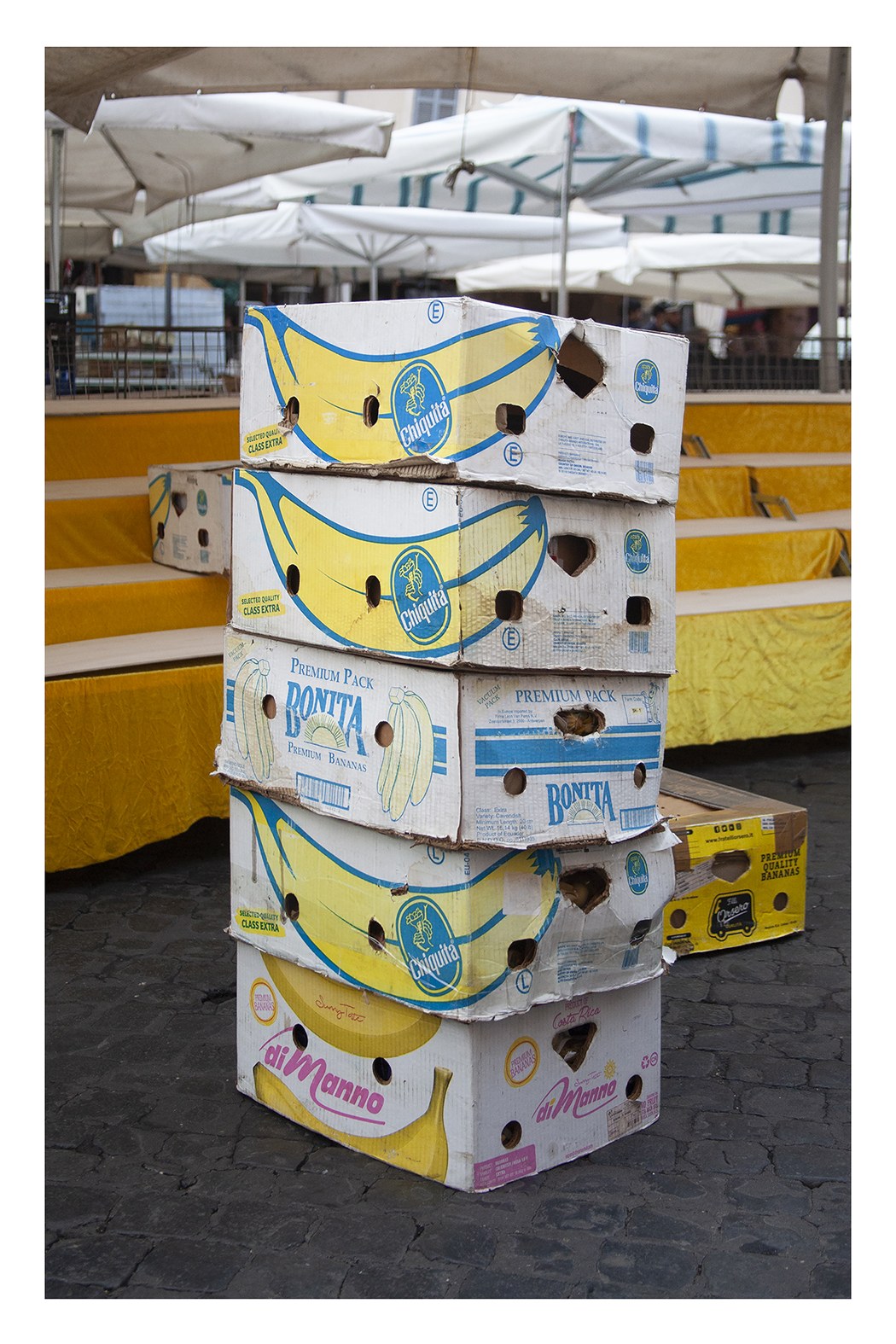
Repubblica Bananera di Roma
Rome, 2021
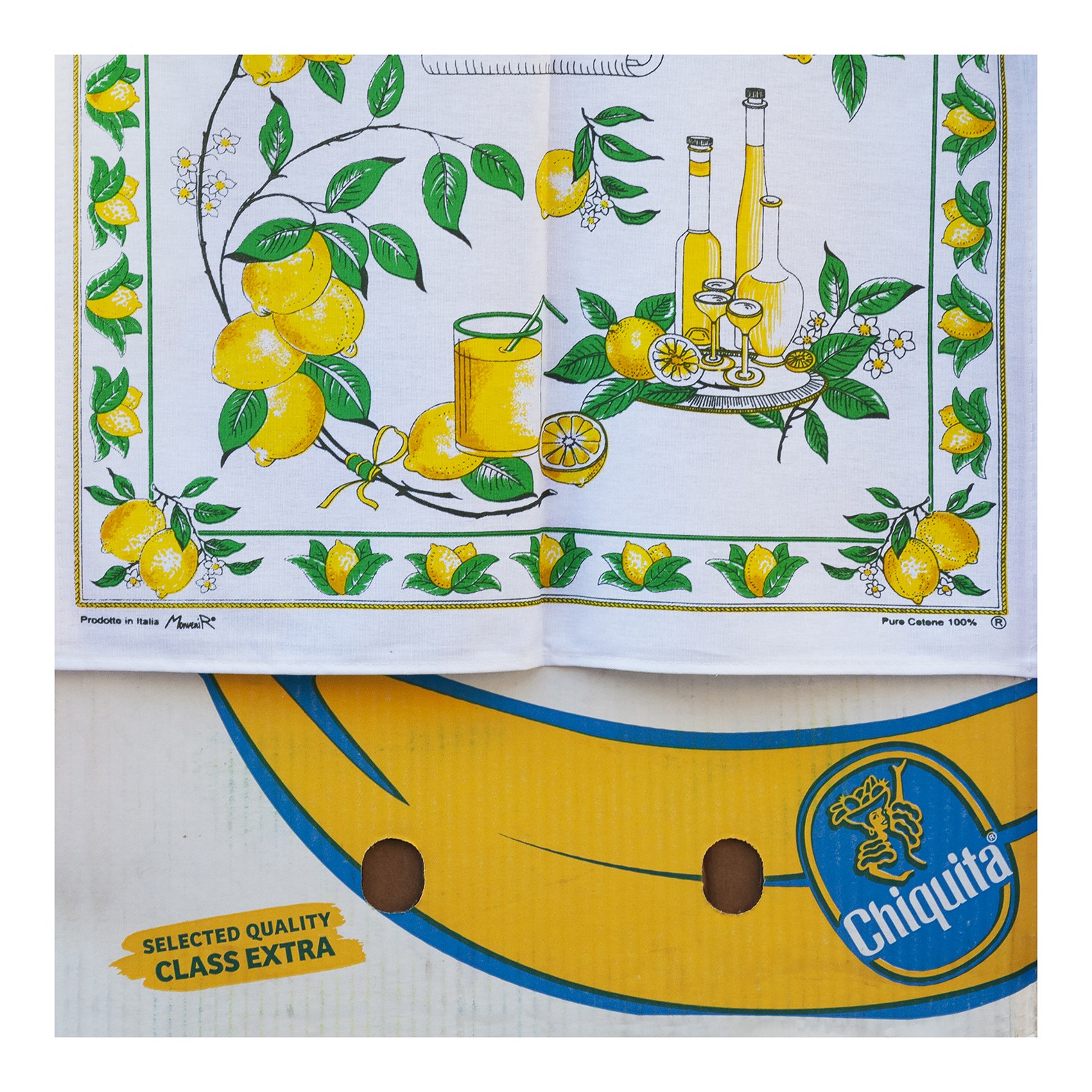
Repubblica Bananera di Roma
Rome, 2021
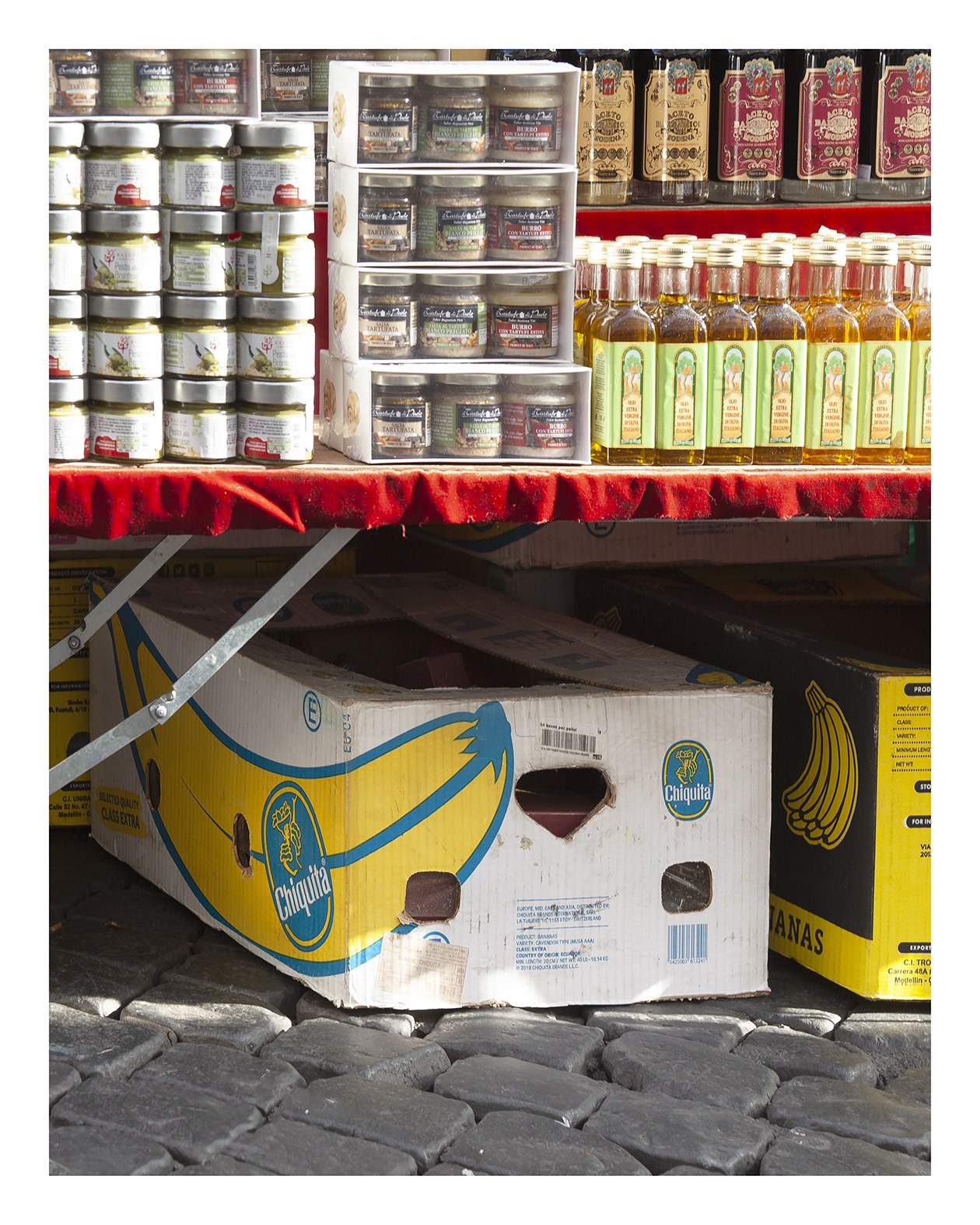
Repubblica Bananera di Roma
Rome, 2021
Repubblica Bananera di Roma
Rome, 2021
Repubblica Bananera di Roma
Rome, 2021
Repubblica Bananera di Roma
Rome, 2021
Repubblica Bananera di Roma
Rome, 2021
Repubblica Bananera di Roma
Rome, 2021
Sírvanse
Rome, 2021
Sírvanse
Rome, 2021
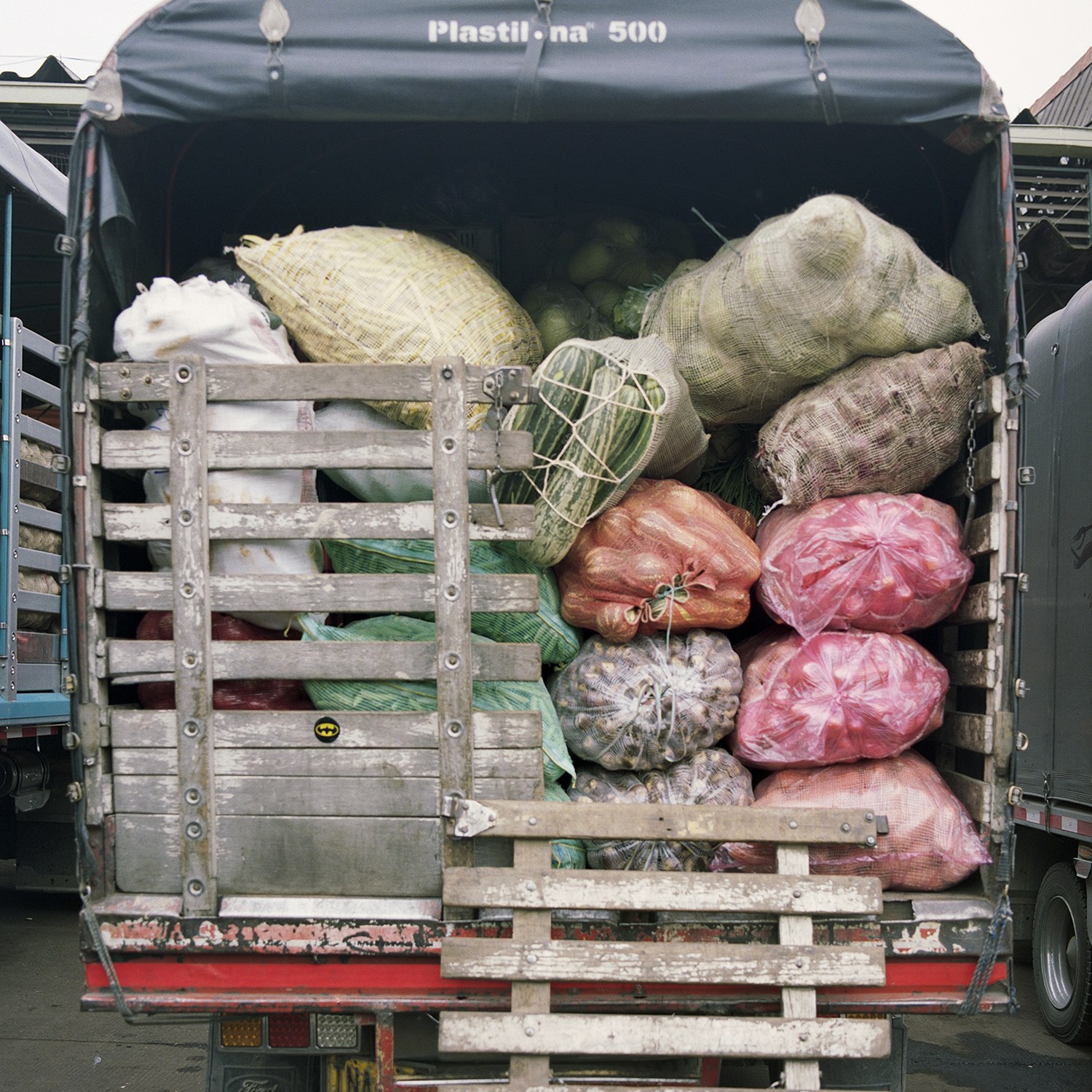
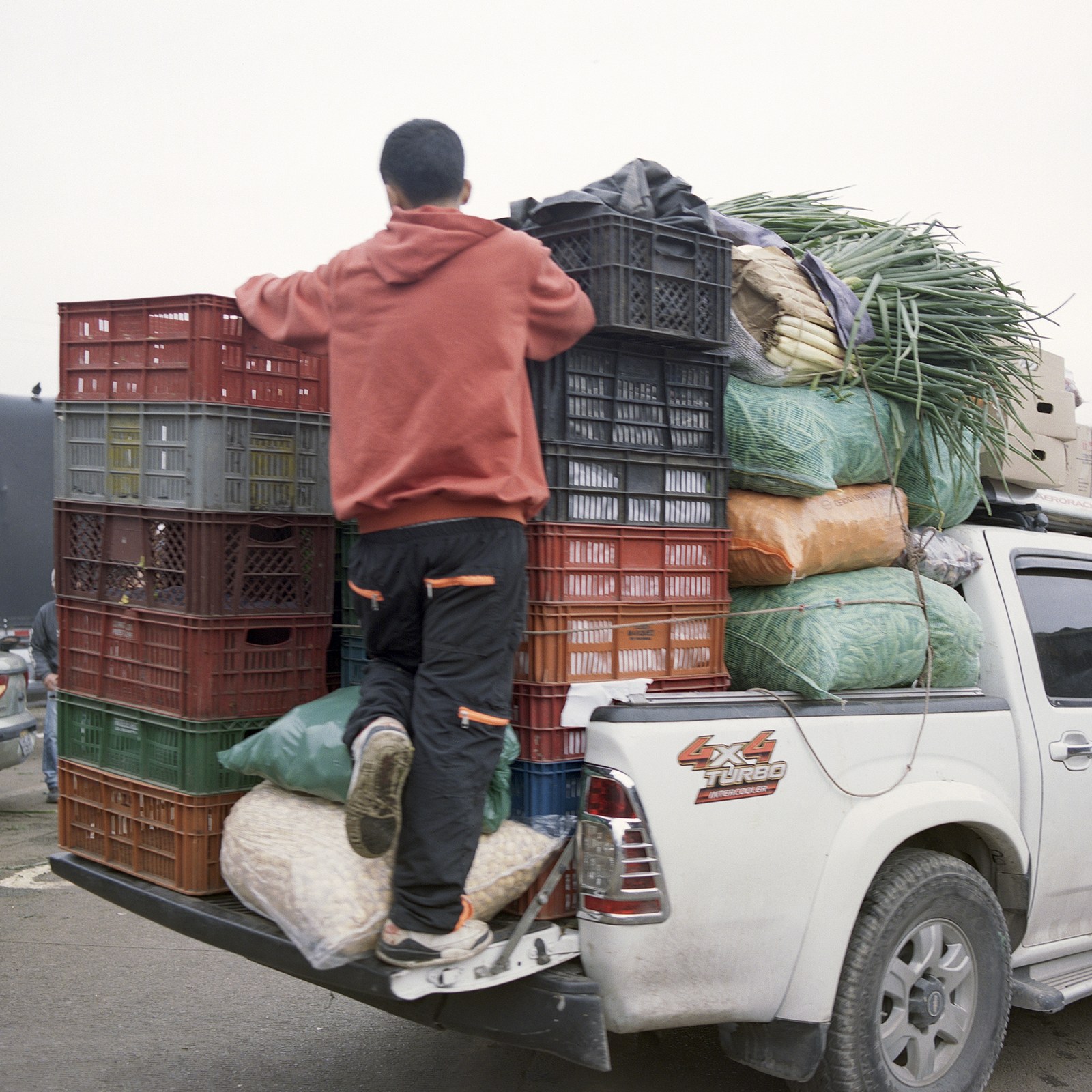
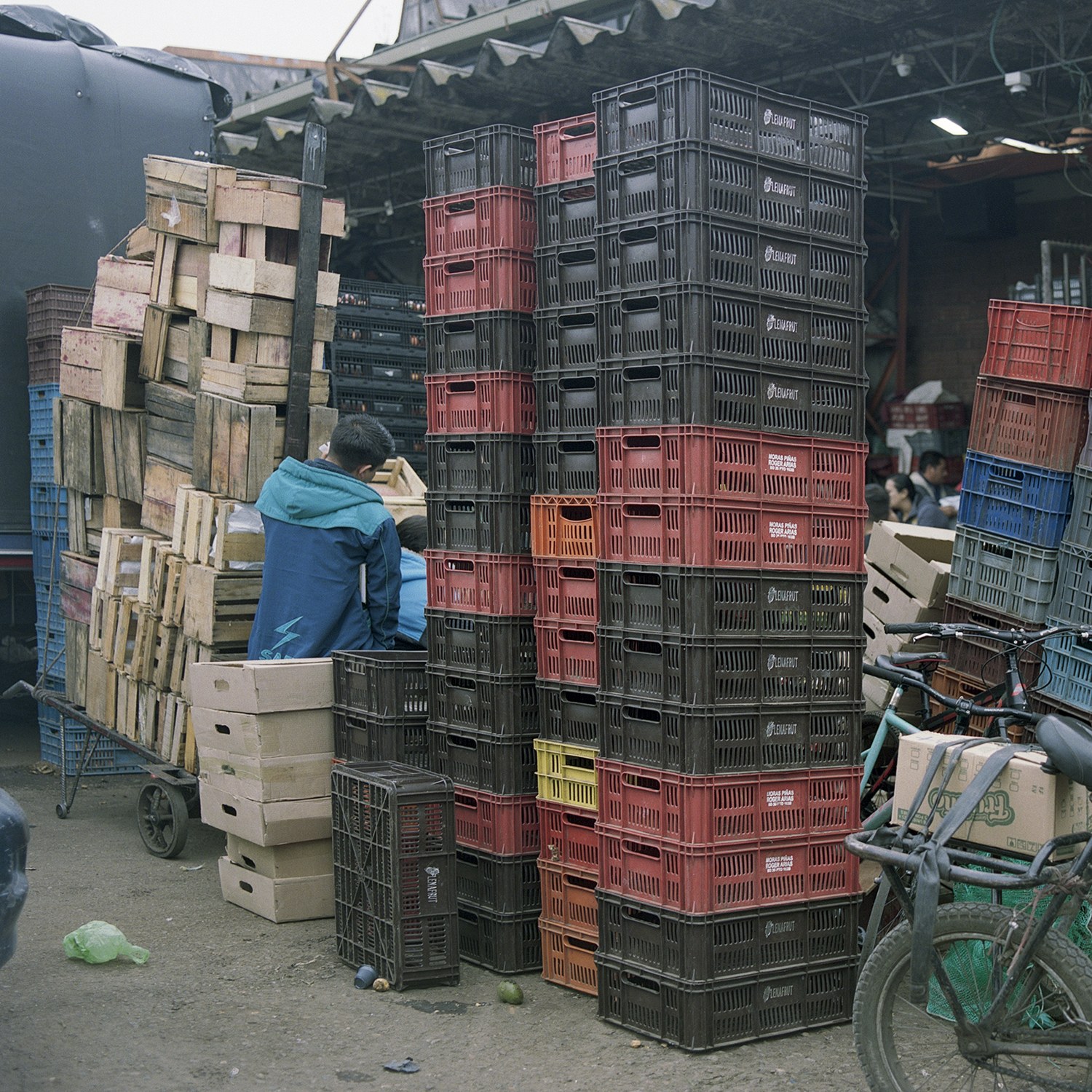
Food and the act of eating play a vital role in human development, not only as nourishment but as a matter of economic, social, political and cultural exchange. Our eating practices define our identity and unite us as a community, from the most popular and everyday, becoming our closest intangible heritage. In Acarreo I address two aspects of the sale of food in Bogotá's wholesale markets. First, I show the richness and variety of what is grown in our territory. Second, the transport of food to restaurants, shops and small retailers, a fundamental link in the food distribution chain and therefore one of the goals of achieving food security. Acarreo calls for responsible, conscious practices in the sale and distribution of food, aimed at real food sovereignty. Access to quality food is a fundamental right that every community should enjoy.
Acarreo
Bogotá, 2022
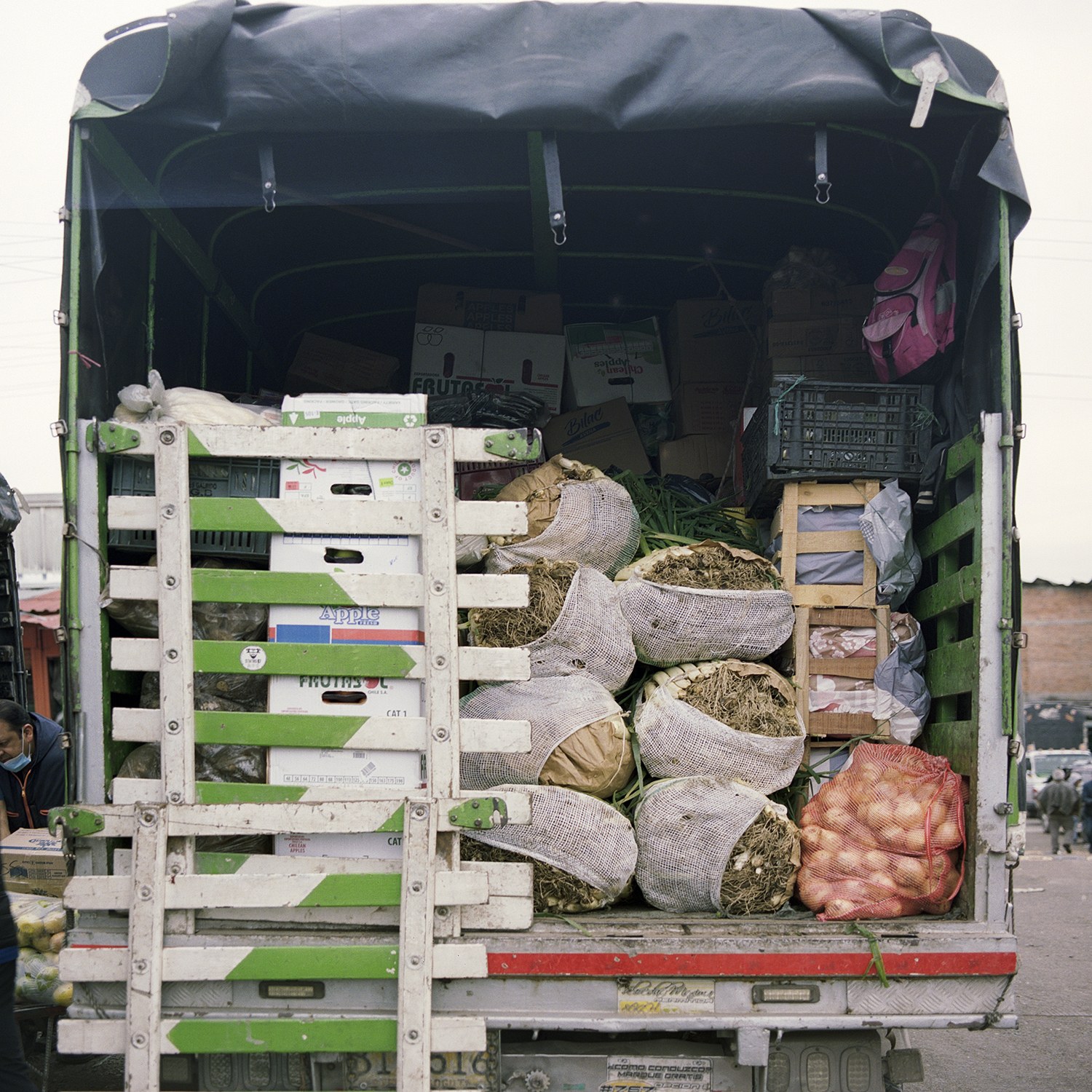
Acarreo
Bogotá, 2022
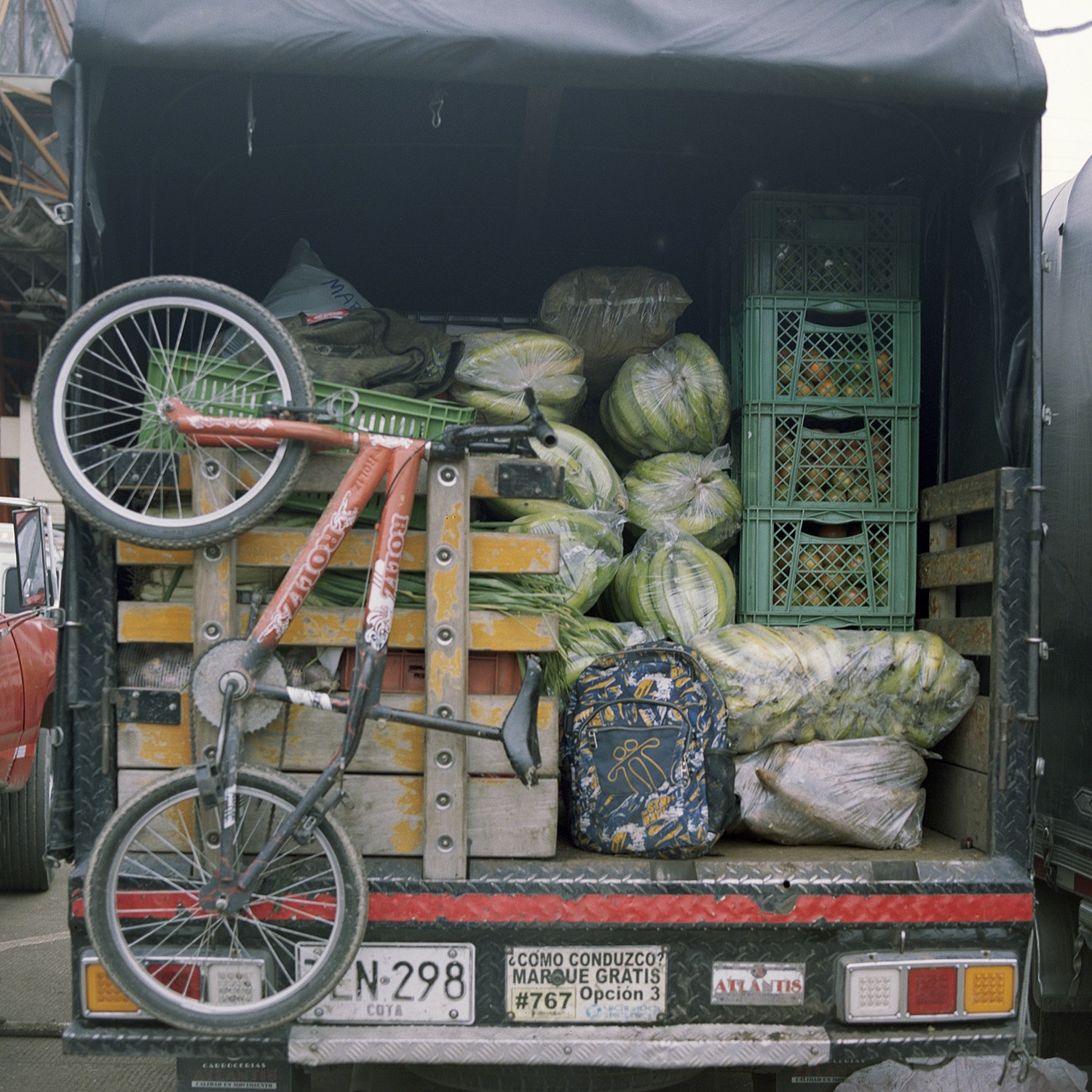
Acarreo
Bogotá, 2022
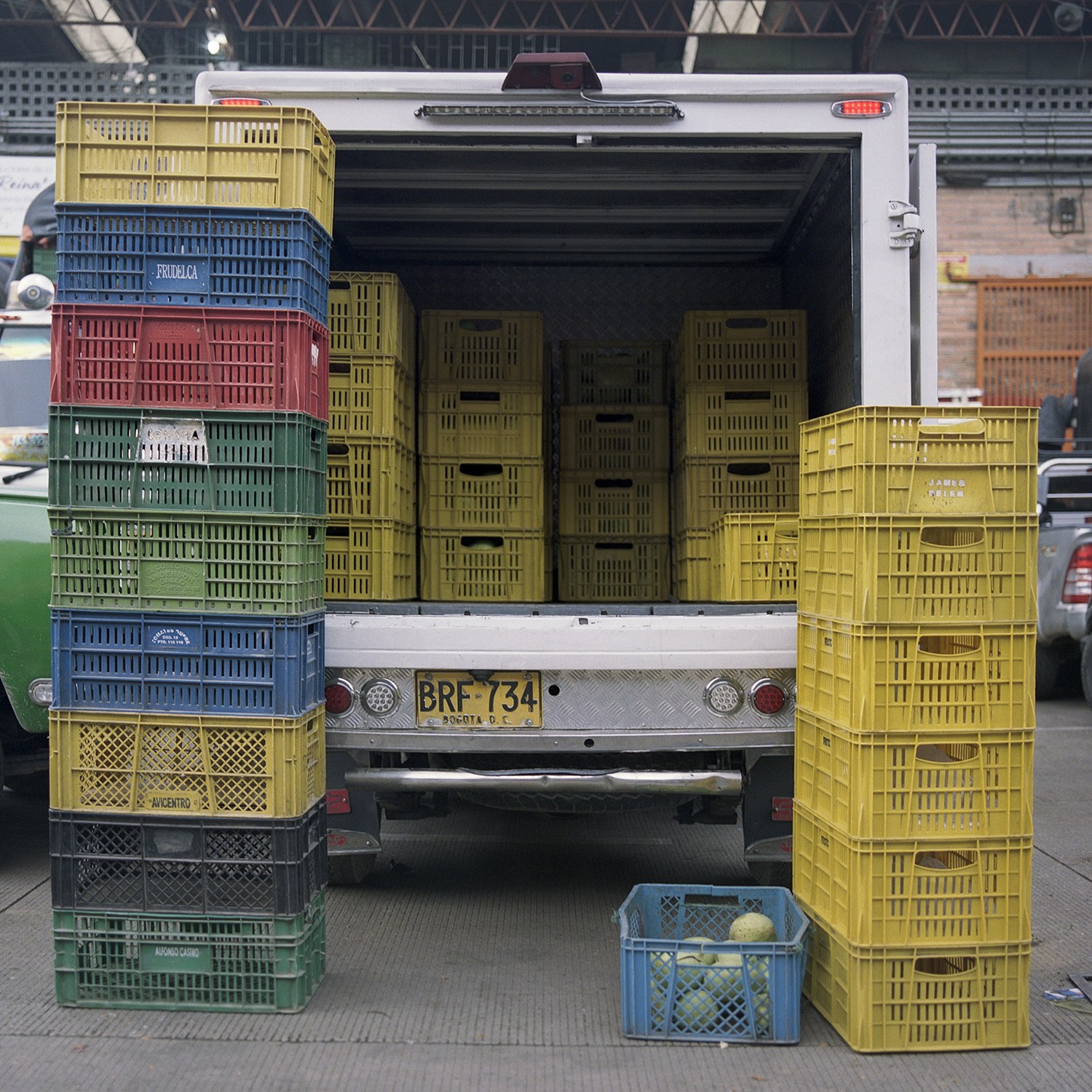
Acarreo
Bogotá, 2022
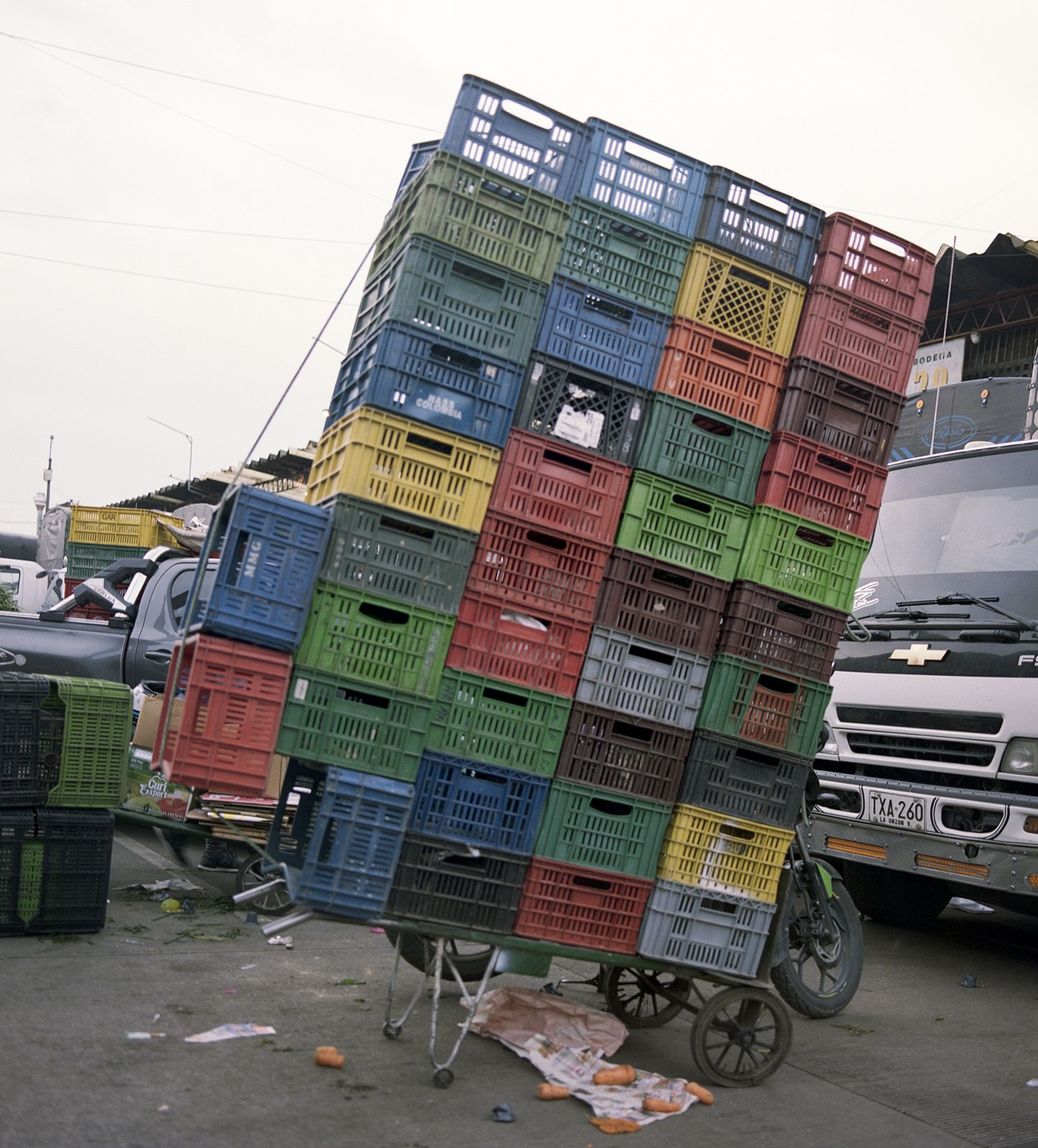
Acarreo
Bogotá, 2022
Acarreo
Bogotá, 2022
Acarreo
Bogotá, 2022
Earlier Work on Image and Advertising
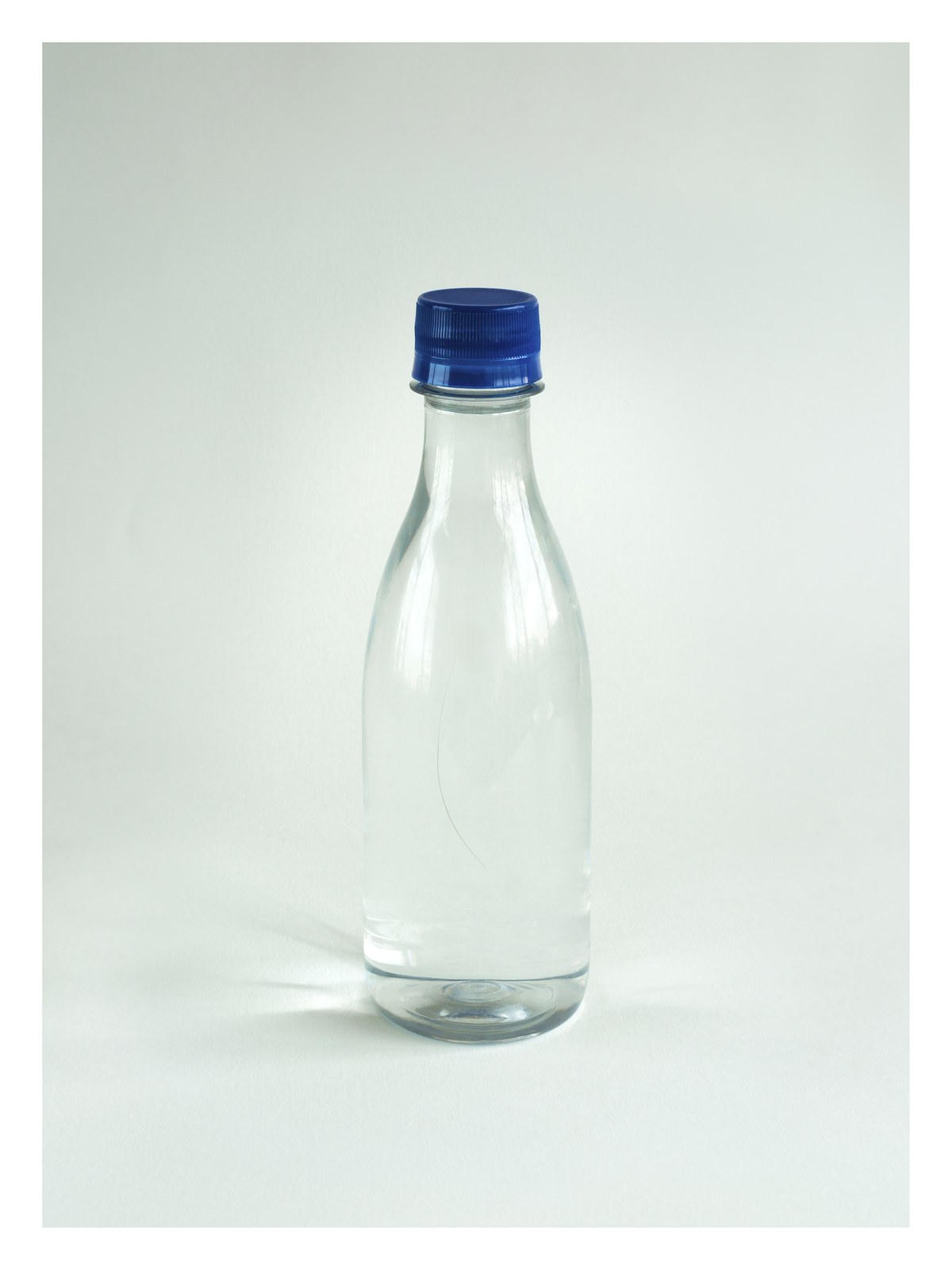
My work is a critique of product photography as an advertising tool. When I walk down the street and see all the ads, I cannot help thinking about the hours photo editors spend in Photoshop, trying to create an altered reality full of smooth surfaces and perfect curves. Advertising turns everyday products into banal objects which, having no traces or marks of use, become unreal and memoryless. We are immersed in a cult of banality, an ode to the superfluous and the fleeting. Tensión superficial is a photographic series that critiques advertising by ridiculing what is already ridiculous: a double game of the absurd. After choosing the most transparent bottle, using meticulous lighting, the whitest and smoothest background, interminable takes and endless hours of Photoshop, I obtain the image of a perfect bottle of water. But amid so much exaggeration, it seems I have forgotten a small detail: inside the bottle a long black hair floats. Something socially unacceptable, impermissible, dirty and disgusting.
Tensión Superficial
2015
Tensión Superficial
2015
Tensión Superficial
2015
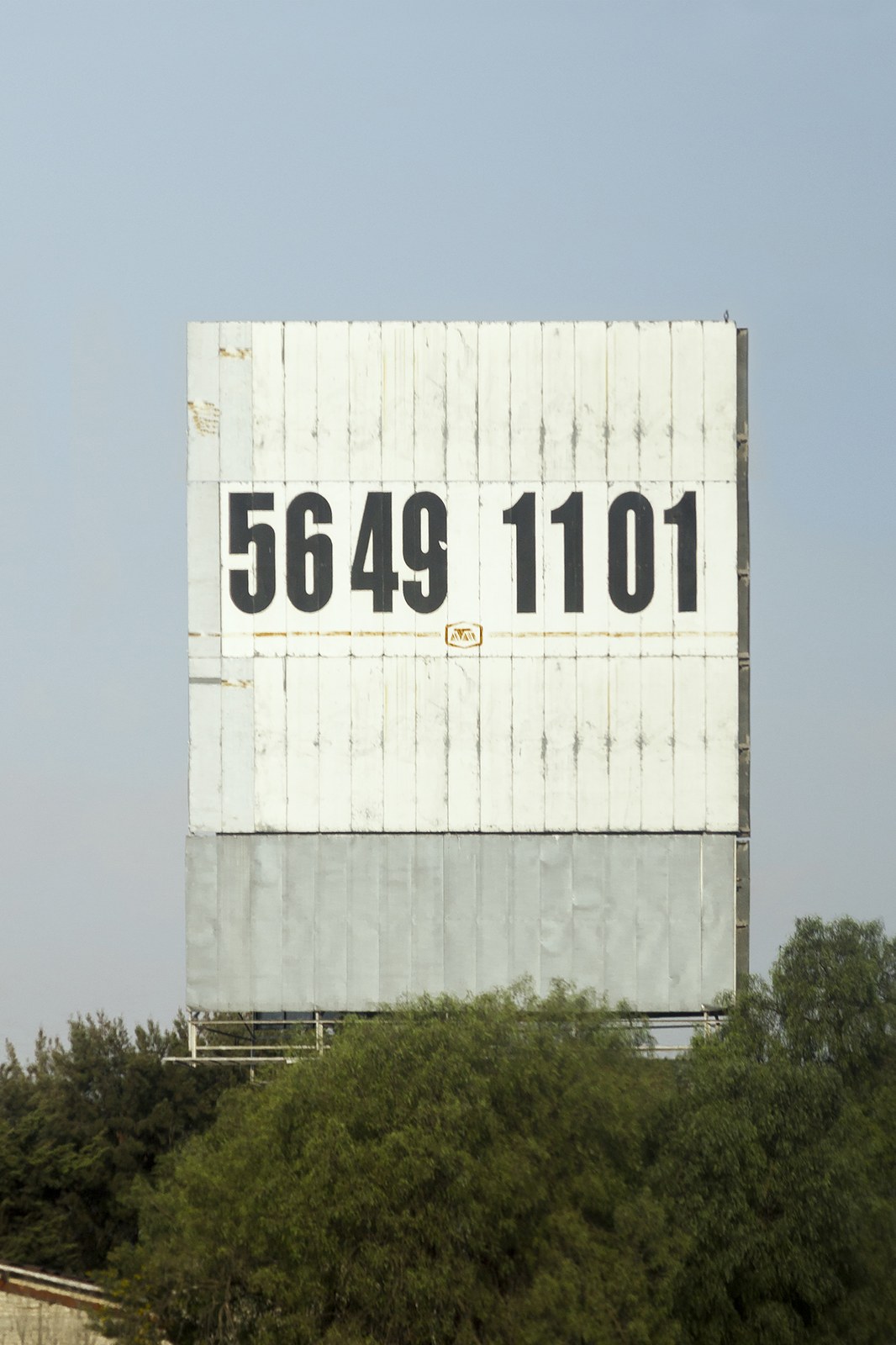
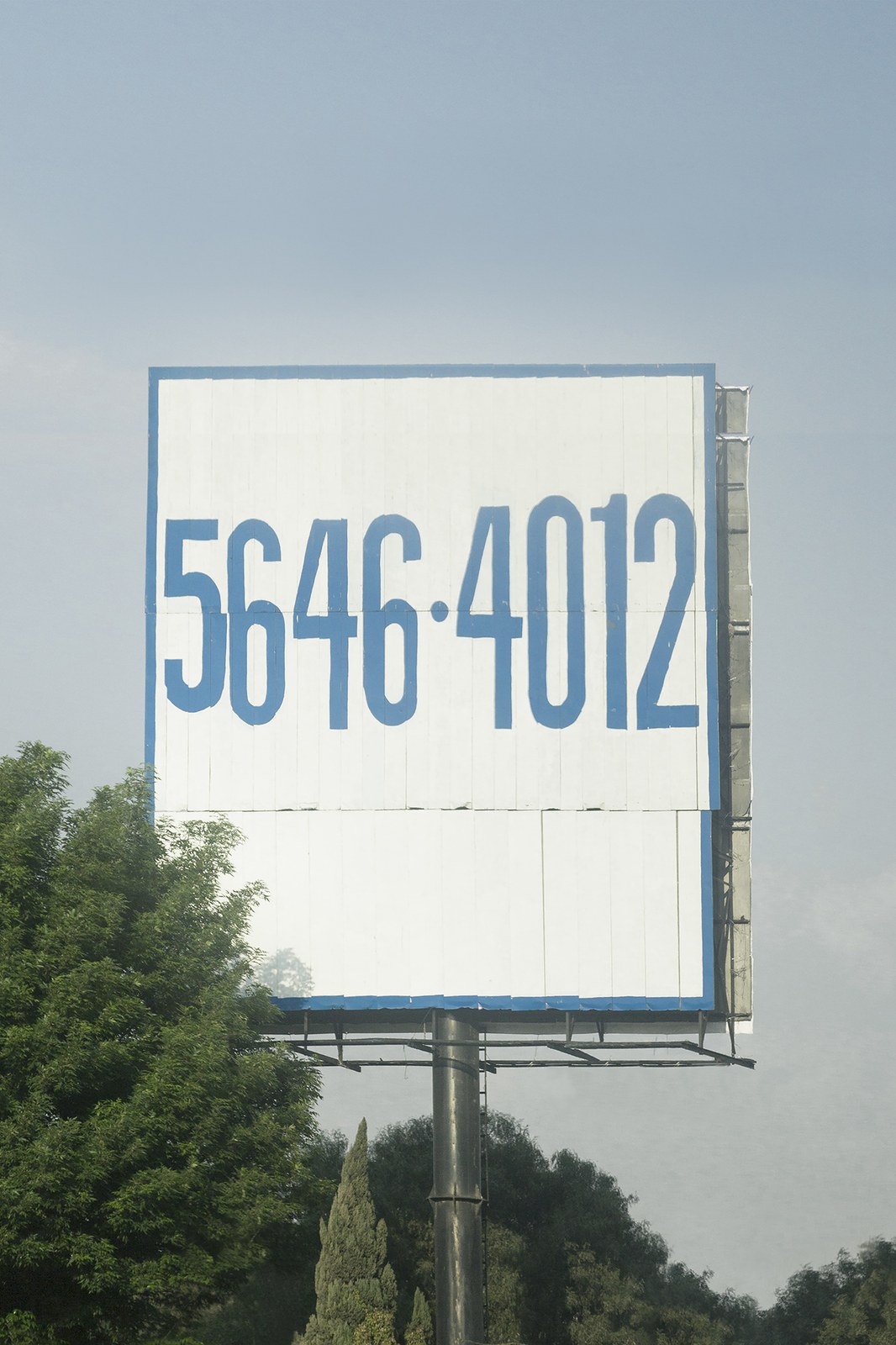
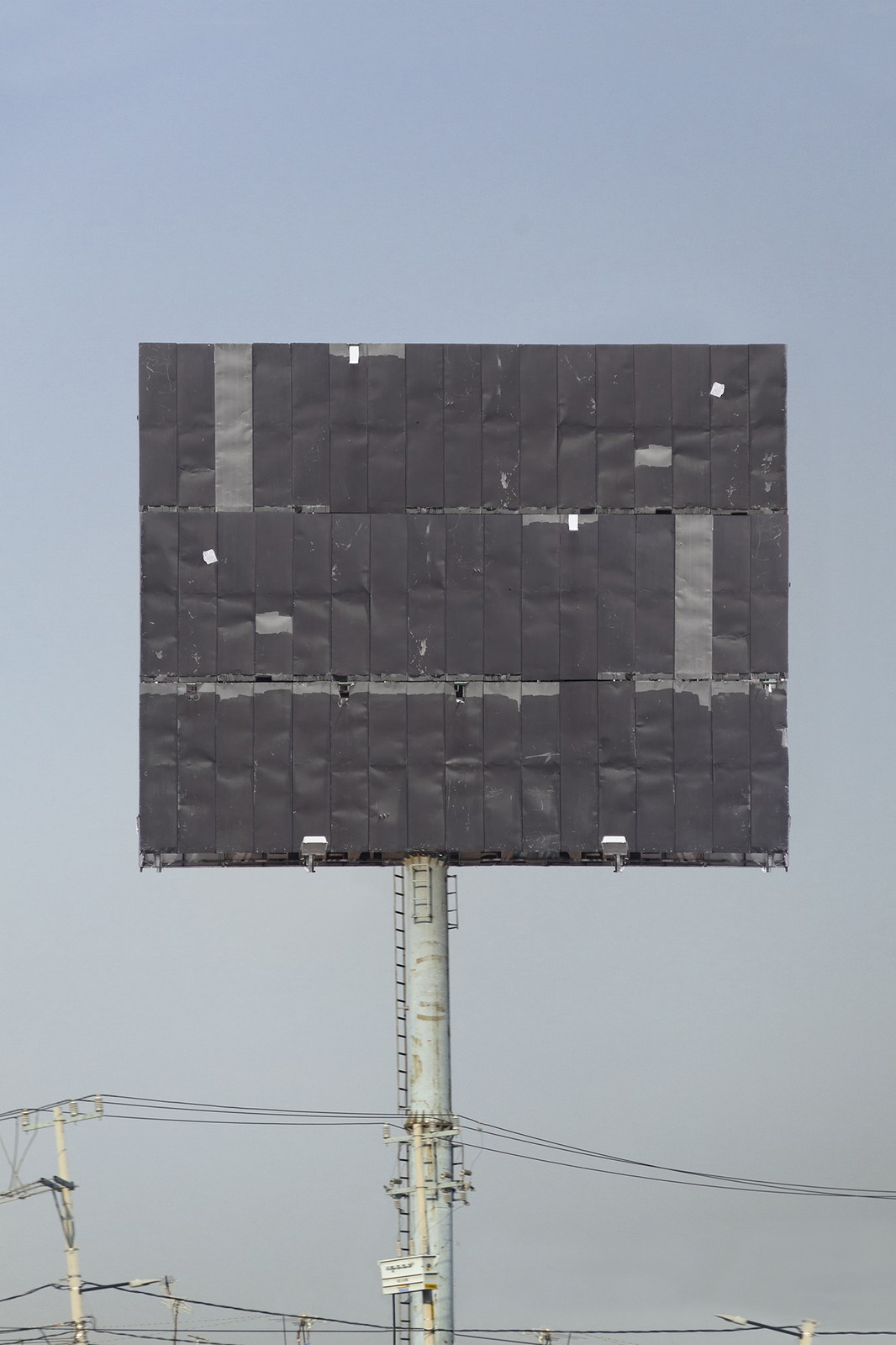
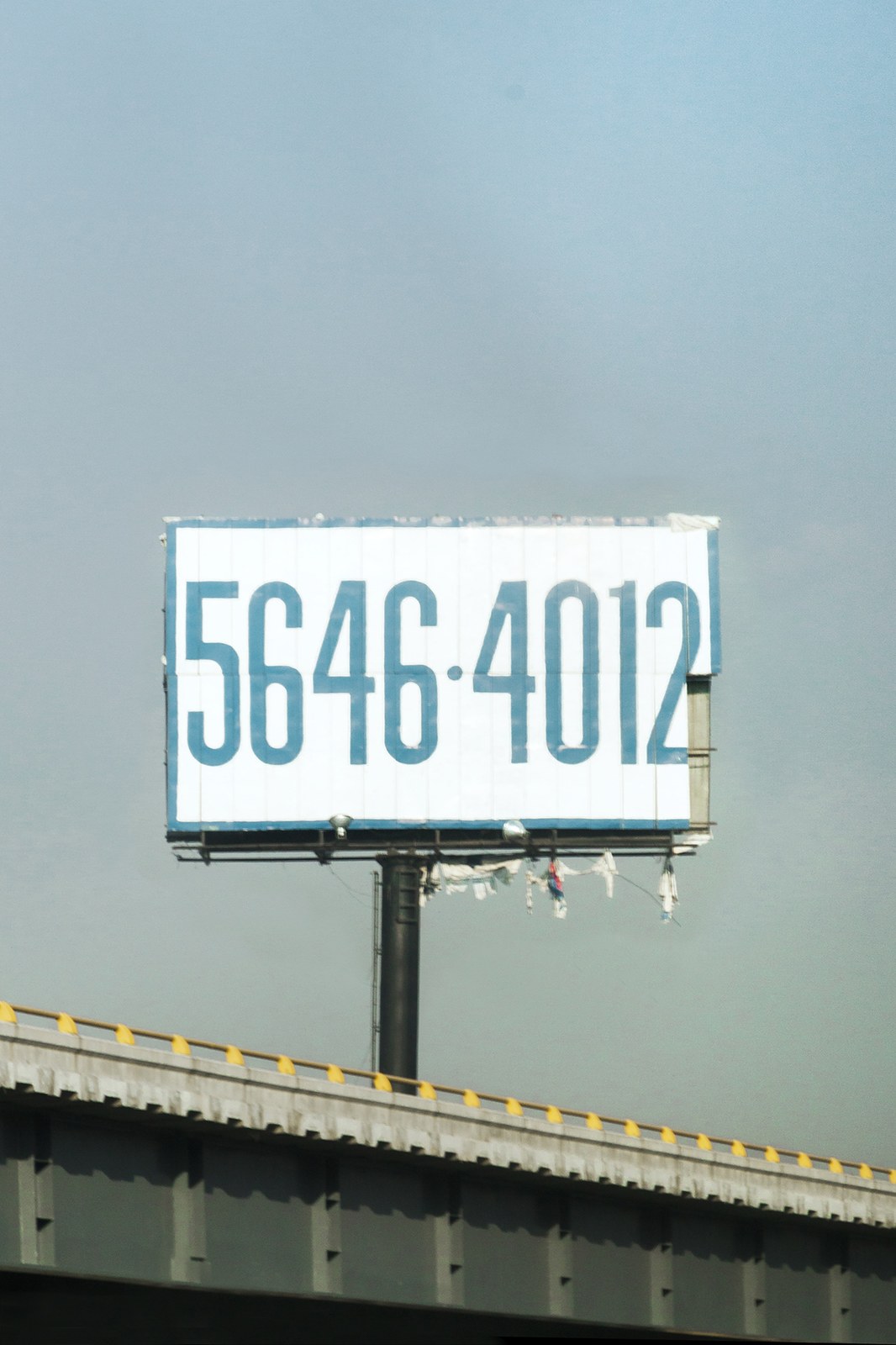
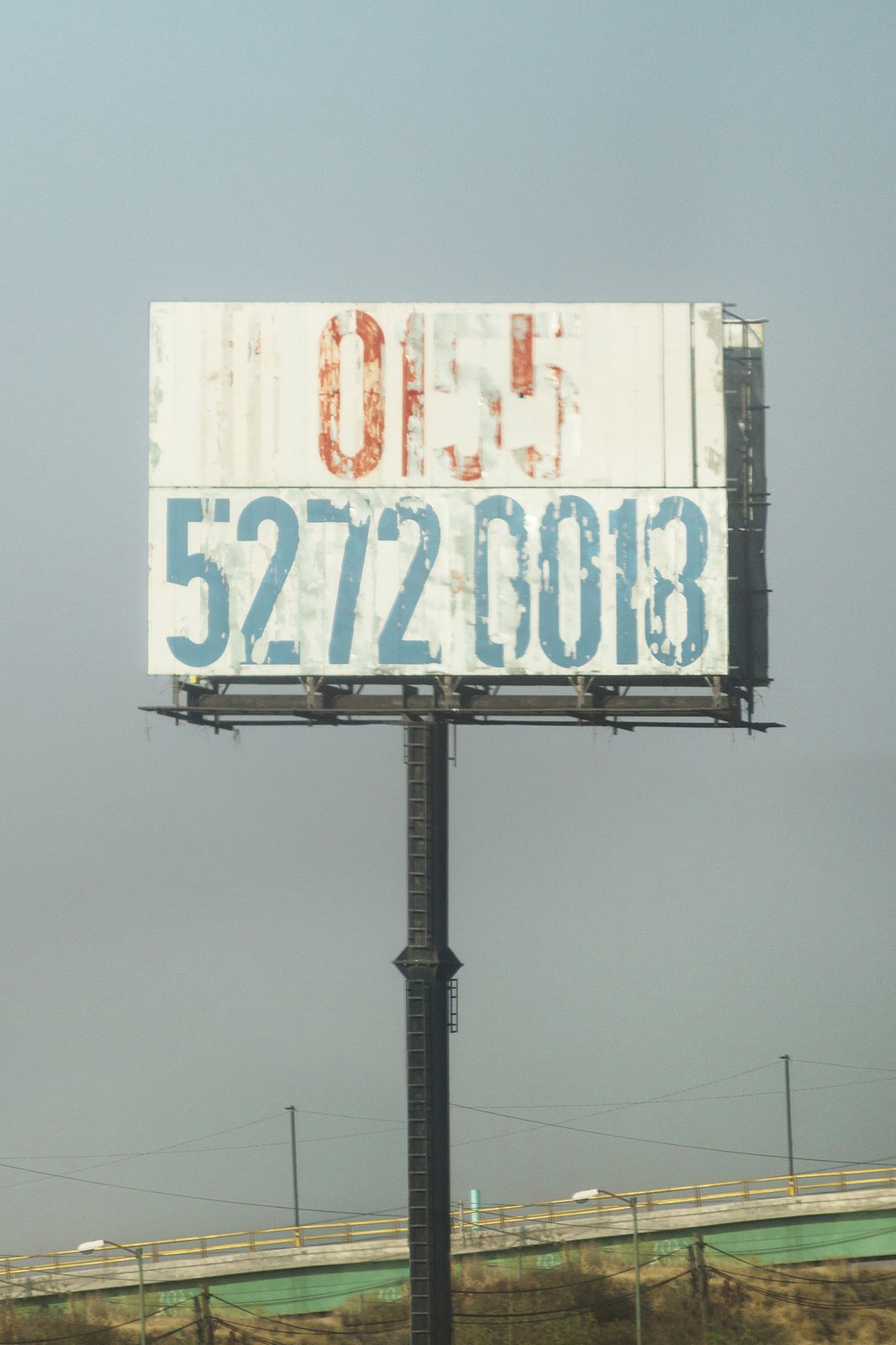
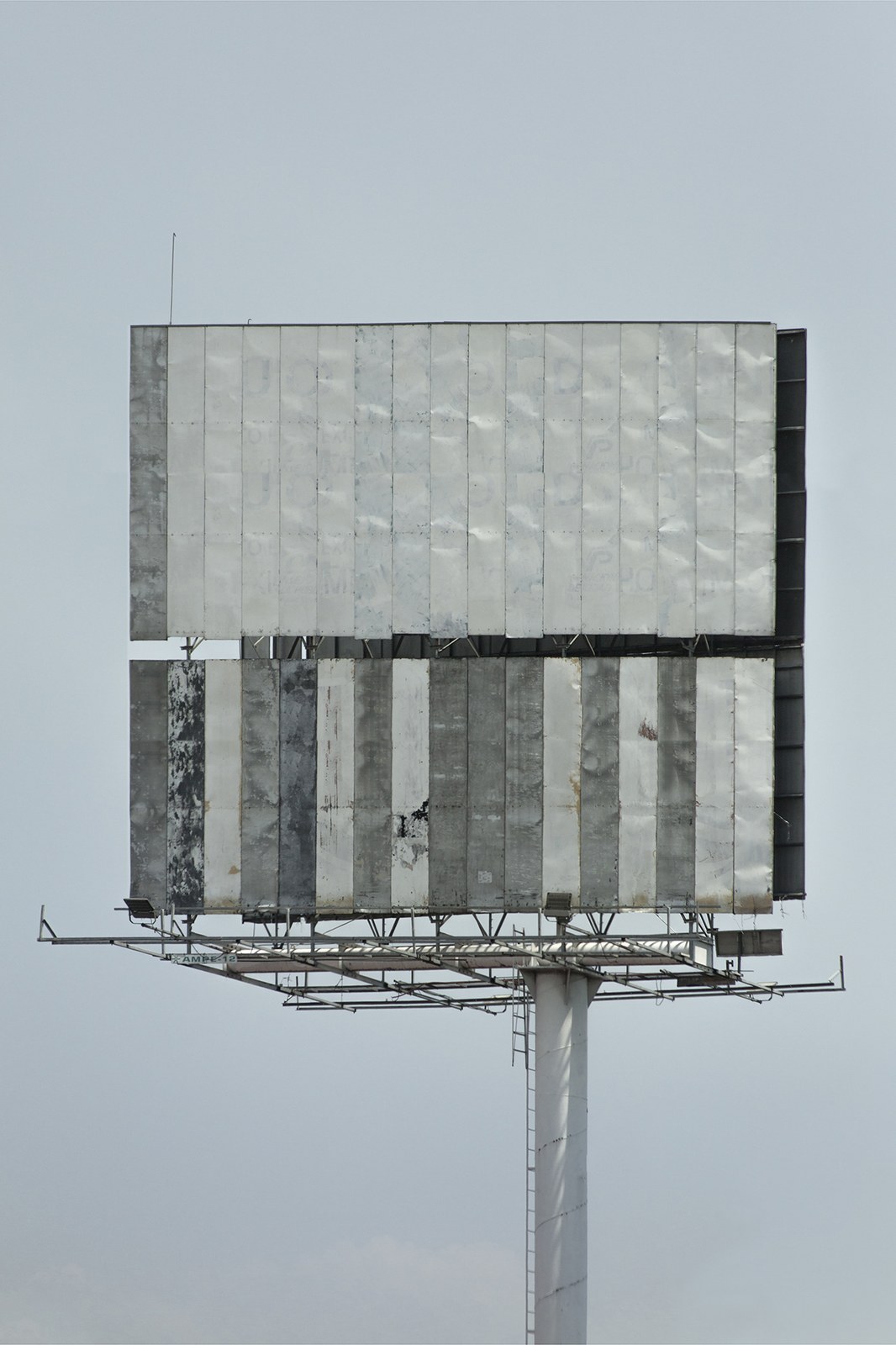
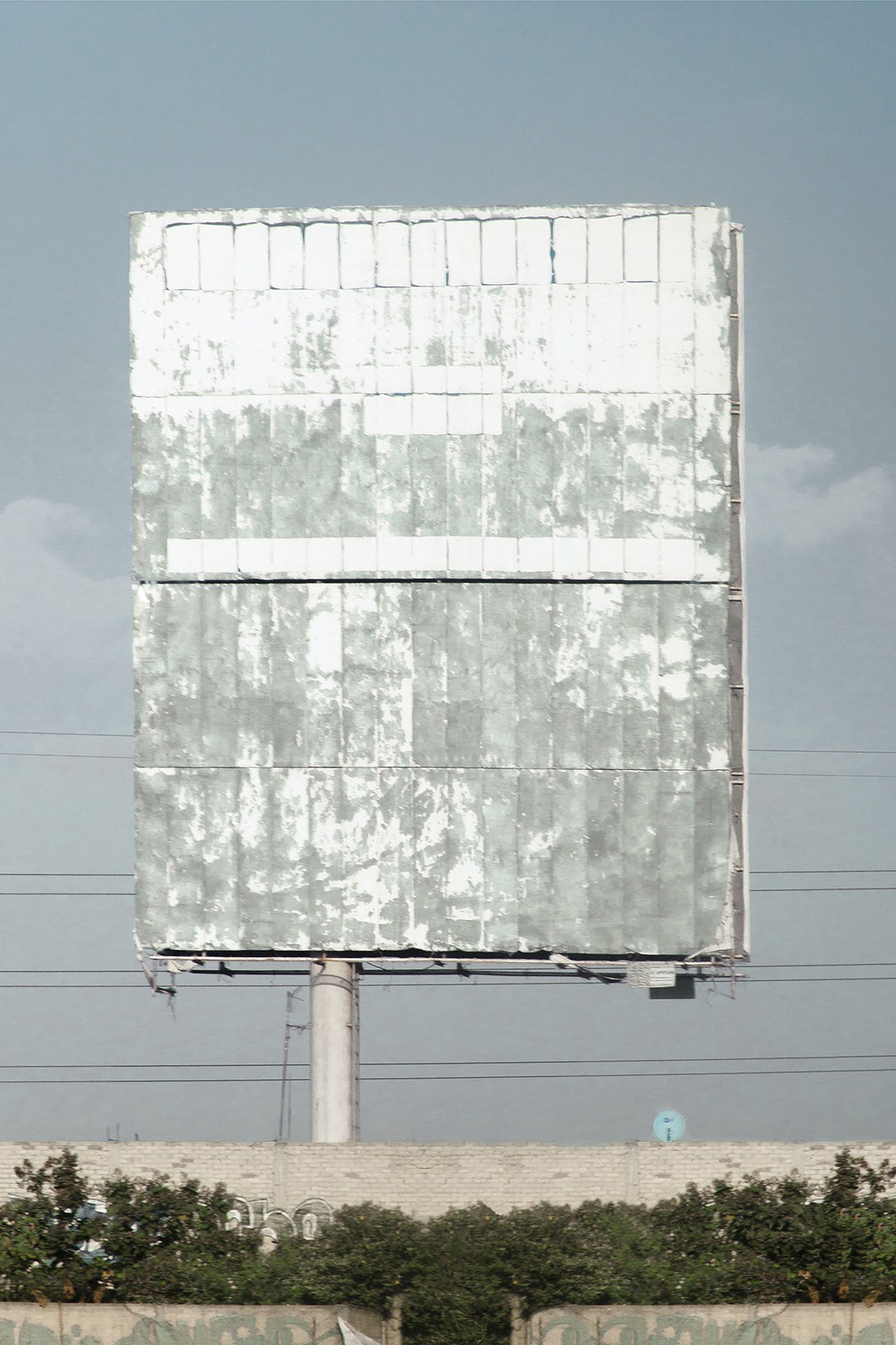
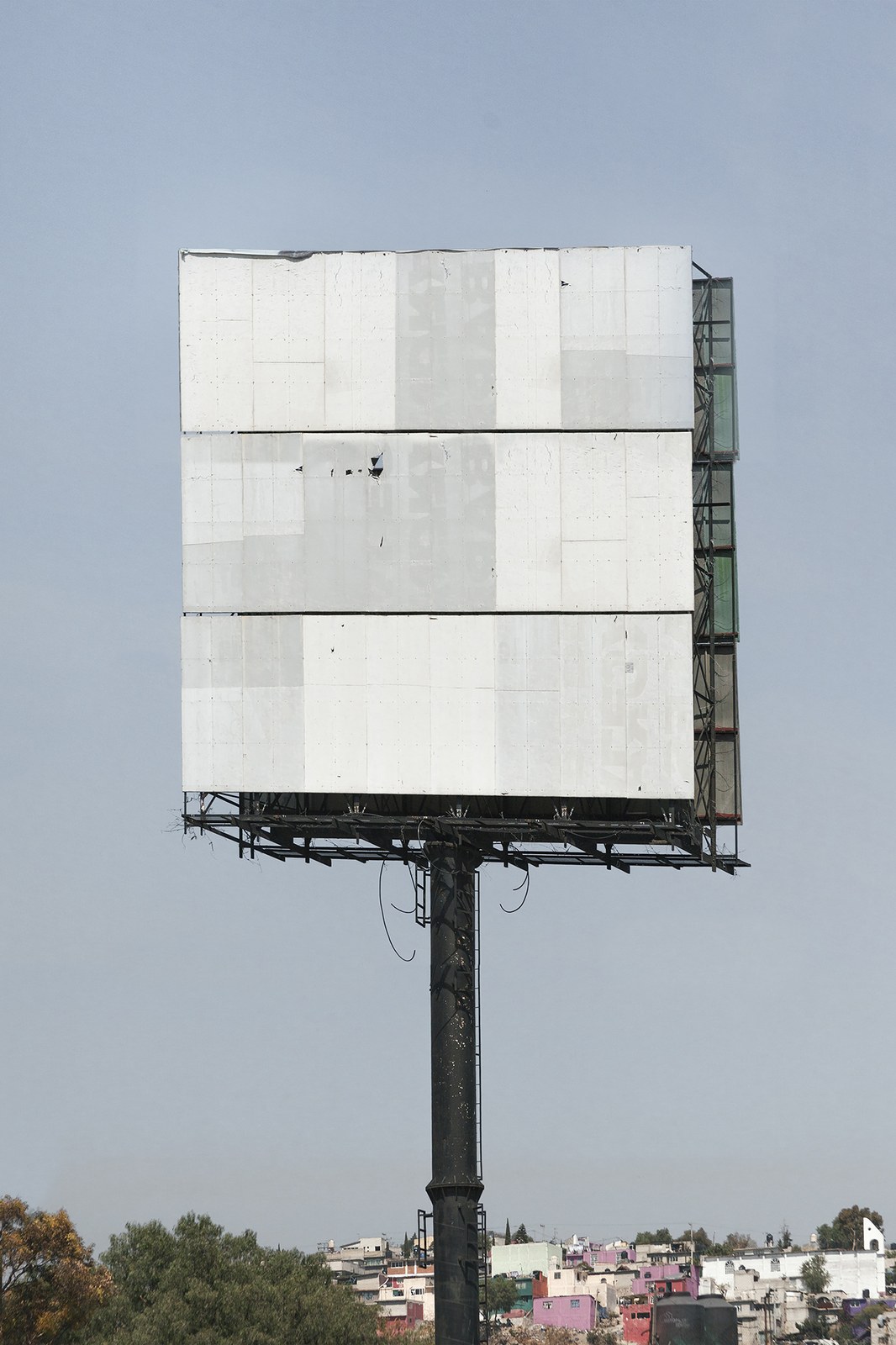
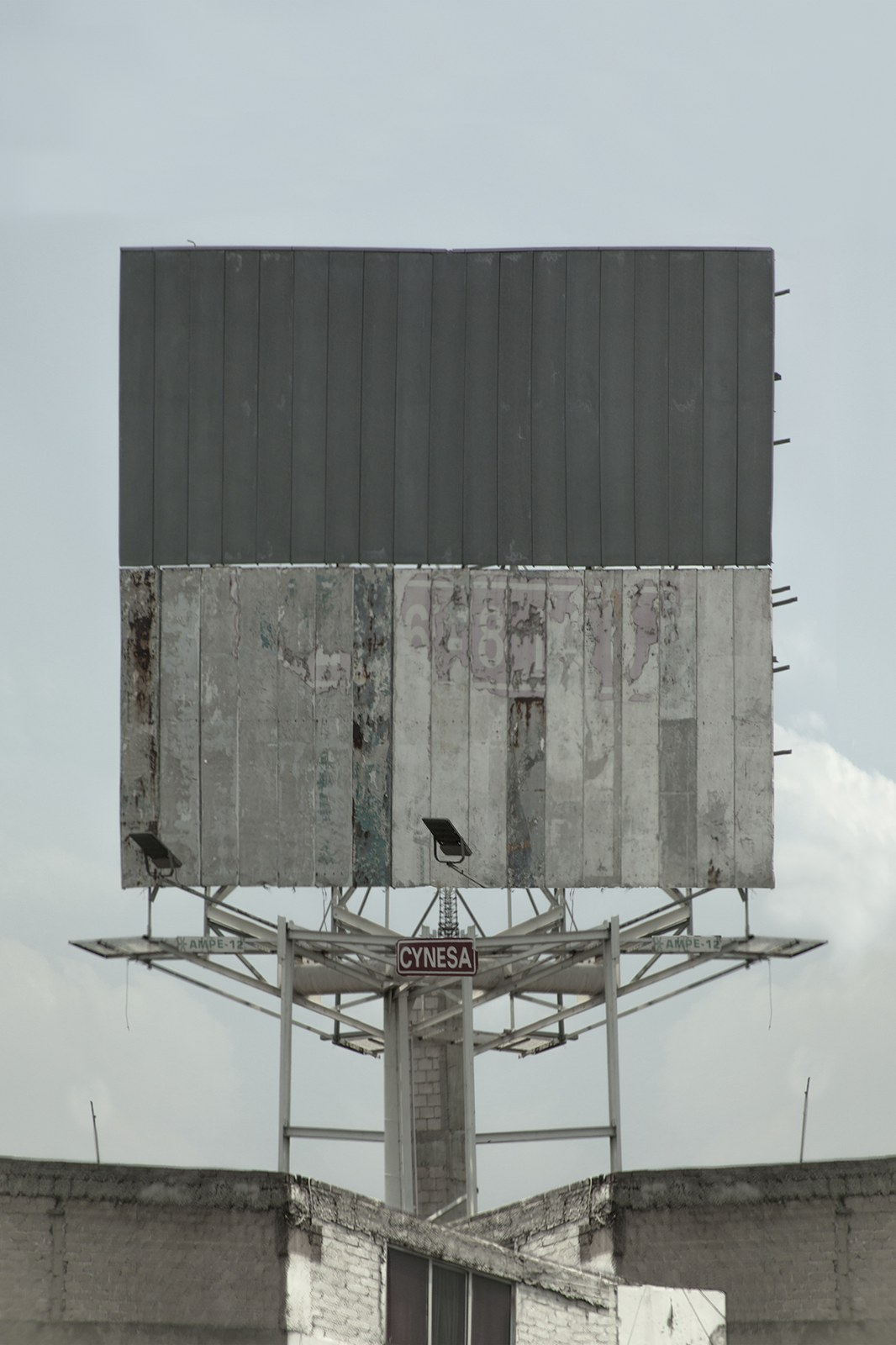
Espectacular Vacío is an ode to a place with no room left for more images: a city in which advertising has been altered and presents a dystopian, distorted reality. An empty reality. A glitch. For this project I walked through Mexico City, a city full of images and information, and came across many abandoned billboards, a sign that its inhabitants can bear no more visual stimuli. In my photographs the billboards appear large and imposing but empty, and through exaggerated digital editing I invent a fictional city inhabited only by forgotten images. Isn't visual silence spectacular? It is my answer to the need to create silent images.
Espectacular Vacío
Mexico City
Espectacular Vacío
Mexico City
Espectacular Vacío
Mexico City
Espectacular Vacío
Mexico City
Espectacular Vacío
Mexico City
Espectacular Vacío
Mexico City
Espectacular Vacío
Mexico City
Espectacular Vacío
Mexico City
Espectacular Vacío
Mexico City
SANTIAGO CARMONA (1990) · Colombian Artist living in NYC
Recognition
Exhibitions
& Awards
Awards & Residencies
Diploma of Recognition — Estallido Cultural por la Paz y la Vida
Embassy of Colombia in Italy · Rome
AwardProject Grant — Fondazione Carla Fendi
Rome · for The Skin of Rome
GrantArtist Residency — Istituto Italo-Latinoamericano (IILA)
Rome, Italy · One month, commissioned by IILA
ResidencyArtist Residency — TECUM Cucina di Quartiere
Florence, Italy · First residency of the programme
ResidencyWinner — XII Photo-IILA Prize
Istituto Italo-Latinoamericano · Rome · for Exceso de Abundancia
AwardSelected — Cali Foto Fest, Festival de Fotografía Experimental
Museo La Tertulia · Cali, Colombia · White Trash
SelectionSelected — trAndeS Photography Competition
DAAD / Freie Universität Berlin & PUCP
SelectionFirst Prize — X Premio Arte Joven
Embassy of Spain & Colsánitas · Bogotá · for Ocupar I & II
AwardWinner, Professional Category — GIF: Espacios y Usos
IDARTES / Fundación Gilberto Alzate Avendaño · Bogotá
AwardSecond Place — EUNIC · Topografía del adentro y del afuera
Bienal Fotográfica Bogotá · Fundación Gilberto Alzate Avendaño
AwardSolo Exhibitions
White Trash: Forme di consumo, forma di costruzione interculturale
Cappella Orsini Lab / Fondazione Opera Lucifero · Rome · Rome Art Week 2022
SoloMicrocosmo
TECUM — Cucina di Quartiere · Florence · Outcome of residency
SoloGroup Exhibitions
T.E.C.A. — Tank Serbatoio Culturale
Bologna · ART CITY / Arte Fiera · Traslocare performance
Art at Home 73-22
Casa 73-22 · Bogotá Art District · White Trash
Acqua, Vita e Salute — XIII Premio IILA Photo
Museo di Roma in Trastevere · Rome
Siamo ciò che mangiamo — XII Premio IILA Photo
Museo di Roma in Trastevere · Rome · Prize winner
Feria del Millón Medellín — First Edition
Palermo Cultural · Medellín · White Trash
Todos los puntos extremos se encuentran en la línea de llegada
Galería Neebex · Bogotá · White Trash
Feria del Millón
Hospital San Juan de Dios · Bogotá
Feria del Millón Caribe — Second Edition
Barranquilla
Lo-foto-gráfico
Galería El Museo · Bogotá · Curated by Juanita Carrasco
X Premio Arte Joven
Galería Nueveochenta · Bogotá · Prize exhibition
II Salón de Arte Joven
Fundación Gilberto Alzate Avendaño · Bogotá
GIF: Espacios y Usos
Fundación Gilberto Alzate Avendaño · Bogotá
Topografía del adentro y del afuera — EUNIC
Bienal Fotográfica Bogotá · Fundación Gilberto Alzate Avendaño
Translocaciones: fotografía contemporánea en Colombia
Galería El Museo · Bogotá · Curated by Javier Vanegas & Santiago Forero
La poética del espacio
Galería de Arte Cafam · Bogotá · Curated by La Metro
Azul
Galería El Garaje · Bogotá
Salón de Diseño — Universidad Nacional de Colombia
Museo de Arquitectura Leopoldo Rother · Bogotá
Feria del Millón
Centro Creativo Textura · Bogotá
Fotográfica Bogotá — International Biennial
Fotomuseo / Museo de Arquitectura Leopoldo Rother · Bogotá
Mostra Laboratorio d'Arti Visive (Antoni Muntadas)
Fondazione Bevilacqua La Masa · Venice, Italy
SANTIAGO CARMONA (1990) · Colombian Artist living in NYC
Curriculum Vitae
Santiago
Carmona
Education
Teaching & Community Programmes
Art & Creative Experience
Side Work
Waged labour is the source material for the SIDE WORK macro-project.
Languages
Skills
Work exhibited before 2020 may appear under the name Santiago López Carmona.
SANTIAGO CARMONA (1990) · Colombian Artist living in NYC
Contact